



Jordan, Syria, and Lebanon revive Arab Gas Pipeline (AGP) talks to boost energy cooperation, reduce costs, and support regional electricity recovery.
Reviving the Arab Gas Pipeline

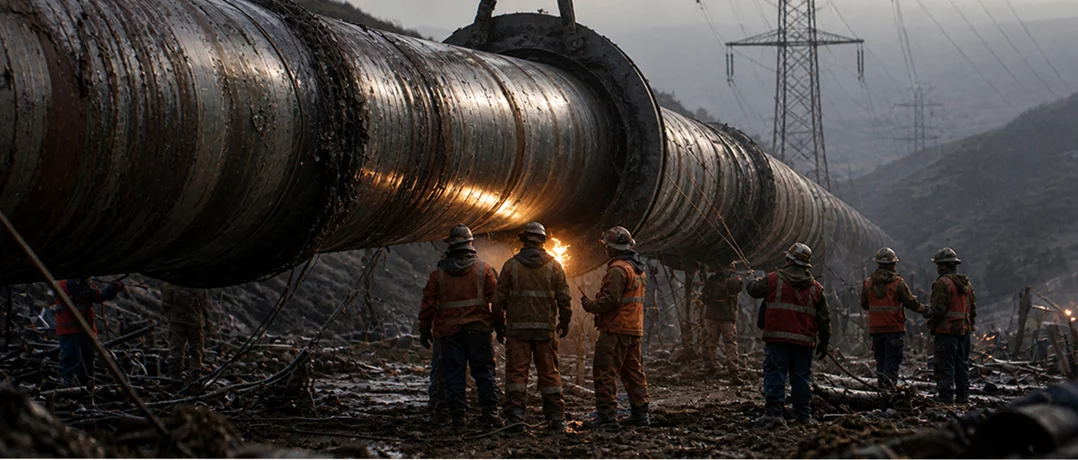
A renewed push for regional energy cooperation among Jordan, Syria, and Lebanon has revived hopes of easing one of the Middle East’s most persistent crises: chronic energy shortages and fragile electricity infrastructure. During a trilateral meeting held in Amman, the energy ministers of the 3 countries discussed expanding cooperation in gas transportation, electricity interconnection, and the rehabilitation of shared energy infrastructure, with a particular focus on reactivating the Arab Gas Pipeline (AGP).
In this context, what is the significance of the aforementioned talks? What is the AGP project, and what benefits could it bring to Lebanon?
The Amman meeting and its strategic significance
The meeting in the Jordanian capital marked one of the most serious attempts in recent years to revive coordinated energy projects between the 3 countries; which in itself carries significant political symbolism for each of the parties concerned.
For Jordan, the talks reinforce its ambition to become a regional transit and energy coordination center. Jordanian Energy Minister Saleh Ali al-Kharabsheh stressed that technical teams had already completed important studies and assessments related to rehabilitating energy networks and preparing the infrastructure for operational use. According to officials, discussions have advanced to an important stage ahead of final technical and contractual arrangements.
For Syria, participation demonstrates a gradual reintegration into regional economic initiatives after years of isolation. Syrian Energy Minister Mohammad al-Bachir confirmed that portions of the AGP had already been rehabilitated and that Syria had successfully begun receiving gas through Jordan, helping stabilize parts of the Syrian electricity network. He also highlighted Syria’s ongoing efforts to restore electricity interconnection lines with both Jordan and Lebanon.
Equally important is the fact that the initiative signals growing regional willingness to cooperate despite years of political tensions, war, and economic instability that had previously frozen many cross-border infrastructure projects.
Why the pipeline matters for Lebanon
For Lebanon, the potential benefits of reactivating the Arab Gas Pipeline are substantial. It provides the country with one of the few realistic pathways toward reducing electricity production costs and improving supply in the near term.
The country’s electricity sector has long depended on expensive fuel oil imports to operate aging power plants. This system has generated enormous financial losses for the Lebanese state while providing insufficient electricity to citizens.
Natural gas offers a significantly cheaper and cleaner alternative. If gas begins flowing again through the pipeline, Lebanon could use it primarily to operate the Deir Ammar power plant, which was originally designed to run on gas. This would reduce dependence on heavy fuel oil, lower electricity production costs, and help decrease environmental pollution and harmful emissions.
Energy experts estimate that Lebanon could eventually receive enough gas to substantially increase electricity generation hours. Although Lebanon’s share of pipeline capacity would remain relatively modest compared to Syria and Jordan, it could still produce meaningful improvements in power supply and reduce the burden on both households and businesses. Indeed, Lebanese Energy Minister Joe Saddi described the trilateral cooperation as a strategic option for rebuilding Lebanon’s collapsed energy sector on more sustainable foundations.
The project also carries broader economic implications. Lower electricity production costs could reduce pressure on public finances and improve conditions for economic recovery. Reliable electricity remains one of the most essential requirements for attracting investment, supporting industry, and revitalizing economic activity.
In addition, diversification of energy sources would improve Lebanon’s energy security. Instead of relying almost entirely on imported fuel oil purchased under volatile global market conditions (which the recent U.S.-Iran armed conflict explicitly revealed), Lebanon would gain access to a more stable regional gas network.
Understanding the Arab Gas Pipeline (AGP)
At the center of the discussions lies the Arab Gas Pipeline, one of the most ambitious regional energy infrastructure projects ever undertaken in the Arab world. Stretching approximately 1,200 kilometers, the pipeline was originally designed to transport natural gas (annually over 10 billion cubic meters) from Egypt through Jordan and Syria to Lebanon, with longer-term plans once envisioning extensions toward Turkey and potentially Europe.
The project began in the early 2000s as part of a broader vision of Arab energy integration. The first segment connecting Egypt’s Arish region to Jordan’s Aqaba became operational in 2003. Additional phases extended the pipeline northward through Jordan into Syria and eventually into northern Lebanon, where it was connected to the Deir Ammar power plant.
However, despite its ambitious scope, the project faced repeated setbacks. Militant attacks in Egypt’s Sinai Peninsula, disruptions caused by the Syrian Civil War (2011-2024), regional political tensions (including in Lebanon), and Egyptian gas shortages all contributed to the pipeline’s near-total suspension after 2011. Although efforts to revive the project reemerged in 2021 and 2022, implementation remained stalled due to sanctions-related concerns (most notably the Caesar Act which hindered any potential linkage between Syria and its neighboring countries), financing delays, and unresolved technical requirements.
Today, changing regional dynamics and gradual improvements in political coordination have once again placed the AGP at the center of regional energy discussions.
Challenges facing the project
Despite growing optimism, major obstacles remain. Large sections of infrastructure, particularly in Syria, require continued maintenance and rehabilitation after years of conflict. Financing also remains a serious challenge, especially for Lebanon, which must secure funding to complete technical upgrades and prepare parts of its network for operational use.
Political complications could also continue to affect implementation. Previous attempts to revive the project were hindered by international sanctions on Syria and delays linked to financing from international institutions such as the World Bank.
In addition, security concerns remain another critical factor. The pipeline has historically been vulnerable to sabotage and instability, particularly in conflict-affected areas.
Nevertheless, regional officials increasingly appear determined to move forward, especially as energy shortages continue to place enormous pressure on regional economies. Indeed, the revival of the Arab Gas Pipeline demonstrates how shared economic interests can create opportunities for cooperation even in one of the world’s most politically fragmented regions. If implemented successfully, the project could transform a long-dormant pipeline into a cornerstone of regional energy security and economic recovery.
-
-

-
The Beiruter
-
