



Three Roman-era sarcophagus fragments looted from Tyre have been recovered in the U.S. and are being repatriated to Lebanon.
Roman-Era treasures from Tyre return home

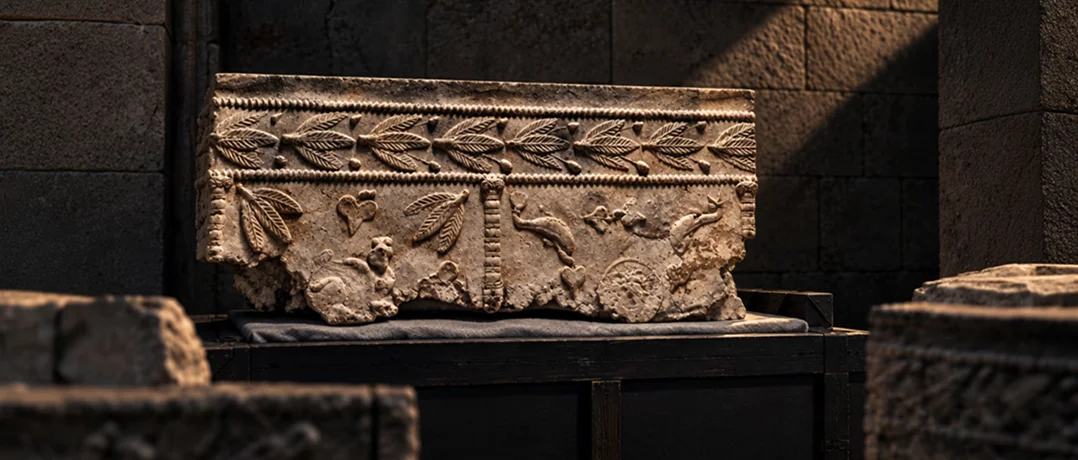
Three fragments of Roman-era lead sarcophagi, looted decades ago from illicit excavations near the southern city of Tyre, have been recovered in the United States and are now on their way home to Lebanon. The pieces, dating to between the 2nd and 3rd centuries A.D., were handed over at a ceremony in New York, following a joint investigation between Lebanese authorities and the FBI that traced the panels back to Tyre's ancient sarcophagus workshops before they were smuggled out of the country and into the international art market.
The Ministry of Culture told The Beiruter that the Directorate General of Antiquities has confirmed the recovery, which came through the Lebanese Consulate in New York, represented by Consul General Talal Daher, following a joint effort between Lebanese authorities and the United States' Federal Bureau of Investigation.
According to the Ministry, "these pieces were illegally smuggled from the city of Tyre and were recovered following efforts by the Directorate General of Antiquities, which is entrusted with protecting cultural property, in cooperation with the Federal Bureau of Investigation." The fragments are expected to be formally handed over to the Ministry of Culture's Directorate General of Antiquities at a later date, following their repatriation from the United States.
A ceremony in New York
The formal handover took place in New York, at a ceremony jointly organized by the FBI's Art Crime Team and Lebanese diplomatic officials. Daher presided over the event on behalf of Lebanon's Ambassador to the United States, Nada Hamadeh Moawad.
The three recovered fragments date to between the 2nd and 3rd centuries A.D. and, according to the FBI, "display distinctive features typical to the workshops of Tyre in south Lebanon", details investigators say confirmed the panels' origin and their status as Lebanese cultural property. Lebanon's Culture Minister, Ghassan Salame, said the fragments "bear distinctive artistic, decorative and technical characteristics typical of workshops that produced lead sarcophagi in Tyre, which were among the city's active and prolific workshops in antiquity." Investigators believe the pieces were removed from illicit excavations in or around Tyre before being exported out of the country.
A law dating back nearly a century
Lebanon has prohibited unauthorized excavation, sale, and export of antiquities since 1933, a legal framework that has remained the backbone of the country's efforts to combat looting in the decades since. Officials on both sides framed the repatriation as part of a broader, ongoing partnership between the two governments. "Protecting cultural property is about preserving the identity and history of communities around the world," said James Barnacle, Assistant Director in Charge of the FBI's New York Field Office. "Illicit trafficking robs nations of their heritage and fuels criminal networks. The FBI's commitment is unwavering, and we will continue working with partners to ensure cultural treasures remain where they belong."
Daher, speaking at the ceremony, framed the return in broader diplomatic terms. "The dialogue between nations is not only political or economic, it is also deeply human," he said. "It is built on mutual understanding, on recognizing the value in each other's stories. In returning these panels, we affirm that Lebanon's heritage is part of the world's heritage, and that protecting it is a responsibility we all share."
Part of a longer pattern of cooperation
This is not the first such repatriation between the two countries. The FBI previously returned a fenestrated ceremonial bronze axe from Byblos to Lebanon in 2018, and officials indicated that cooperation between the two governments on cultural heritage protection is expected to continue. The effort behind this latest handover involved coordination across the FBI's New York and New Orleans Field Offices, its Law Enforcement Attaché sub-office in Beirut, the NYPD, and the U.S. Department of State.
The FBI's Art Crime Team, established in 2004 in response to a rise in cultural property crimes worldwide, is composed of specially trained agents stationed across the United States. Since its founding, the unit has recovered more than 20,000 items collectively valued at over $1 billion. The Bureau has emphasized that looted artifacts are frequently not identified as stolen until years or even decades after removal from their country of origin, and that current possessors are often several transactions removed from the original theft, inheriting or purchasing items without any knowledge of their illicit origin.
A recovery with added weight
The repatriation arrives at a particularly fraught moment for Tyre's cultural heritage. UNESCO placed the ancient city on its List of World Heritage in Danger this past July, following damage linked to Israeli strikes in the area, a designation that has heightened international attention on the preservation of the city's archaeological legacy. Against that backdrop, the return of these sarcophagus fragments carries weight beyond the individual artifacts themselves, underscoring both the fragility of Tyre's ancient sites and the continued global market for looted material drawn from them.
The FBI has urged the public to remain vigilant regarding antiquities that may have been trafficked into the United States, noting that recovered items are returned to their country of origin regardless of whether a criminal prosecution ultimately follows. For Lebanon, the return of the Tyre fragments stands as a modest but symbolically significant step, a small piece of the country's Roman-era past, recovered from illicit trade and set to make its way home to the Directorate General of Antiquities.
-
-

-
The Beiruter
-
