



Energy expert Roudi Baroudi discusses the Strait of Hormuz crisis, the GCC’s response, regional vulnerabilities, and why diplomacy matters.
Roudi Baroudi: The Strait of Hormuz crisis and the urgent need for diplomacy
Roudi Baroudi: The Strait of Hormuz crisis and the urgent need for diplomacy
By Maurice Matta | October 20, 2026

Reading time: 5 min
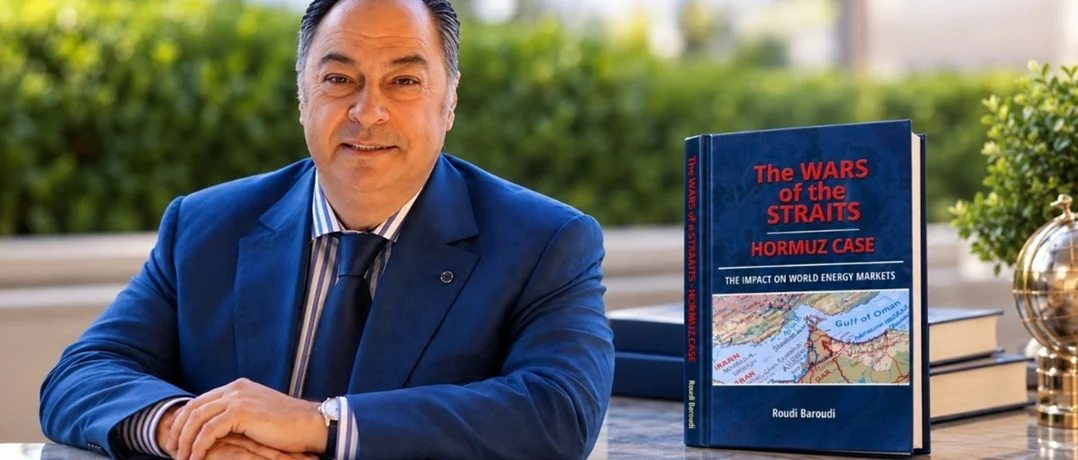
In his book “The Wars of the Straights: Hormuz Case,” energy expert Roudi Baroudi examines how the countries of the region became hostages to a conflict not of their making. Drawing on decades of experience in the Gulf, Baroudi reflects on the consequences of the crisis, the vulnerabilities it has exposed, and the lessons that must be learned. He also addresses the GCC’s response, the risks of further escalation, and the importance of dialogue and diplomacy in preventing future conflicts.
For energy expert Roudi Baroudi, author of “The Wars of the Straights: Hormuz Case,” the book is about how the countries of the region became hostages to a conflict not of their making, and about how we can best prevent this from happening again.
Explaining what led him to write the book, Baroudi says:
“I figured it was a way to salvage something positive from what can only be described as a disaster. Having lived and worked in several Gulf countries at various times over the past five decades or so, I actually helped to plan, build, service, and/or promote several of the oil and gas facilities that have been damaged or destroyed by Iranian missiles and drones. What is more, Qatar has become my second home, and it feels deeply personal when this generous land and its friendly people are subjected to mortal danger. My hope is that while this disaster is still fresh in people’s minds, now is the perfect time to prevent the next one by spreading awareness of – and reinforcing confidence in – the tools we have for the prevention and resolution of armed conflict. Whenever something terrible happens, there are always lessons to be learned.”
Reflecting on those lessons, Baroudi emphasizes the importance of the current international system and the particular significance of the Strait of Hormuz.
“For one thing, whatever the failings of the current international system, it’s the best that anyone has ever come up with. As the title suggests, this is not the first time that belligerents have fought over a narrow waterway. In fact, it’s not even close to the first time that people have fought over this particular strait. What makes Hormuz so special, especially this time, is that its geography encloses an outsize share of the world’s most valuable and sought-after commodities. No one can afford for this to happen again. It is both a logical and a moral imperative, therefore, to redouble efforts aimed at defusing tensions, restoring calm, and preventing recurrence.”
As for how the GCC should respond to the crisis, Baroudi believes the approach must be strategic, professional, competent, and urgent, but not hasty.
“Strategically, professionally, competently, urgently, but not hastily. This entire episode has confirmed just how vulnerable the countries of the Gulf are, and the only responsible way to respond is to start with a full accounting of what transpired. As I state in the book, no one has the right to choke out the global economy, and while that is precisely what Iran has been trying to do, we must do more than simply condemn. We must take a full accounting of the root cause(s) of the conflict, then ask whether anything we do can make a another war more or less likely. Some observers are already suggesting that GCC states scale back their ties to the United States. I disagree. Sudden about-face turns often communicate the very opposite of seriousness decisiveness. Instead, to various extents, Qatar and its neighbors need to examine the facts, then decide whether a rebalancing of their alliances is in order.”
Looking ahead, Baroudi remains cautious about predicting the next developments in the crisis, particularly given the surprises that have already emerged throughout the conflict.
“Given all the surprises we’ve already seen in this conflict, it would be foolhardy to predict what will happen next. There is always the chance of a diplomatic breakthrough, of course, and Qatar has been prominent among those states seeking to mediate between the Americans and the Iranians, but significant gaps remain between the two sides, and mutual trust is virtually non-existent. As though this were not sufficiently grim, we also have to consider that even if the United States accepts some form of peace with Iran, Israel may decide to resume its own attacks. Absent a durable agreement, the current situation is simply not sustainable in the long term, and there are several scenarios that could lead one side or the other to escalate.”
However, this does not necessarily mean that another escalation is inevitable. Baroudi points to the instability of the current situation and the economic consequences that could persist even without renewed hostilities.
“Not necessarily. But the current situation is inherently unstable, and neither side is happy with the status quo, with too many opportunities for friction between the US and Iranian militaries. And frankly, there doesn’t have to be another escalation for the situation to get worse. An extended period of neither war nor peace – just enough to keep oil, gas, and fertilizer prices elevated – would continue to undermine economies around the world, impoverishing billions of people. My fear is that one way or another, we will continue to experience geopolitical instability and economic headwinds. S we must be prepared.”
Ultimately, Baroudi sees dialogue, diplomacy, and international mechanisms as the way forward, while acknowledging the limitations faced by Qatar and other GCC countries.
“There’s no magic bullet. Qatar and the other GCC countries cannot impose a ceasefire, but they stand to sustain even worse damage if and when full-scale hostilities resume. My solution would be to trust in dialogue, diplomacy, and the processes afforded by the various agencies, treaties, and rules of the United Nations. It would be to keep lines of communication open as long as possible, to keep reminding the belligerents of their responsibilities, and to keep imagining a stabler, happier future in which armed conflict is a thing of the distant past.”
