

Russia is withdrawing forces from northeastern Syria as Damascus consolidates power and President Ahmad al-Sharaa heads to Moscow for talks.
Russia alters its military posture in northeast Syria
Russia alters its military posture in northeast Syria
By The Beiruter | January 28, 2026

Reading time: 3 min
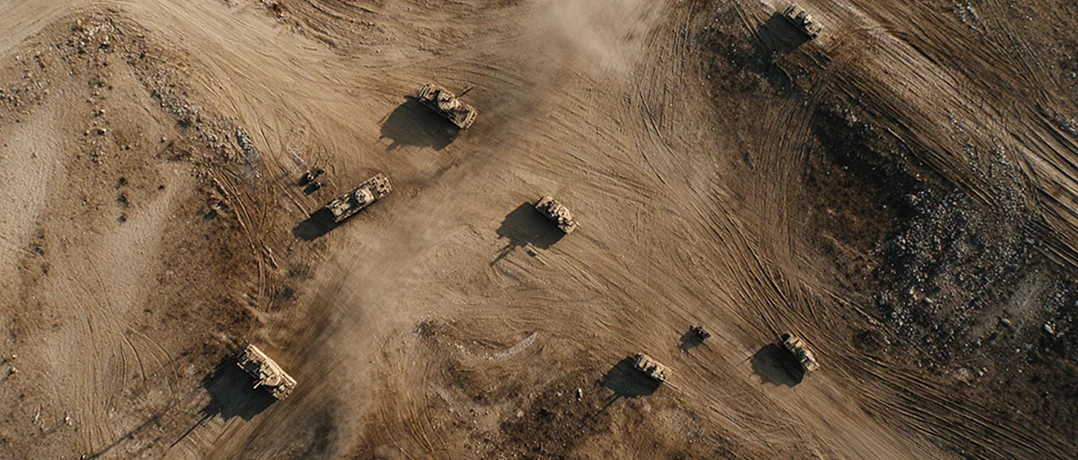
Russian forces have begun withdrawing from northeastern Syria, signaling a notable shift in Moscow’s military posture in the region. The pullback comes after the Kurdish-led Syrian Democratic Forces (SDF) lost much of their territory in an offensive by government forces.
These developments could be seen as part of a broader recalibration of Russia’s role in Syria, aligning with the emergence of interim President Ahmad al-Sharaa’s government in Damascus and a changing balance of power on the ground.
Withdrawal from Qamishli and Hasakah
Reports from Qamishli airport, a key site in northeastern Syria, indicate that Russian troops have been evacuating equipment, military vehicles and armored units over the past week. Living quarters once occupied by Russian forces were found largely empty, with only scattered personal items and fitness equipment left behind. SDF fighters stationed at the base confirmed the withdrawal, noting that some of the equipment was transported to Russia or to Moscow’s Hmeimim airbase on the Syrian coast.
The evacuation also extended to positions in Hasakah province, where tensions between the SDF and Syrian government forces have been high. Intensified convoy movements were reported, including sealed crates, radar systems, missile defense units and helicopters being redeployed from Qamishli to western Syria or returned to Russia. Russian flags remained at the airport, along with 2 aircraft bearing Russian markings, indicating a continued but reduced presence.
A changing relationship with Damascus
The withdrawal coincides with the consolidation of power by the new Syrian government under President Sharaa, who assumed office after former President Bashar al-Assad fled the country during the December 2024 rebel offensive, code-named “Operation Deterrence of Aggression.” While Moscow had historically been a close ally of Assad, it did not intervene to support him during the 2024 uprising but instead granted him asylum.
Despite their past opposition, Sharaa’s government has adopted a pragmatic approach toward Russia, retaining cooperation while asserting control over northeastern Syria. Informed Russian sources indicate that the pullback was carried out at Damascus’ request after government forces expanded their control, signaling that a heavy Russian presence in the northeast is no longer necessary.
Sharaa’s Moscow visit and strategic implications
President Sharaa is scheduled to visit Moscow today to meet with Russian President Vladimir Putin, underscoring the evolving bilateral relationship. The visit is expected to cover the current situation in Syria, regional developments and the restructuring of Russian military arrangements at the Hmeimim and Tartous bases. Discussions may also focus on Russia’s logistical and military support, including the rehabilitation of the Syrian army and the continued supply of Russian-made equipment.
The talks come amid ongoing ceasefire arrangements between the SDF and government forces, which have been extended to support US-facilitated transfers of detained ISIS militants to Iraq. From here, Russia’s withdrawal and Sharaa’s visit could be seen as coordinated moves to strengthen Damascus’ authority in the northeast while maintaining Russian strategic influence along the coast.
In conclusion, Russia’s gradual pullback from northeastern Syria reflects a recalibration of its role in the country, balancing reduced direct involvement with continued strategic oversight from its coastal bases. For the SDF, the withdrawal introduces uncertainty over security and territorial control, while for Damascus, it reinforces the government’s authority and capacity to negotiate directly with international partners. Meanwhile, Sharaa’s visit to Moscow signals a continuation and reaffirmation of the new phase in Syrian-Russian relations, highlighting pragmatic cooperation, military restructuring and long-term strategic alignment in a rapidly evolving regional landscape.
-
-

-
The Beiruter
-
