

Russia reinforces its Syrian military foothold through renewed resupply missions, sustaining Khmeimim and Tartus bases amid post-Assad regional shifts developments.
Russia reinforces its Syrian foothold

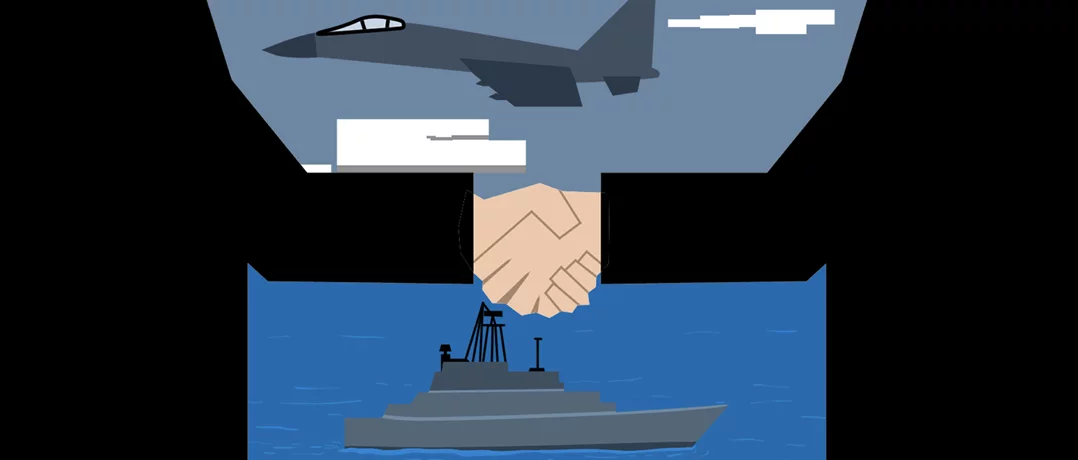
Recent reports indicating that Russia has resumed military resupply operations to its air base in Syria suggest that Moscow is determined to preserve its long-term strategic position in the Middle East despite the collapse of the Bashar al-Assad regime. Indeed, a Russian cargo vessel delivered military equipment to Syria’s Khmeimim Air Base through the port of Tartus in what appears to be the first major resupply mission since Assad’s removal from power.
The development is significant not only because it demonstrates Russia’s continued military presence in Syria, but also because it reveals the evolving relationship between Moscow and Syria’s new leadership. At a time when many observers expected Russia’s influence in the country to diminish, recent events suggest that the Kremlin has successfully adapted to the post-Assad political landscape and remains committed to safeguarding its strategic interests in the Eastern Mediterranean.
The resupply mission and its strategic message
According to the aforementioned reports, the Russian cargo ship Sparta departed from St. Petersburg in March and arrived at the Syrian port of Tartus in May while being escorted by Russian naval vessels for much of its voyage. U.S. officials cited in the reports believe the ship was transporting equipment intended for Khmeimim Air Base, Russia’s largest military installation in Syria.
The mission carries importance beyond the delivery of military supplies. It serves as a clear signal that Russia has retained operational access to its military infrastructure despite the dramatic political transformation that followed Assad’s downfall. The shipment demonstrates that Moscow is not merely preserving a symbolic presence but is actively sustaining the logistical capabilities necessary for long-term military operations.
For Russia, maintaining regular supply lines is essential to ensuring that its forces remain capable of operating effectively in Syria. The resupply operation therefore represents a practical affirmation of Russia’s intention to remain a key actor in the region.
The importance of Khomeini and Tartus
Russia’s military presence in Syria is centered around 2 critical facilities: Khmeimim Air Base in Latakia Province and the naval logistics facility at Tartus.
Khmeimim serves as Russia’s primary air operations hub in the Middle East. Since its establishment during the Syrian civil war, the base has enabled Moscow to project military power across the region and support operations beyond Syria’s borders. It has also functioned as a major logistical center connecting Russian activities in the Mediterranean, North Africa, and parts of the broader Global South.
Tartus, meanwhile, provides Russia with its only naval facility on the Mediterranean Sea. The port allows Russian warships to operate far from their home bases and grants Moscow a strategic maritime foothold in one of the world’s most important geopolitical regions.
Together, these facilities significantly expand Russia’s military reach. Losing them would have represented a major setback for Moscow’s global ambitions. Their continued operation therefore highlights the strategic value Russia places on its Syrian presence.
Moscow’s adaptation to the post-Assad era
The survival of Russian military facilities after Assad’s fall was far from guaranteed. The new Syrian leadership emerged from forces that had previously fought both the Assad government and Russian-backed military campaigns during the civil war. Many analysts initially expected relations between Damascus and Moscow to deteriorate sharply.
However, developments over the past year suggest a more pragmatic reality. Rather than pursuing confrontation, Syria’s new leadership appears to have maintained channels of communication with Russia and recognized the potential benefits of continued cooperation.
This shift reflects mutual interests. Syria remains economically fragile after years of conflict and reconstruction challenges. Russia continues to possess political influence, economic resources, and military capabilities that may contribute to stabilizing certain sectors of the country. For Moscow, preserving its bases safeguards a strategic investment that has taken years and substantial resources to build.
As a result, both sides appear to have adopted a pragmatic approach based on shared interests rather than ideological alignment.
Regional and international implications
Russia’s ability to maintain its military foothold in Syria has broader geopolitical implications.
First, it demonstrates Moscow’s resilience despite major political setbacks. The loss of Assad represented a significant challenge to Russian influence, yet the Kremlin has managed to retain one of its most valuable strategic assets in the region.
Second, the development highlights the limits of Western expectations regarding Russia’s withdrawal. Some policymakers had hoped that political change in Damascus would automatically lead to the closure of Russian military facilities. Instead, the new Syrian authorities appear willing to preserve relations with multiple international partners, including Russia.
Third, the continued operation of Russian bases enhances Moscow’s capacity to project influence beyond Syria. The facilities support Russian activities in the Mediterranean, Africa, and other regions where Moscow seeks to maintain political and military engagement.
For the United States and its allies, the resupply mission underscores the reality that Russia remains an important actor in Middle Eastern security affairs despite broader geopolitical tensions elsewhere.
Challenges facing Russia’s presence
Although Russia has successfully maintained access to its Syrian bases, challenges remain.
The political environment in Syria continues to evolve, and future governments may reassess existing military arrangements. Economic constraints, international sanctions, and shifting regional alliances could also complicate Moscow’s efforts to sustain a long-term presence.
Furthermore, Russia must balance its commitments in Syria with competing military and strategic priorities elsewhere. Maintaining overseas military infrastructure requires considerable financial and logistical resources, particularly under conditions of international pressure.
Consequently, while Russia’s position appears secure for the moment, its long-term sustainability will depend on continued cooperation with Damascus and the broader regional environment.
Hence, the continued operation of the Khmeimim and Tartus bases confirms that Russia remains determined to maintain its role as a major regional power. More importantly, it suggests that the post-Assad era has not diminished Moscow’s strategic relevance in Syria. Instead, Russia appears to be transitioning from reliance on a specific regime to a broader, more flexible relationship with the Syrian state itself.
-
-

-
The Beiruter
-
