



Russia quietly bolsters Iran’s war effort through intelligence-sharing, satellite imagery, and drone technology, enhancing Tehran’s operational effectiveness while maintaining plausible deniability and avoiding direct confrontation with the US.
Russia’s quiet hand in Iran’s war effort

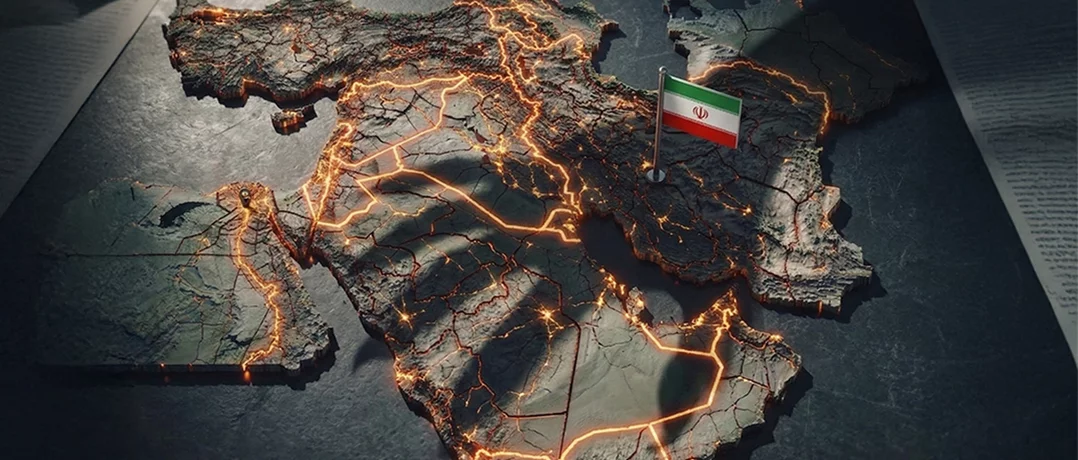
Since the outbreak of the current regional armed conflict involving Iran, the United States (US), and Israel, growing attention has focused on the role of Russia as a strategic enabler of Tehran’s military capabilities.
While Moscow has publicly denied direct involvement, multiple intelligence reports and media investigations suggest a pattern of indirect yet meaningful support. This assistance, ranging from intelligence-sharing to drone technology cooperation, appears to have enhanced Iran’s operational effectiveness without crossing the threshold into direct confrontation with Washington.
Intelligence sharing and satellite capabilities
One of the most significant forms of reported Russian support to Iran lies in the sphere of intelligence. According to several Western media reports, as well as American energy expert and former diplomat Amos Hochstein, Moscow has provided Tehran with detailed intelligence on the positions of US forces and allied assets across the Middle East. This includes information on military bases, naval deployments, and aerial movements; data that would otherwise be difficult for Iran to obtain independently.
A key component of this support is satellite imagery. Iran possesses only a limited number of military-grade satellites, restricting its ability to conduct real-time surveillance and targeting. Russian satellite capabilities, which have been refined during the Russia-Ukraine War, offer a substantial upgrade. Access to such imagery enables Iran to track high-value targets with greater precision and to plan operations based on reliable, up-to-date battlefield information.
Analysts describe this intelligence support as an “enabler” rather than a decisive factor. It does not fundamentally alter the balance of power but significantly improves Iran’s targeting accuracy; particularly in strikes against US assets.
Drone technology and tactical expertise
Beyond intelligence, Russia has reportedly transferred advanced technology related to unmanned aerial vehicles (UAVs), particularly enhancements to Iran’s domestically produced Shahed drones. These upgrades are believed to include improved guidance systems and targeting mechanisms, increasing both accuracy and operational efficiency.
This cooperation reflects a reversal of earlier dynamics in the Russia-Iran relationship. During the early stages of the war in Ukraine, Iran supplied Russia with large numbers of Shahed drones, which were widely used by Russian forces. Since then, Russia has developed its own production capabilities for these drones while simultaneously refining their performance on the battlefield.
Now, Iran appears to be benefiting from Russia’s battlefield experience. Reports indicate that Moscow has provided tactical advice on drone deployment, including optimal flight altitudes, swarm tactics, and strike coordination. Such expertise, drawn from extensive combat use in Ukraine, allows Iran to maximize the effectiveness of relatively low-cost systems against more advanced adversaries.
Strategic motivations behind Russian support
Russia’s decision to assist Iran is driven by a combination of strategic, economic, and geopolitical considerations.
First, supporting Tehran allows Moscow to challenge US influence in the Middle East without engaging directly in conflict. By enhancing Iran’s capabilities, Russia introduces greater uncertainty and cost for Washington and its allies.
Second, the war in the Middle East diverts Western attention and resources away from Ukraine. As the US reallocates military assets, such as air defense systems and interceptors, to the region, pressure on Russian forces in Ukraine may ease. This indirect benefit aligns with Moscow’s broader objective of reshaping the strategic environment in its favor.
Third, rising energy prices resulting from regional instability provide an economic advantage for Russia, a major oil and gas exporter. Higher revenues help sustain its war effort and mitigate the impact of Western sanctions, even wavering them altogether.
Finally, the partnership with Iran reflects a broader alignment among states seeking to counterbalance US global influence. While not a formal alliance, the relationship has deepened significantly since 2022, evolving into a pragmatic and mutually beneficial partnership.
Denials, ambiguity, and US response
Despite mounting evidence, Russia has categorically denied providing intelligence or military support to Iran. Kremlin officials have dismissed such reports as false, highlighting Moscow’s official stance in favor of de-escalation.
This ambiguity serves a strategic purpose. By avoiding open acknowledgment, Russia maintains plausible deniability, reducing the risk of direct confrontation with the USs. At the same time, the lack of transparency complicates Washington’s ability to formulate a clear response.
Limits of the Russia-Iran Partnership
Despite its growing depth, the Russia-Iran partnership remains limited by several factors.
Crucially, there is no mutual defense agreement obligating either side to intervene militarily on behalf of the other. This distinguishes their relationship from formal alliances (such as NATO) and underscores its pragmatic nature.
Russia also faces material constraints. Its military-industrial base is heavily engaged in Ukraine, limiting its ability to supply large quantities of advanced weaponry. As a result, its support to Iran is likely to remain focused on intelligence, technical assistance, and limited technological transfers rather than major arms shipments.
Moreover, Moscow has an interest in maintaining working relations with other regional actors, including Gulf states and even Israel. Direct involvement in the conflict would risk undermining these relationships and triggering a broader confrontation with Washington.
Hence, Russia’s support for Iran since the start of the war illustrates a carefully calibrated strategy: provide enough assistance to strengthen a partner and complicate US operations, but stop short of direct military involvement. For Russia, the objective is not to decisively alter the outcome of the conflict, but to expand its influence, extract economic benefits, and divert Western attention from Ukraine.
-
-

-
The Beiruter
-
