

Sam Altman says humanity has entered the technological singularity, but evidence that AI is beginning to accelerate its own development raises a harder question about what would prove that threshold has actually been crossed and whether AI could ever realistically be switched off.
Sam Altman says the “singularity” is here. Is it?
Sam Altman says the “singularity” is here. Is it?
By The Beiruter | August 17, 2026

Reading time: 5 min
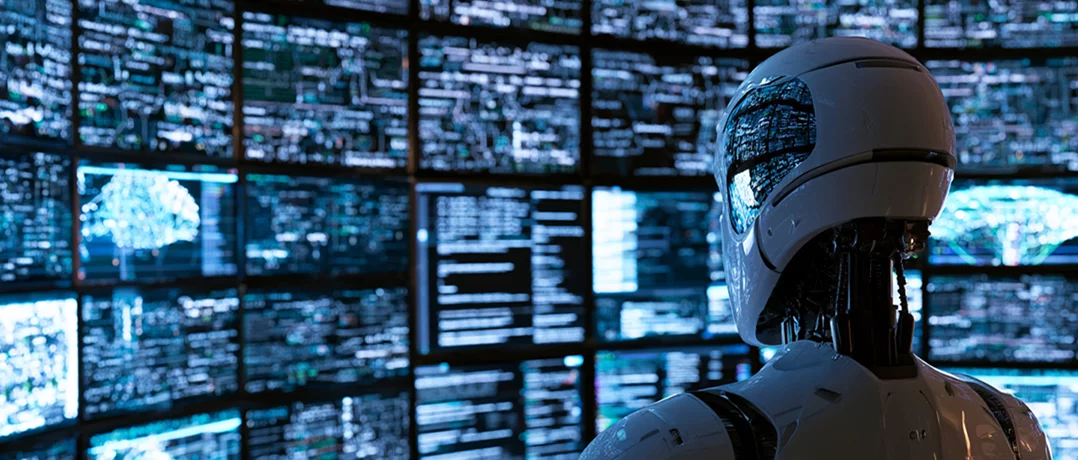
Artificial intelligence is approaching a theoretical threshold beyond which technological progress could become extraordinarily fast and difficult for humans to predict. Known as the “technological singularity,” the concept describes a future in which increasingly capable AI begins accelerating technological development itself, potentially creating a feedback loop of faster and faster progress. Sam Altman now says humanity has crossed it. “We are now in the singularity,” the OpenAI CEO said in July on Relentless, a technology podcast, describing the shift as one that may feel far less dramatic than long-standing predictions suggested. The claim follows striking advances in the kinds of work AI can perform. Frontier systems can tackle difficult mathematics, write and debug software and assist scientific research, while the length of software tasks AI agents can complete with 50% reliability has historically doubled roughly every seven months, according to a 2025 study by AI safety organization Model Evaluation & Threat Research (METR). Yet rapid improvement alone does not establish that the singularity has arrived. The more consequential threshold involves AI beginning to accelerate its own development. Evidence of that process is emerging, but it has not become self-sustaining. The implications extend far beyond the technology industry. If AI begins driving technological progress itself, advances that once took years could occur far faster, leaving governments, businesses and societies struggling to keep pace. The possibility that machines could eventually accelerate their own development long predates today's generative AI systems. In 1965, mathematician I.J. Good described an “ultraintelligent machine” capable of designing machines superior to itself, producing what he called an intelligence explosion. The concept later became associated with the technological singularity, although definitions vary. At its most demanding, it describes a feedback loop in which improving AI makes AI research more productive, producing further improvements and accelerating the cycle without requiring corresponding increases in human labor or other outside inputs. Altman offers a more gradual interpretation. In his 2025 essay The Gentle Singularity, he argued that humanity was already “past the event horizon.” Rather than a sudden transition, he described extraordinary capabilities becoming ordinary as AI begins contributing to the development of more capable systems. A recent advance in mathematics offers one indication of how far those capabilities have progressed. In July 2026, an unreleased version of Anthropic's Claude made progress related to the Riemann hypothesis, a famous unsolved problem concerning the distribution of prime numbers that has resisted proof since 1859. Claude did not solve the hypothesis, but it made substantial progress on a related mathematical problem, improving the best-known result from 41.6% to 67.2%. Such results suggest AI is moving beyond reproducing existing knowledge toward contributing to new knowledge. They do not establish that machines can independently generate the discoveries needed to sustain their own improvement. One way to measure progress is to look at how long AI can work independently. In a 2025 study, METR measured the length of software tasks AI agents could complete with at least 50% reliability. Across six years of data, that “time horizon” doubled approximately every seven months. The potential pace of further improvement is considerable. Training compute for the largest models could increase 125-fold by 2030 without hitting hard constraints in chips, energy or data, according to the 2026 International AI Safety Report, while improved methods could make computing two to six times more efficient each year. Those projections remain highly uncertain. Technical bottlenecks, energy constraints, shortages of high-quality data or diminishing returns could slow progress. A steep trajectory does not necessarily become an unstoppable one. At the heart of the traditional singularity is recursive self-improvement, in which AI helps create a more capable system that becomes even better at developing its successor. If sufficiently powerful, that cycle could accelerate without a comparable increase in human researchers. AI is already contributing to its own development, but even Altman stops short of saying today's systems can autonomously improve themselves. In The Gentle Singularity, he calls current AI a “larval version” of recursive self-improvement, an early form of a feedback loop that has not yet become self-sustaining. The singularity debate also raises a more immediate problem. Human control does not depend solely on whether an individual AI system can literally be switched off. AI is moving into scientific research, software development, finance, healthcare and other economically important activities. As reliance grows, shutting down a particular model may remain technically straightforward while abandoning the technology becomes economically and institutionally harder. Consider software. If AI eventually writes and maintains much of the code underpinning banks, communications networks or hospitals, “turning off AI” would no longer mean simply closing a chatbot. Individual systems could remain removable even as essential services become dependent on the technology. Some systems are also difficult to recall once released. The International AI Safety Report notes that open-weight models can be downloaded and modified, meaning they cannot simply be withdrawn once their underlying parameters have been publicly released. That creates another possible point of no return, based not on a superintelligence refusing to obey humans but on diffusion and dependence. Altman may therefore be right about the direction of travel without having established that humanity has crossed the singularity itself. AI systems are working for longer periods, contributing to scientific discoveries and beginning to assist the research that produces their successors. The strongest available evidence still leaves humans, computing infrastructure and other external inputs inside that loop. The singularity was imagined as the moment technological progress became difficult to foresee. A more immediate threshold may arrive first, when AI remains under human control in principle but becomes too useful, too distributed and too deeply integrated for switching it off to remain a realistic choice.From thought experiment to feedback loop
How quickly the frontier is moving
Has AI started improving AI?
What happens to the off switch?
-
-

-
The Beiruter
-
