



As Syria moves to reassert control over former SDF-held areas, Kurdish officials describe the ceasefire as politically driven but vulnerable, citing Turkish involvement, unresolved security issues, and limited trust in implementation.
SDF’s presence declines following ceasefire agreement
SDF’s presence declines following ceasefire agreement
By The Beiruter | January 19, 2026

Reading time: 5 min
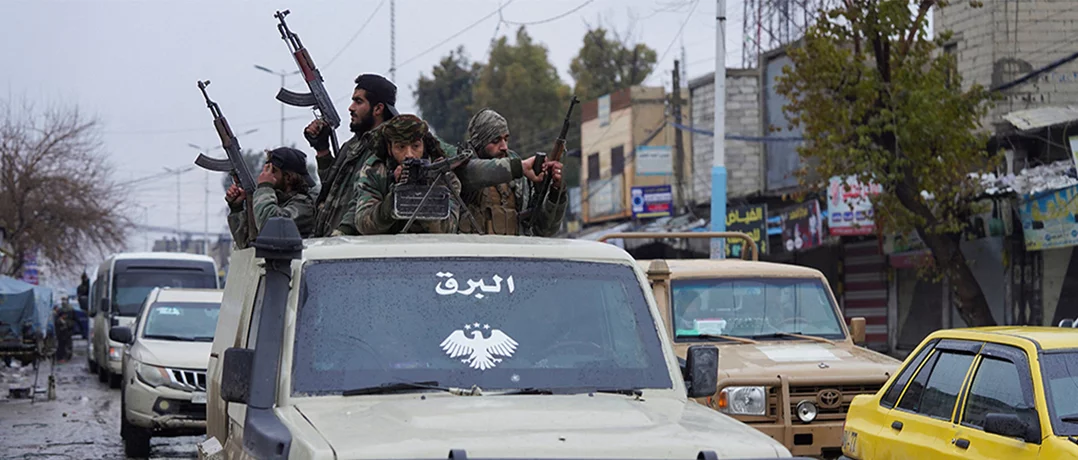
The deal, confirmed by both sides and backed by regional and international actors, marks a turning point in Damascus’ long-running effort to restore sovereignty over the country’s northeast. After years of de facto division, the agreement reshapes Syria’s political, military and economic landscape.
In order to get accurate and crucial intel regarding SDF’s perspective and stance, The Beiruter reached out to Leila Moussa, the representative of the SDF Council.
Challenges ahead
Despite the celebratory scenes in Raqqa, significant challenges remain. The agreement lacks a detailed timeline, and its phased implementation will test trust between former adversaries. Sensitive issues, including the management of Islamic States (IS) detainees and camps, security coordination with local Arab tribes and the fate of displaced civilians, require careful handling to avoid renewed instability. Moreover, while a similar agreement was reached on 10 March 2025, the latter soon faltered and failed to achieve the intended integration and de-escalation.
In an exclusive interview with The Beiruter, Leila Moussa, the representative of the SDF Council, stated that the recent ceasefire agreement between the Syrian government and SDF was the result of international pressure aimed at preventing further civilian casualties. She stressed that the SDF accepted both the ceasefire and the March 10 agreement out of conviction that the Syrian crisis is fundamentally political and can only be resolved through dialogue, negotiation and diplomatic means, rather than militarization or a return to civil war.
Moussa warned, however, that the ceasefire remains fragile due to the Syrian government’s lack of genuine commitment, ongoing media incitement, particularly against Hasakah, and continued violations on the ground, which leave the agreement vulnerable to collapse.
Regarding SDF commander Mazloum Abdi’s visit to Damascus, she noted that outcomes would depend on what the negotiating delegation ultimately announces, as discussions are still ongoing. She attributed the recent military escalation, especially in Ashrafiyeh and Sheikh Maqsoud, to direct Turkish involvement, describing it as a clear breach of prior understandings and a trigger for widespread violence and civilian casualties.
Moussa stressed the need for stronger international guarantees, calling for an active United Nations role to enforce ceasefires and protect all Syrian components. She also highlighted ongoing engagement with the US administration, urging an impartial approach that prioritizes Syrian national interests. Furthermore, she cautioned that continued violence and incitement threaten Syria’s social fabric and regional stability, urging Syrians to reject sectarianism and build the future on coexistence and inclusive governance. When asked about the direction of current displacement due to the recent conflict, Moussa noted that displacement is taking place inside the country and not to neighboring countries (including Lebanon).
From escalation to ceasefire
The ceasefire follows weeks of heightened tensions that culminated in a rapid government military push into SDF-held areas. Clashes in eastern Aleppo earlier this month exposed the fragility of previous understandings (namely the agreement reached on 10 March 2025, which included commitments to a ceasefire, integration of the SDF and DAANES institutions into the Syrian state as well as and the safe return of displaced people), prompting Damascus to advance toward Raqqa and Deir Ezzor. Faced with mounting pressure, the SDF withdrew from key positions after initial confrontations, paving the way for negotiations aimed at halting further bloodshed.
Meanwhile, SDF commander Mazloum Abdi confirmed acceptance of the agreement, stating that his forces would pull out of Raqqa and Deir Ezzor to prevent escalation. Syria’s Defense Ministry subsequently ordered an immediate halt to fighting along all front lines, underscoring the seriousness of the ceasefire and the intent to stabilize the situation.
Reasserting control over strategic regions
At the core of the ceasefire agreement (which includes 9 Articles) is the transfer of control over Raqqa and Deir Ezzor (2 Arab-majority provinces rich in oil, gas and critical infrastructure) to the Syrian state. Government forces have already secured major assets, including the Tabqa dam on the Euphrates and the al-Omar oil field (considered to be Syria’s largest). These sites are not only economically vital but also symbolically significant, representing the restoration of central authority over resources that had funded parallel governance structures for years.
The return of border crossings, energy facilities and dams to state control is expected to strengthen Damascus’ fiscal position at a time when reconstruction needs remain immense; especially as Sharaa remains determined to benefit from state assets rather than foreign loans. It also reduces the likelihood of SDF from exploiting strategic assets outside the state framework.
It should be noted that for years, the Syrian government (during the rule of the Assad regime) has been unable to assert its control over the Euphrates River (especially on its east bank) given SDF’s presence. Today, however, the government managed to seize control of this strategic location.
Dismantling the SDF and military integration
A key pillar of the agreement involves dismantling the SDF as an independent military force and integrating its fighters into Syria’s army and security services on an individual basis. Senior SDF military and civilian figures are expected to assume roles within state institutions, a move framed by Damascus as inclusive rather than punitive.
The emphasis on individual integration, rather than maintaining distinct ethnic or regional units, reflects the government’s insistence on a unified national military. Syrian officials have repeatedly rejected the notion of parallel armed formations, arguing that durable state-building requires a single, cohesive chain of command.
Kurdish rights and political reassurances
To ease Kurdish concerns, President Ahmed al-Sharaa has taken symbolic and legal steps to recognize Kurdish rights. Measures include strengthening cultural and linguistic recognition and signaling political inclusion at the provincial level, particularly in Hassakah, the heartland of Syria’s Kurdish population. Under the agreement, Hassakah’s civilian administration will be integrated into Damascus’ official institutions, while assurances have been made regarding local representation and participation in national elections.
These gestures are widely seen as confidence-building measures designed to reassure Kurdish communities that reintegration will not come at the expense of their identity or civic rights. This came following Sharaa’s issuing of a presidential decree affirming that Syrian citizens of Kurdish origin are an integral and original part of the Syrian people, and that their cultural and linguistic identity is an inseparable component of Syria’s inclusive national identity. The Kurdish administration in Syria’s north and northeast responded by stating that it was “a first step, however it does not satisfy the aspirations and hopes of the Syrian people.”
International and regional dimensions
The United States (US) played a notable facilitative role, with US Special Envoy to Syria Tom Barrack praising the agreement as a pivotal step toward a unified Syria. Washington, long a backer of the SDF in the fight against ISIS since 2015, has increasingly aligned with Damascus since the political transition of late 2024, prioritizing stability and counterterrorism cooperation.
Regional actors have also weighed in. Türkiye (a longtime ally of Hay’at Tahrir al Sham, which is now primarily leading Damascus) welcomed the deal, expressing hope that it would enhance security and preserve Syria’s territorial unity. Ankara’s support could be understood through its past-present attempt to crackdown on Kurdish sentiments for self-determination in Türkiye and the region.
Therefore, the convergence of international support adds weight to the agreement, increasing the likelihood of sustained implementation.
In conclusion, the ceasefire between Damascus and the SDF represents more than a pause in fighting; it is a strategic recalibration of Syria’s internal order. By reclaiming territory, resources and authority through a blend of military pressure and political compromise, the Syrian state has taken a decisive step toward an enforced reunification. Whether this moment evolves into lasting stability will depend on faithful implementation, genuine inclusion and the ability of all parties to move beyond years of fragmentation toward a shared national future.
-
-

-
The Beiruter
-
