



In the village of Remhala, Charles Nassar has transformed fragments of war into works of art. Through Shazaya Museum, the artist preserves a part of Lebanon’s history, turning painful memories into a space for reflection, resilience, and healing.
Shazaya museum.. Turning the pain of war into art
Shazaya museum.. Turning the pain of war into art
By Yara Saliba | November 01, 2026

Reading time : 5 min
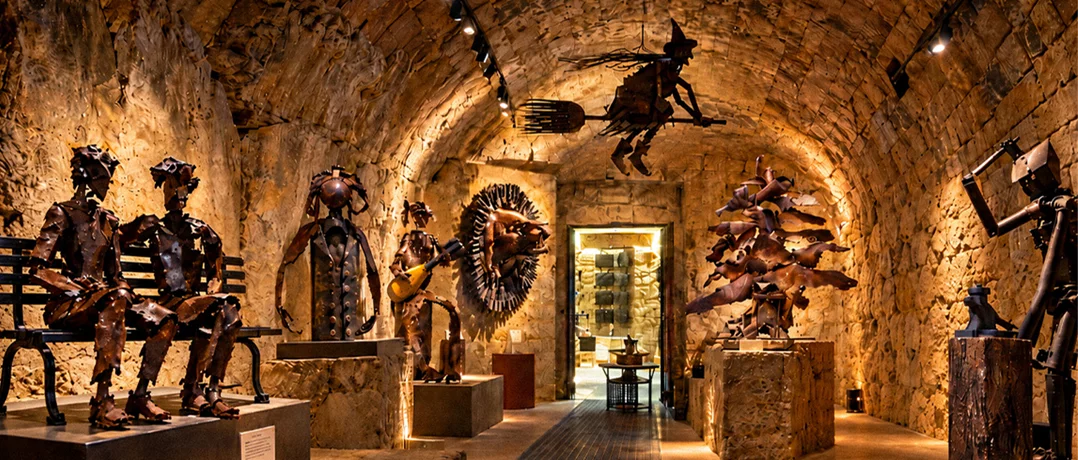
Lebanon has endured years of war and destruction, leaving lasting scars on generations of Lebanese people. From the Civil War to the July War and the more recent conflicts, each has left behind painful memories and experiences that have affected our lives. In the village of Remhala in the Aley District, a man named Charles Nassar has transformed this exact pain into art.
At Shazaya Museum (the Museum of Fragments), what began as a young boy’s passion for collecting has evolved into a space where visitors can explore and commemorate the history Lebanon has gone through.
Where it all started
Charles Nassar’s journey as an artist and the founder of Shazaya Museum began long before the museum opened its doors. At 17, he was forced to leave his village during the civil war and moved to Beirut, where he spent the following 25 years away from home. His father owned an ironworks beneath their house, where Nassar learned his skills. He also developed an interest in art, so he chose to study drawing and painting instead of following the career path his mother had wanted for him.
The two disciplines eventually came together, creating the artistic practice that would define his museum. During the war, Nassar continued working with his father, which helped them survive those difficult years. Their work also brought him into collecting the physical remains of the bombardment and the fighting.
“We would go down to the shelters and come back up to find destruction in the neighborhood. When we went to repair things, we would find shrapnel. I collected the fragments, put them in my pickup truck and brought them to the workshop,” he recalled during his interview with The Beiruter.
With his background in art, Nassar began exploring the fragments' shapes and their potential as artistic materials. The collection began to take form between 1985 and 1990, but Nassar had no intention of establishing a museum. “I never intended to open a museum. I was just a boy who enjoyed collecting things,” he said. His first creation was a Nativity scene for Christmas. Unable to afford one for his family, he decided to make it himself using available materials, including fragments he had collected.
How the idea came to life
After the wars ended, Nassar returned back and displayed his artworks on a piece of land he owned close to his house in his village. He placed one piece there, followed by another, until people from the village and nearby areas started visiting to see his creations. Their interest encouraged him to consider turning the collection into a museum.
The idea became more concrete after a visit from a representative of the Ministry of Tourism, who encouraged him to apply for official museum status. Nassar gathered the necessary documents from the municipality and submitted his application through the Ministry of Culture. However, the inspection that followed came with several requirements, such as expanding the existing space, providing emergency access, parking, bus access and toilets. So, he decided to put the project aside due to the scale of the work.
It was not until 2020, during the COVID-19 pandemic, that Nassar decided to move forward. With the help of a group of young men, he began excavating the soft, sandy ground, working night after night. This process took a year and a half and they also had to address practical challenges, such as humidity and lighting problems, before the space was ready.
Nassar invited the same inspector who had initially assessed the site to return and see the changes he had made. “She told me, ‘You’re crazy, but you did it,’” he remembered.
Shazaya Museum officially opened in September 2023. But unfortunately, the wars that followed over the next two years prevented the museum from receiving the attention it deserved. Today, it is gradually gaining recognition, especially since it was included in the list of museums participating in Museum Night, an initiative organized by the Ministry of Culture.
Pain buried in the fragments
Nassar said his inspiration came from the fragments themselves and the pain he had endured throughout the years. “This was my pain, and I tried to represent it in my art,” he explained. “During the war, my work was the only thing that helped me survive, so I started expressing my feelings that way.”
Almost everyone who walked through the doors had someone in their family who had been affected by the wars. For many Lebanese, particularly those who had left the country during the conflicts, the fragments brought back painful memories. Visitors arrived with excitement and curiosity, eager to see what he had created while some came expecting Charles to remind them of the past and its darkest days. What they did not expect was to discover how a painful memory could be transformed into something meaningful.
As Nassar shared with complete sincerity,
The pain never disappears, it stays with you forever, so I had to find a way to express what I was carrying inside.
Despite everything, Charles Nassar’s work stands as a testament to resistance and resilience. By transforming fragments of war into art, he brings to life a reality that many Lebanese people have been struggling to face.
-
-
-
Yara SalibaJunior Writer/Translator
-
