

Retired Lebanese General Johnny Khalaf assesses whether restoring compulsory military service could strengthen Lebanon or deepen existing political and economic challenges.
Should Lebanon restore conscription?

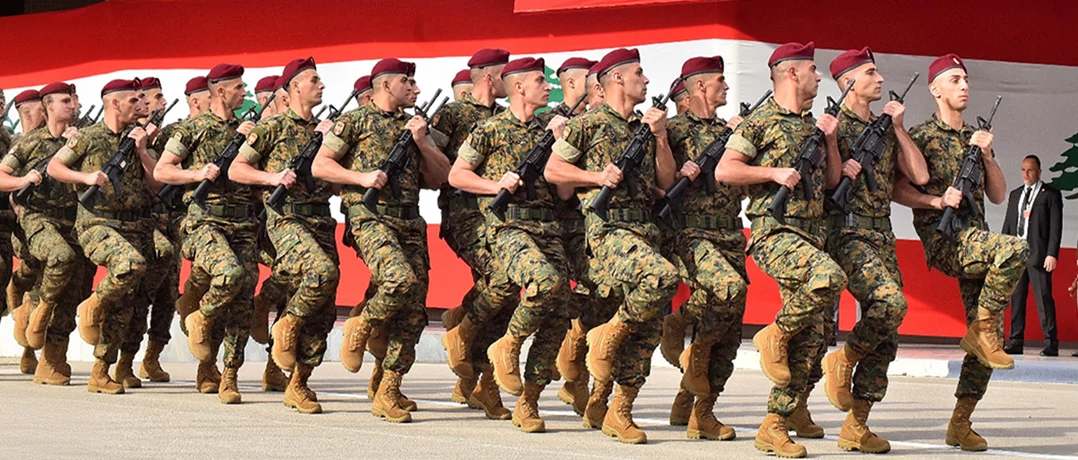
The debate over restoring compulsory military service in Lebanon has resurfaced repeatedly over the past several years, particularly whenever national security, state authority, or youth engagement become central public concerns. Although mandatory military service was officially suspended in 2007, periodic proposals to revive it have continued to divide political parties, military figures, and the wider public.
As the country celebrates Army Day, The Beiruter reached to retired Lebanese General Johnny Khalaf as it has become essential to reopen a broader conversation about whether compulsory service could reinforce national cohesion, strengthen the Lebanese Armed Forces (LAF), and cultivate civic responsibility, or whether it would instead place additional pressure on an already fragile state.
A strategic reserve rather than additional active forces
General Khalaf expressed clear support for the principle of compulsory military service but stressed that its return should not be viewed simply as increasing troop numbers. Instead, he argued that any future program would have to form part of a comprehensive national strategy supported by careful military planning and realistic implementation.
“I support the return of compulsory military service, but only within a comprehensive national vision that is carefully planned and militarily feasible.”
According to Khalaf, one of the principal advantages of mandatory service would be the creation of a trained human reserve that could be mobilized during national emergencies, security crises, or natural disasters. Such a reserve would improve Lebanon’s overall state of preparedness without permanently expanding the size of the standing army.
He further noted that compulsory service would broaden military skills among young citizens while simultaneously providing training in civil defense, emergency response, and relief operations. This dual function, he argued, would enhance the army’s capacity to respond to a wide range of crises extending beyond conventional military threats.
Rather than serving solely as a recruitment mechanism, Khalaf viewed compulsory service as an investment in national resilience capable of preparing citizens to assist state institutions whenever extraordinary circumstances arose.
National integration depends on political consensus
One of the traditional arguments in favor of military conscription has been its potential to foster national unity by bringing together young people from different religious, political, and regional backgrounds. Khalaf acknowledged this objective but cautioned against assuming that it could be achieved automatically.
He argued that compulsory service could indeed create a common space where Lebanese youth from all communities interacted under equal conditions, helping reduce stereotypes and strengthen loyalty to state institutions rather than sectarian identities. However, he stressed that such success depended entirely on fairness and equal treatment. “If implemented fairly and without discrimination,” he said
“Compulsory service could become a meeting point for young people from all regions and sects, strengthening their sense of belonging to the state and reducing preconceived divisions.”
Khalaf explained that Lebanon’s unique political reality made this objective considerably more complicated than in many other countries. The existence of competing political loyalties and armed actors outside state institutions remained a major obstacle to creating genuine national cohesion through military service alone.
In particular, he observed that the country’s sectarian divisions and the presence of Hezbollah as an influential armed and political force complicated the environment in which compulsory service would operate. For this reason, he maintained that any attempt to restore conscription would first require broad national political consensus across all communities, ensuring that every group viewed the system as impartial and nationally representative.
Financial and institutional challenges
Despite supporting the concept in principle, Khalaf argued that Lebanon currently lacked the practical conditions necessary to implement compulsory military service successfully.
He identified funding as the primary challenge. Reintroducing conscription would require significant investment in training facilities, military infrastructure, instructors, accommodation, equipment, healthcare services, and logistical support. At a time when Lebanon continued to experience severe financial constraints, such expenditures would place additional pressure on state resources.
He also noted that implementation would require extensive political coordination through both the Cabinet and Parliament, making the initiative dependent not only on military planning but also on sustained political agreement “before it could become a national policy.”
Equally important, Khalaf stressed that policymakers would have to consider the economic consequences for young Lebanese. Given the country’s ongoing financial crisis, compulsory service could become an additional social burden if participants were required to interrupt their education or employment without adequate financial support or compensation.
Divided public opinion among Lebanese youth
Khalaf believed Lebanese society remained divided over the issue. Some young people would likely view compulsory service as an opportunity to develop discipline, acquire practical skills, and contribute to national service. Others, however, would regard it as another obstacle at a time when many were already struggling with unemployment, economic uncertainty, and plans to pursue education or careers abroad.
He observed that many Lebanese youths sought opportunities outside the country due to limited economic prospects. Interrupting university studies or delaying entry into the labor market for compulsory service could therefore discourage support for the proposal.
To improve public acceptance, Khalaf suggested that any future program should include tangible incentives rather than relying solely on patriotic appeals. Financial compensation, vocational training, professional certifications, educational benefits, or employment opportunities following completion of service could significantly increase participation and public confidence.
Such incentives, he argued, would help transform compulsory service from an obligation into a meaningful investment in young people’s futures.
A vision that remained premature
Although Khalaf endorsed the long-term concept of military conscription, his overall assessment remained cautious. He concluded that Lebanon’s current political, economic, and institutional conditions made implementation unrealistic in the immediate future.
“At the present time, I do not believe compulsory military service is realistically implementable under Lebanon's current circumstances.”
The army itself, he noted, already faced considerable operational responsibilities and financial pressures. Adding the administrative, logistical, and financial burden of compulsory service under current circumstances would likely prove unsustainable.
He also highlighted that Lebanon remained in a period of political uncertainty, with evolving national and regional dynamics whose long-term consequences had yet to become clear. Under such conditions, he believed restoring compulsory service would require far greater political stability and national consensus than presently existed.
Lebanon’s military conscription experience
Military conscription has long formed part of Lebanon’s modern history. It was first introduced in 1953 before being suspended during the Lebanese War (1975-1990). The system was reactivated in 1993 following the restoration of state institutions after the war and remained in force until its suspension under Law No. 665 in 2007.
During that 14-year period, approximately 250,000 young Lebanese completed compulsory military service, while nearly 12,000 later volunteered for permanent service in the LAF. Recruits underwent military instruction, physical conditioning, civic education, and national awareness programs designed to strengthen discipline and encourage integration among citizens from diverse backgrounds.
Despite recurring discussions, proposals to revive compulsory military service have repeatedly stalled before reaching the implementation stage. A notable attempt emerged in 2020, when then-Defense Minister Zeina Akar floated a revised national service model intended to be more flexible than the previous system. The proposal envisaged multiple service durations, ranging from three months to one year, and expanded the concept beyond traditional military training to include community service, administrative assignments, educational programs, and other public-sector responsibilities. Although the initiative generated considerable public debate, it was never formally adopted.
The issue returned to the political agenda in 2025, when MP Adib Abdel Massih introduced a legislative proposal titled “Service to the Nation.” Instead of reinstating mandatory enlistment, the draft sought to establish a voluntary national service program, allowing young Lebanese to contribute 180 non-consecutive days of unpaid service within military or civilian state institutions. The proposal reflected a shift toward a more flexible and civic-oriented model of national service. Nevertheless, like earlier initiatives, it did not advance to implementation, leaving the future of national service in Lebanon dependent on broader political consensus and state capacity.
In the end, until the required conditions emerge, the discussion is likely to remain an important, but largely theoretical, component of Lebanon’s ongoing debate over state-building and national security.
-
-

-
The Beiruter
-
