

Across the diaspora, Lebanese families navigate Christmas through absence, screens, and enduring emotional ties.
Silence is louder in December

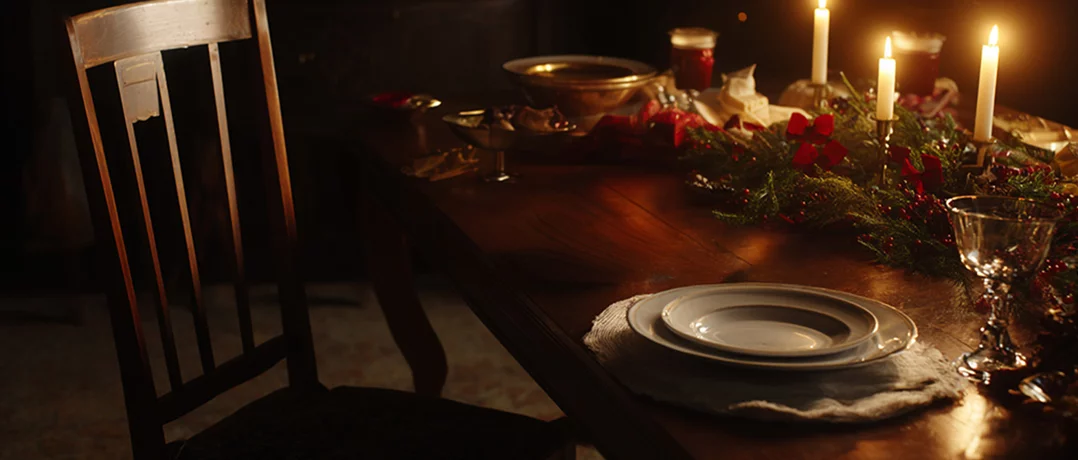
Christmas is meant to be a gathering. A table that expands. A house that grows louder.
For those who stay behind, it still is. But for millions living abroad, Christmas has become something else entirely: a negotiation with distance, memory, and absence.
In the Lebanese diaspora, Christmas is marked by contrasts between time zones, between screens and rooms, between where the body is and where the heart insists on staying. It is a season that sharpens longing instead of softening it. A season that asks difficult questions: How long can you miss a place before it changes? How many holidays can pass before absence becomes routine?
This is not a story about travel delays or festive loneliness. It is about the emotional cost of survival of leaving home to study, to work, to care, to provide, to endure. It is about children who grow up too fast in foreign dorms, mothers and grandmothers who measure time in missed milestones, workers who carry grief across borders, and nurses who offer comfort to strangers while their own families sit an ocean away. Through the voices of Lebanese across generations and continents, this piece traces what Christmas becomes when home is elsewhere, but painfully intact in memory.
Tarek, 16, Germany
Adam now lives in a small town outside Frankfurt. He speaks with a voice steady but young in a way that makes the emptiness around him feel sharper. He has been living in Germany for less than four months, sent by his parents to a boarding school.
“At school everyone talks about going home for Christmas,” he says. “Like it’s normal. They’re counting the days. I’m counting too, but not for the same reason.”
His family will not fly him back. His parents want him to “focus on school.” So, he will stay in the dorms with two other international students who also cannot leave.
“I try to be okay with it,” he continues, “but in the afternoon, right when it gets dark at like 4:30, when I feel a knot in my stomach. Like something is stuck there.” He describes the things he misses most: his mother, the wood in the fireplace of his grandparents’ house in the mountains, the sound of cousins filling every room of the house, laughing too loudly.
“My mom sent me videos of them decorating the tree,” he says. “Everyone is there… except me. They kept saying my name in the video, like ‘this ornament is Tarek’s.’ I watched it, and it made me feel happy but also… I don’t know. Like I disappeared from the picture.”
He says he’s scared of getting used to Christmas without them. “I want to grow, but I don’t want home to stop feeling like home.” On Christmas Eve, he plans to video call his family from his room. “I’ll sit with them on the iPad while they eat,” he says, forcing a smile.
Lara, 23, nurse, Dubai
Every December, the hospital gets busier. People celebrate hard, accidents increase, older patients get lonely and sick. For Lara, the season is double shifts and
“I’ll be working Christmas Eve and Christmas Day,” she explains. “I asked for one of them off, but it wasn’t possible. We’re understaffed.”
She describes the ache of watching her sisters gather in Lebanon while she sits alone in a studio apartment lit by a tiny tree she bought from the supermarket. “When you’re alone on Christmas, you feel like the world is happening somewhere else,” she says. “Like life is moving without you.”
Still, she finds moments of quiet meaning in her work. Last year, she spent Christmas night holding the hand of an elderly man who had no family in the UAE. “He asked me where I was from,” she recalls. “When I said ‘Lebanon,’ he said ‘May God protect your parents.’ I cried in the hallway after.”
This year, she doesn’t know what the night will bring. Maybe chaos, maybe calm. “But maybe giving comfort to someone else is my Christmas,” she says. “Even if no one is giving it to me.”
Habib, 33, Belgium
Habib left Lebanon eight years ago, when his mother was diagnosed with cancer. “I told her I’d go for a year,” he says. “Just enough to pay for her treatment.”
One year became many. She died two years ago. “I wasn’t there when she left,” he adds. “I was working the night shift. My sister called me at 4 a.m. I still hear the sound of the phone.” Since then, Christmas has been a season he approaches cautiously. “People think we get used to being away,” he says. “We don’t. We learn to hide it better.”
He does not see a point in heading to Lebanon for Christmas. “Christmas in Lebanon isn’t about the day. It’s about the smell of the house, the noise, the neighbors knocking on the door with sweets… My mother’s voice warming the whole place.”
He pauses, swallowing the sentence he almost says. Instead, he continues: “Here, the city is beautiful, the lights are perfect. But there is no one to see them with.” He explains that he usually works on Christmas Day. “It’s easier,” he says. “Work doesn’t leave room for thinking too much.”
“I put one angel on my little Christmas tree,” he says, “for my mother. I don’t know if she can see it. But I need it to be there.”
Yvonne, 74, Australia
Yvonne lives in a small house in western Sydney, with a tidy garden and a lemon tree she planted the year she arrived. She came to Australia in 1988 to help her daughter after the birth of her first child. “I said I’d stay six months,” she smiles. “I stayed a lifetime.”
“In Lebanon, Christmas started early,” she says. “The house smelled different from the morning. My mother would wake us up to help. There was always noise. Always someone coming and going.” Her voice slows when she speaks of the children she raised back home, some now grandparents themselves. “My grandchildren there are grown,” she says. “I watched them grow through a screen.”
She has not spent Christmas in Lebanon in over twenty years. The flight is too long and too exhausting for her age. But what hurts most is the feeling of missing small things that can never be replayed.“I missed their first Christmas outfits. Their first questions about Baby Jesus. I missed teaching them how to make maamoul with my hands over theirs.” Every December, she decorates her living room alone. The nativity scene is old, brought from Lebanon in her suitcase decades ago, wrapped in towels.
“I still put it the same way,” she says. “Joseph here, Mary there. I talk to them while I work. I tell them who I miss.” On Christmas Day, friends in Australia comes by for lunch, but the house never fills the way it once did. “It’s beautiful, but it’s not full,” she says simply. “Part of my heart is always set at another table.”
After everyone leaves, she sits with her phone and waits for Lebanon to wake up. “When they call me, it’s night there,” she explains. “I hear the laughter, the clinking of coffee cups. I say ‘Allah yikhallikon’ and then I go to sleep.”She pauses, then adds: “People think grandmothers only miss people. We miss time.”Still, she prepares extra food every year. “In case someone passes by,” she says.
Loneliness should never eat alone.
Christmas ends quietly for those abroad. After the calls are closed, after the last message is sent, after the lights outside are turned off, there is a silence that no celebration fills. It is not dramatic. It lives in kitchens that are too clean, in rooms without echoes, in plates washed for one.
Yet year after year, they light candles for people who cannot see them. They invent rituals out of necessity, because memory, like faith, demands practice.
What binds the diaspora at Christmas is a collective understanding that love can stretch across oceans, that grief can coexist with hope, that belonging does not disappear, it simply migrates.
And maybe this is the brutal truth of Christmas abroad: even in isolation, even in loss, even in distance, people continue to set tables for the lives they are still waiting to return to, because hope, like home, is something you keep alive.
-
-

-
The Beiruter
-
