



Why has Syria’s forgotten Site 99 returned to international attention?
Site 99: Syria’s nuclear legacy

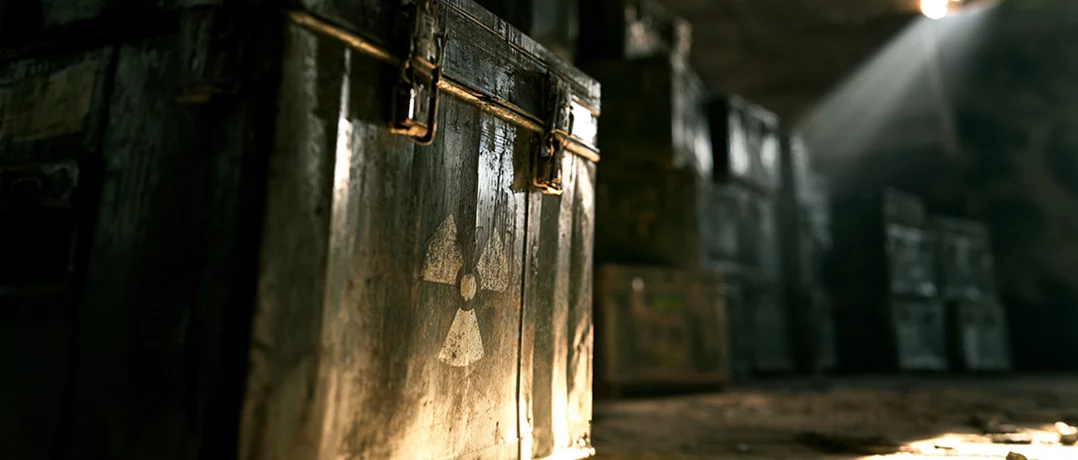
After Israel destroyed Syria’s clandestine Al-Kibar nuclear reactor in 2007, the remnants of Damascus’ secret nuclear program gradually faded from international headlines. Yet today, those remnants have re-emerged as a significant regional security concern. At the center of renewed attention is a little-known facility known as “Site 99,” a storage location containing nuclear material inherited from the Assad era.
The issue gained fresh momentum after the International Atomic Energy Agency (IAEA) confirmed that inspectors had discovered “several tons” of nuclear material at an undeclared Syrian site. The announcement followed an unprecedented decision by Syria’s new government to voluntarily disclose the location to the agency and allow international inspectors access.
The arrangement aims not only to eliminate the remaining legacy of Syria’s covert nuclear ambitions but also to prevent a potentially dangerous confrontation involving Israel, Syria, and even Türkiye.
IAEA discovers “several tons” of undeclared nuclear material
The issue entered a new phase after IAEA Director General Rafael Grossi recently visited Damascus.
Speaking alongside Syrian Foreign Minister (FM) Asaad al-Shaibani, Grossi announced that the agency had successfully inspected an undeclared site after Syria voluntarily informed the IAEA of its existence. “Following your courageous decision to notify us about a site where nuclear material had been stored, we were able to access it,” Grossi said.
He added that the discovery was highly significant because inspectors found
several tons of nuclear material that could be misused.
According to Shaibani, Syria officially informed the IAEA on 17 July about the previously undisclosed location, describing it as part of the legacy left behind by the former Assad government. During Grossi’s visit, IAEA experts collected environmental samples from the site as part of the agency’s verification process.
The Syrian foreign minister stressed that the discovered material does not currently pose a danger, adding that it would remain under the custody of the Syrian authorities while being placed under the safeguards and monitoring mechanisms of the IAEA.
The announcement marked one of the most significant disclosures regarding Syria’s former nuclear activities since the destruction of Al-Kibar.
What is Site 99?
According to American and Israeli officials, Site 99 served as a secure storage facility for nuclear-related material connected to the Al-Kibar project after the reactor’s destruction.
Among the material reportedly stored there is “yellowcake,” a concentrated uranium oxide powder produced during the early stages of uranium processing. Yellowcake is not weapons-grade material and cannot be directly used to build a nuclear weapon. Instead, it represents an intermediate stage in the nuclear fuel cycle that requires extensive conversion, enrichment, and processing before it could become suitable for either civilian nuclear fuel or fissile material for weapons.
Officials also believe that Site 99 contains additional radioactive residues and remnants originating from the Al-Kibar reactor project.
For years, the facility remained largely inactive and attracted limited public attention. However, following the fall of the Assad government, its strategic importance increased considerably as authorities sought to account for nuclear-related assets inherited from the previous regime.
Why has Site 99 become a security concern?
The principal concern surrounding Site 99 is not the immediate prospect of nuclear weapon development. According to United States (U.S.) and Israeli officials, the stored material is insufficient for producing a nuclear bomb in its present form.
Instead, security concerns focus on the possibility that radioactive material could be incorporated into a so-called “dirty bomb;” a conventional explosive device designed to disperse radioactive particles over a localized area. While such a weapon would not generate a nuclear explosion, it could contaminate urban environments, create widespread panic, and require costly decontamination efforts.
Israeli officials reportedly became increasingly concerned after detecting activity around the facility in recent months. Intelligence assessments suggested that Syria’s new authorities might be attempting to access the stored material, while concerns that Turkey could be assisting Damascus in reaching the site have mounted. Moreover, Tel Aviv has consistently maintained that sensitive nuclear material should not remain unsecured inside Syria.
Following the collapse of the Assad regime, Israeli forces reportedly struck the entrances to Site 99 to prevent unauthorized access. Rather than allowing tensions to escalate, the U.S. pursued a diplomatic solution by engaging both Israel and Syria while encouraging the IAEA to resume its technical work inside the country.
The recent inspection by Grossi reflects the success of those diplomatic efforts. Rather than removing the material immediately, the current priority appears to be identifying, verifying, and placing all nuclear material under international safeguards before determining the next steps regarding its long-term disposition.
Although no evidence has emerged that the new Syrian government intended to weaponize the material, the uncertainty surrounding the facility heightened regional tensions.
The origins of Syria’s secret nuclear program
The story of Site 99 cannot be understood without revisiting the Al-Kibar reactor, located in Syria’s Deir ez-Zor province. Throughout the early 2000s, the Assad government secretly pursued the construction of what Western intelligence agencies and the IAEA later concluded was a nuclear reactor that closely resembled North Korea’s Yongbyon reactor.
Israel viewed the project as an unacceptable strategic threat. In September 2007, the Israeli Air Force (IAF) launched Operation Orchard, destroying the reactor before it became operational. At the time, neither Israel nor Syria publicly acknowledged the strike, although Israel officially confirmed responsibility years later.
Subsequent IAEA investigations concluded that the destroyed structure was “very likely” a nuclear reactor, citing environmental samples, satellite imagery, engineering characteristics, and inconsistencies in Syria's explanations.
Although the bombing effectively ended Syria’s suspected military nuclear ambitions, it did not eliminate every component of the program. Research facilities, storage sites, and residual nuclear material remained scattered across the country, including what later became known as Site 99.
The IAEA’s expanding role
The IAEA has gradually re-established its presence in Syria following the country’s political transition. After years of limited cooperation, the agency has resumed inspections at sites connected to Syria’s former nuclear activities.
The inspection of Site 99 and the collection of environmental samples represent one of the agency’s most important verification missions inside Syria since 2007. Beyond addressing technical questions about undeclared nuclear material, the operation carries considerable political significance.
If completed as planned, the operation will close another chapter of Syria’s abandoned nuclear ambitions, strengthen confidence in Syria’s compliance with international nuclear obligations, while simultaneously reducing one of the remaining proliferation risks inherited from the Assad era.
-
-

-
The Beiruter
-
