

The South Pars strike and Iran’s retaliatory attacks on Gulf energy hubs escalate the Middle East conflict, threatening global oil and gas supplies, spiking prices, and signaling a dangerous new phase in regional warfare.
South Pars strike sparks global energy shock

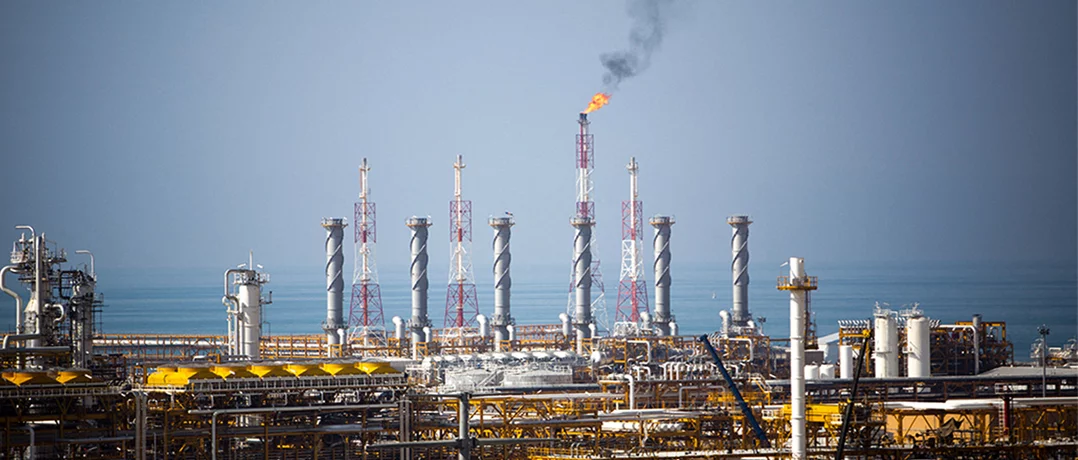
A major escalation has unfolded in the Middle East as energy infrastructure, once largely avoided in direct confrontation, has become a central target in the ongoing war involving Iran, Israel, and the United States (US).
The strike on Iran’s South Pars gas field and Tehran’s subsequent retaliation against Gulf energy facilities signal a dangerous shift, with consequences that extend far beyond the region and into the global economy.
From strike to retaliation: A dangerous expansion of the conflict
The reported Israeli strike on Iran’s South Pars gas field marks a turning point in the conflict. The attack targeted key installations within the field, damaging parts of Iran’s most vital energy hub and temporarily disrupting production. As the world’s largest natural gas field, South Pars is central to Iran’s domestic energy supply and economic resilience.
In response, Iran launched a series of retaliatory missile and drone attacks across the Gulf. One of the most significant strikes hit Qatar’s Ras Laffan Industrial City, a major liquefied natural gas (LNG) hub, causing extensive damage and raising alarm across global energy markets.
Additional missiles were fired toward the Kingdom of Saudi Arabia (KSA), with several intercepted near Riyadh, while threats were issued against energy facilities in the United Arab Emirates (UAE). Iran also warned that multiple oil and gas installations across the region had become “legitimate targets,” urging evacuations ahead of potential further strikes.
This rapid escalation illustrates a clear shift in strategy: energy infrastructure is no longer off-limits, and retaliation is being calibrated to inflict economic pressure across borders.
Washington’s red lines and a growing regional backlash
Amid the escalating confrontation, the US has issued stark warnings to Iran. President Donald Trump publicly cautioned Tehran against targeting Qatar again, threatening a massive military response that could include the destruction of the entire South Pars field if such attacks continue.
At the same time, Washington has attempted to distance itself from direct involvement in the initial strike, despite reports suggesting prior knowledge or coordination with Israel. This ambiguity reflects the delicate balance the US is attempting to maintain: supporting its ally while avoiding deeper entanglement in a widening war.
Regionally, Iran’s actions have triggered strong backlash. Qatar condemned both the initial strike on South Pars and Iran’s retaliation, describing attacks on energy infrastructure as violations of international law and threats to global energy security. The diplomatic fallout was immediate, with Doha expelling Iranian officials in response to the missile strikes.
Other parties, including the Gulf Cooperation Council (GCC), Egypt, KSA and the UAE, have similarly denounced the attacks, warning that continued escalation could destabilize the entire region. At the same time, European leaders have called for restraint and urged a halt to strikes targeting civilian infrastructure, emphasizing the global risks associated with such actions.
Shockwaves through global markets
The immediate effect of the escalation has been a sharp increase in global energy prices. Oil markets reacted quickly, with Brent crude rising toward $110 per barrel amid fears of prolonged supply disruptions.
Natural gas markets have also been affected, particularly following the strike on Qatar’s Ras Laffan facility. As one of the world’s most important LNG hubs, any damage to its operations could significantly tighten global supply, especially for energy-dependent regions.
Compounding the crisis is the disruption of maritime traffic through the Strait of Hormuz, a critical chokepoint through which roughly 20% of the world’s oil and LNG passes. Ongoing hostilities have effectively halted shipping in the area, creating one of the most severe energy supply shocks in modern history.
The broader economic consequences are already emerging. Rising fuel costs are contributing to inflationary pressures worldwide, while financial markets are reacting with volatility. Analysts warn that even if hostilities subside, damage to infrastructure could take months, or longer, to repair, extending the impact on global supply chains.
South Pars: The energy lifeline at the center of the crisis
The significance of the South Pars gas field cannot be overstated. Shared between Iran and Qatar, it represents the largest known natural gas reserve in the world and forms the backbone of both countries’ energy sectors.
For Iran, the field supplies the majority of its domestic gas consumption, powering electricity generation, heating, and industrial activity. Any disruption to its output directly affects the country’s internal stability and economic capacity.
For Qatar, the adjacent North Field (geologically part of the same reservoir) has transformed the country into one of the world’s leading LNG exporters. Facilities such as Ras Laffan process and export vast quantities of gas to global markets, particularly in Asia and Europe.
Because of this interdependence, any attack on South Pars carries implications far beyond Iran. It risks disrupting shared infrastructure, escalating tensions with neighboring states, and threatening a critical pillar of global energy supply.
In conclusion, the targeting of the South Pars gas field and the subsequent wave of retaliatory strikes mark a decisive escalation in the ongoing conflict. By bringing energy infrastructure into the center of military operations, the confrontation has moved beyond traditional battlefields and into the core of the global economy.
-
-

-
The Beiruter
-
