A journey through the layered history of Southern Lebanon, tracing its evolution from Phoenician and Christian roots to Jabal Amel and its place within the modern Lebanese state.


A journey through the layered history of Southern Lebanon, tracing its evolution from Phoenician and Christian roots to Jabal Amel and its place within the modern Lebanese state.

When people speak today about Southern Lebanon, it is often reduced to its contemporary political identity.
As if its history began with the conflicts of recent decades.
As if this land had always been what it has become.
Yet history tells a different story.
Long before the creation of Greater Lebanon in 1920, long before regional wars and modern ideological divisions, the South belonged to a historical space whose roots reach back to Antiquity.
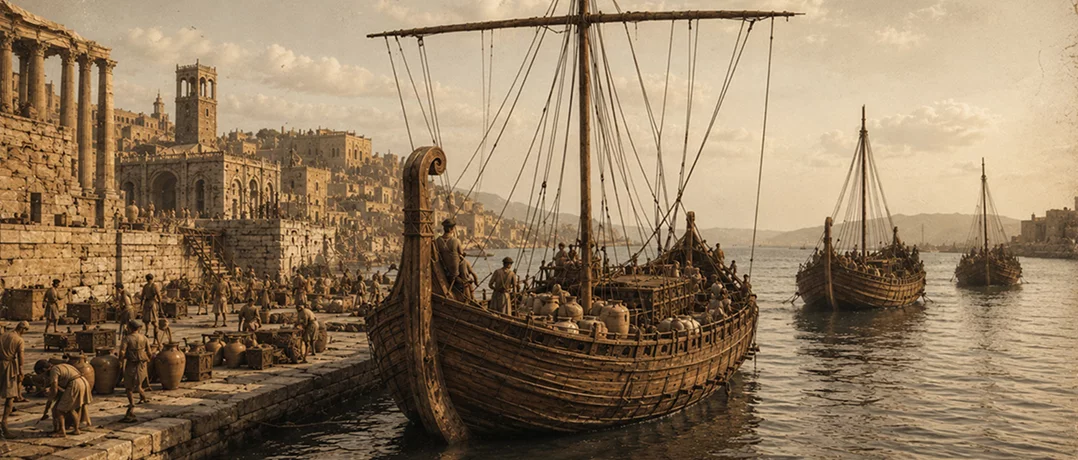
Tyre was one of the greatest Phoenician cities of the Mediterranean.
Its sailors navigated as far as North Africa and Europe while most of today's states did not yet exist.
This region was deeply integrated into Phoenician civilization, then into the Roman Empire and the Byzantine Empire.
For several centuries, the populations of the South were predominantly Christian.
Bishoprics, monasteries, and religious centers developed there long before the arrival of Islam.
The archaeological remains still visible today bear witness to this often-forgotten reality.
Then came the Arab conquests of the seventh century.
As throughout the Levant, the region underwent gradual demographic, cultural, and religious transformations.
Among the Arab tribes that settled in the region were the Banu Amila, originally from Yemen.
Over time, a significant portion of their descendants adopted Shiism and gave their name to the region of Jabal Amel.
This evolution was gradual.
It did not immediately replace the existing populations.
As everywhere in the Levant, identities blended, overlapped, and transformed over the centuries.
At the same time, a significant portion of the Christian populations gradually began moving toward Mount Lebanon.
This movement cannot be explained by a single reason.
It resulted from a combination of political, economic, and cultural factors.
The mountains offered greater security and local autonomy.
The development of Christian religious and educational institutions there also created a powerful center of attraction.
Over time, Mount Lebanon became the principal demographic, intellectual, and political center of the Christian communities of the Levant.
Meanwhile, Jabal Amel developed a strong and distinctive Shiite identity.
The region produced influential scholars whose impact extended far beyond the borders of present-day Lebanon.
But this identity was also shaped through a frequently difficult relationship with Ottoman authority.
The Ottoman Empire was dominated by a Sunni elite that often viewed Shiite communities with suspicion.
Political, fiscal, and administrative tensions contributed to a sense of marginalization among certain elites of the South.
It is in this context that one can understand why some of them looked more toward Damascus and the Syrian sphere than toward the project of an autonomous Lebanon.
This choice was not purely ideological.
It was rooted in a historical reality in which the South had long been administratively and economically linked to the Syrian provinces of the Empire.
The opposition of some Shiite notables to the Greater Lebanon project cannot therefore be understood without taking this history into account.
But the story does not end there.
In 1920, Greater Lebanon was born.
A new political reality emerged.
For the first time, the country's different regions were united within a single entity.
Part of the population welcomed this project.
Others embraced it more slowly.
As is often the case in history, political identities take time to develop.
Then came the other great upheaval of the twentieth century: the creation of the State of Israel in 1948.
Contrary to the simplified narratives that dominate today, Southern Lebanon was not yet the permanent front line we now know.
The region lived primarily from agriculture, trade, and local exchanges.
Border villages sometimes maintained natural economic relations with their immediate surroundings.
The gradual militarization of the South would come later, driven by regional wars, the Palestinian issue, and Lebanon's transformation into a battleground for causes that extended far beyond its borders.
From that moment on, the South gradually ceased to be merely a Lebanese territory.
It became a regional issue.
And at times, an international one.
That is where another story begins.
A story in which ideological projects often took precedence over attachment to the territory itself.
Yet when one looks at the history of modern Lebanon, a question remains.
Who carried the idea of Lebanon when it did not yet exist?
Who defended the existence of a distinct Lebanese entity while others dreamed of attachment to Damascus, Arab unity, or projects extending beyond the country's borders?
History shows that the principal forces behind the creation of Greater Lebanon emerged from the Christian communities of Mount Lebanon.
Not because they were superior to others.
But because, over the centuries, they had developed a particular relationship with this mountain, which had become a refuge, a space of autonomy, and ultimately the cradle of the Lebanese idea.
It was a quiet heroism.
A heroism without slogans.
A heroism often forgotten.
The heroism of men and women who devoted their efforts to building schools, universities, institutions, a free press, and a state.
While others looked toward larger causes, toward empires, toward Arab unity, or toward regional struggles, they looked first toward Lebanon.
Their struggle was not to conquer a foreign capital.
Nor to participate in a revolution beyond their borders.
Their struggle was to preserve a fragile land and turn it into a homeland.
True heroism is not always the heroism of those who bear arms.
Sometimes, it is the heroism of those who build.
Those who stay.
Those who protect an identity without seeking to impose it on others.
And if Lebanon still exists today despite wars, occupations, crises, and divisions, it is also because some of its inhabitants continued to believe, against all odds, that this land deserved to be a country and not merely a province within a larger project.
The history of the South deserves to be told in all its complexity.
Because before it became a battlefield, it was a Phoenician land.
Then Christian.
Then Arab.
Then Lebanese.
And understanding this succession of inheritances may be the best way to understand Lebanon itself.
