

Lebanon has accused Israel of spraying chemicals over southern farmland, raising concerns over environmental damage, public health risks, ceasefire violations, and potential international legal action.
Southern Lebanon under Israeli toxic chemical exposure
Southern Lebanon under Israeli toxic chemical exposure
By The Beiruter | February 05, 2026

Reading time: 4 min
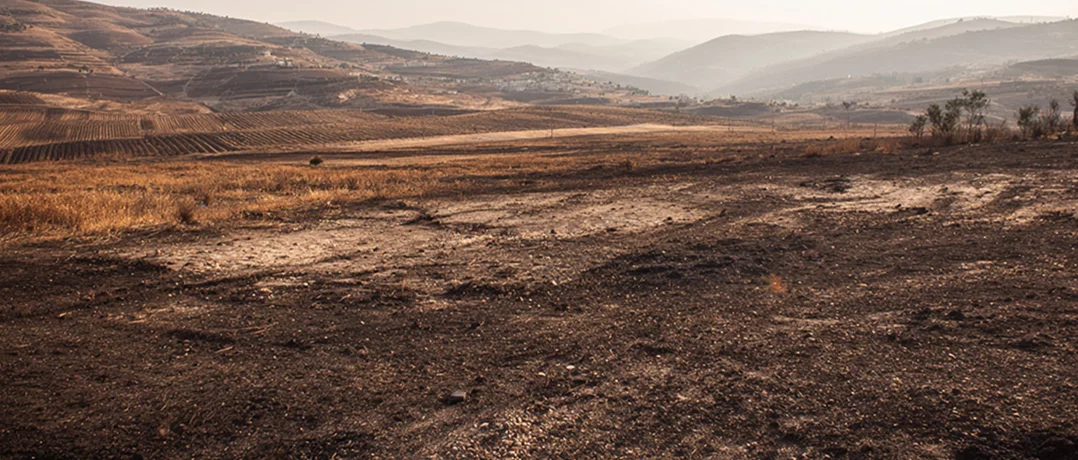
Lebanon is facing yet another escalation in tensions with Israel after Lebanese President Joseph Aoun accused Israeli forces of committing a serious environmental and health violation by spraying chemicals over southern Lebanese towns.
The incident, which reportedly involved the dispersal of toxic substances over agricultural land and orchards, has been widely condemned by Lebanese officials and civil society actors alike as a breach of sovereignty and an assault on public health, livelihoods, and the environment.
The event also underscores the fragility of ceasefire arrangements and the continuing humanitarian and ecological risks faced by communities along the Lebanon-Israel border, as Tel Aviv seems to be adopting a “scorched earth” policy.
Alleged environmental and health violations
President Aoun described the Israeli action as both an environmental and “health crime,” highlighting the deliberate targeting of farmland and civilian livelihoods. He stated that the operation represents a continuation of Israel’s repeated attacks on Lebanon, which have persisted despite the ceasefire agreement in November 2024.
According to Aoun, these “dangerous practices” threaten not only the agricultural economy but also public health, soil quality, and the broader ecosystem in southern Lebanon. Aoun ordered Lebanese authorities to compile a fully documented file in coordination with the ministries of Agriculture, Environment, and Public Health to pursue legal and diplomatic avenues, including formal complaints to international bodies.
Scientific and environmental concerns
Samples of the sprayed substances were collected by UNIFIL and the Lebanese Armed Forces (LAF) in collaboration with local environmental authorities. Lebanese Environment Minister Tamara el-Zein confirmed that laboratory tests were underway to determine the chemical composition and assess its toxicity.
While Israel described the substances as “non-toxic,” the lack of transparency has prompted Lebanese authorities and international observers to treat the situation with caution, citing potential long-term damage to soil, groundwater, and agricultural ecosystems. Experts have warned that the indiscriminate use of chemicals in farming areas could have cascading effects on food security, public health, and environmental sustainability.
Legal and diplomatic response
Lebanon’s Ministry of Foreign Affairs and Emigrants (MOFA) has initiated steps to document and assess the incident in preparation for legal and diplomatic action. The ministry is coordinating with scientific and research institutions to produce a comprehensive dossier, including evidence of the areas affected, the nature of the chemicals used, and the resulting environmental, agricultural, and public health impacts.
Once completed, Lebanon intends to submit a formal complaint to the UN Security Council and other international bodies, urging accountability for what President Aoun describes as “a blatant violation of Lebanese sovereignty.”
Impact on UN operations
The United Nations Interim Force in Lebanon (UNIFIL) reported that Israeli military aircraft notified them in advance of the operation, requesting that peacekeepers remain under cover. This forced the suspension of over 10 activities and routine patrols for approximately 9 hours along the Blue Line, the UN-monitored border between Lebanon and Israel.
UNIFIL stressed that the action was unacceptable and violated United Nations Security Council (UNSC) Resolution 1701, which underpins the ceasefire and post-2006 war arrangements. The disruption also hindered the peacekeeping force’s ability to monitor border security, raising serious concerns about the potential exposure of both civilians and United Nations (UN) personnel to harmful substances.
International criticism and broader context of Israeli-Lebanese tensions
This chemical spraying is part of a broader pattern of Israeli violations along the border. Lebanon has recorded over 2,000 breaches of the ceasefire in the final quarter of 2025 alone.
While the Israel Defense Forces (IDF) persisted in its violations, Hezbollah has retained its armed presence in areas south of the Litani River, leaving civilians particularly vulnerable and bearing the heavy price. Past Israeli operations have also included the use of incendiary weapons and white phosphorus, causing large-scale destruction of farmland, forests, and infrastructure, as well as displacement of local populations.
From here, the incident has raised alarm among international human rights and environmental organizations, which stress that targeting civilian agricultural areas with potentially toxic substances may constitute a violation of International Humanitarian Law (IHL). The deliberate attacks on objects essential to civilian survival without military necessity are prohibited and could be considered war crimes. Observers are calling for independent investigations by the UN and international criminal bodies to assess potential violations of the Geneva Conventions and other environmental protection treaties.
In conclusion, the recent chemical spraying in southern Lebanon illustrates the intersection of environmental security, public health, and geopolitical conflict. Lebanon’s leadership has stressed that this act is not only a breach of sovereignty but a direct assault on civilian life and the environment. With formal complaints to the UN and ongoing laboratory analysis, Beirut aims to hold Israel accountable while highlighting the need for robust international oversight to prevent further environmental and humanitarian crises along the Lebanon-Israel border. The incident underscores the urgent necessity for diplomatic engagement, international monitoring, and legal accountability to safeguard civilian populations and ecological integrity in the region.
-
-

-
The Beiruter
-
