



How football prediction games are reshaping the fan experience in Lebanon, blurring the line between entertainment and gambling while making the sport more interactive, social, and digitally connected.
Sports predictions changing the Lebanese football experience
Sports predictions changing the Lebanese football experience
By Lynn El Khalil | July 09, 2026

Reading time: 5 min
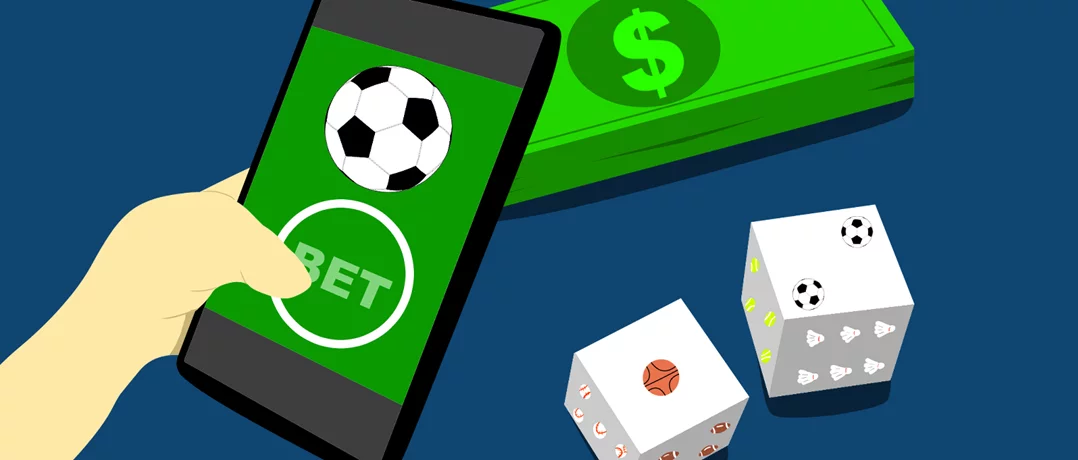
Illustration by Karim Dagher
For many young Lebanese, football no longer ends when the referee blows the final whistle. Before a match even begins, thousands of fans have already made predictions, compared scores with friends or, in some cases, placed money on the outcome. Whether through betting websites and on everyday apps, following football has become a far more interactive experience than simply watching 90 minutes on television. What was once a spectator sport has increasingly become a game of participation. Fans are no longer only supporting their favorite clubs or national teams. They are trying to predict scorelines, collect rewards, climb leaderboards or beat their friends with more accurate picks. The result is a culture where football extends well beyond the match itself.
For many young people, predictions have become part of the routine of following football. Ali, a student at the American University of Beirut, said he found himself opening Toters every day during football tournaments, not only to submit predictions but also to check his progress. “Honestly, what I got out of Toters wasn’t just the predictions,” he said. “Every time I’d open the app to vote or check how many trophies I had, I’d end up finding a new restaurant or shop I’d never heard of before. “Over time, he said the habit became about more than football. “Over the past few weeks, it made me try different places and different types of food. I actually think it helped me support smaller restaurants that I probably wouldn’t have found otherwise. “While Ali’s experience was largely positive, it also reflects how prediction games become part of users’ daily routines. Checking scores, waiting for results and returning to see whether predictions were correct can become just as important as watching the matches themselves. The appeal is not limited to dedicated football fans.
Amanda, a pharmacist, admits she rarely watches the sport, yet still enjoys participating in prediction games. “I don’t even watch football that much, but it’s a fun way to keep up with who’s winning,” she said. “Doing it with a friend makes it even better because it turns into a little competition between us.” For Amanda, the attraction lies less in the rewards and more in the experience itself. “Collecting the trophies is honestly satisfying,” she said. “The prizes aren’t anything crazy, but it’s still fun trying to get them.” She believes that feeling is what keeps many people coming back. “It kind of gives you this fake sense of accomplishment and definitely taps into that gambling feeling,” she said. “And honestly, that’s what makes it addictive.”
Her comments point to a broader shift in how younger generations engage with sport. Prediction games transform football into an ongoing challenge rather than a single event. Every correct guess provides a small sense of achievement, while every incorrect prediction creates another opportunity to try again in the next match. Over time, this cycle encourages users to stay constantly engaged throughout an entire tournament rather than tuning in only for the biggest games. The line between prediction games and sports betting can sometimes appear blurred.
Unlike traditional betting websites, prediction platforms generally do not require users to risk money. Instead, they reward successful predictions with points, prizes or discounts. Although the financial stakes are removed, many of the same emotions remain: anticipation before kick-off, excitement during the match and disappointment or satisfaction when the final score arrives. For Georges, who works in marketing, that distinction has been significant. “I’ve struggled with gambling before, so these prediction games kind of scratch that itch without me actually losing money,” he said. Instead of placing wagers online, Georges said prediction games offered a different way to enjoy football. “You’re still getting the excitement of predicting the result, but at least you’re winning small rewards on NEO instead of throwing your money away.” He added that he now spends less time on betting websites. “It made me spend less time on betting websites that can be really sketchy. I’d much rather use something like this.” While Georges describes prediction games as a positive alternative in his own experience, they also demonstrate how closely entertainment and gambling can intersect. Both rely on uncertainty, competition, and the hope of being rewarded. The main difference is that one risks money while the other mainly rewards participation.
The popularity of prediction games also reflects a generational shift in how young people consume sport. Football is no longer something experienced only on television or at cafés. Conversations now begin before kick-off with predictions, continue through group chats during the match and often end with screenshots of leaderboards, trophies or winning picks. Following football has become increasingly social, competitive and digital. For many young Lebanese, making predictions has become as familiar as discussing transfers or debating refereeing decisions. Winning is no longer measured only by whether a favorite team lifts a trophy but also by whether a prediction turns out to be correct.
As prediction games continue to grow alongside traditional sports betting, they raise new questions about where entertainment ends and gambling begins. They have undoubtedly made football more interactive, drawing even casual fans into tournaments they might otherwise ignore. At the same time, they encourage habits built around constant engagement, competition, and the pursuit of rewards.
Whether those rewards come in the form of cash, prizes or simply the satisfaction of getting it right, one thing is clear: for a growing number of young Lebanese, the football experience now starts long before kick-off and lasts long after the match is over.
