



How the Feast of Saint Maron reflects the origins of the Maronite Church and its lasting role in shaping faith, identity, and diaspora life in Lebanon and beyond.
St. Maron: The spiritual father behind a living heritage
St. Maron: The spiritual father behind a living heritage
By The Beiruter | February 08, 2026

Reading time: 5 min
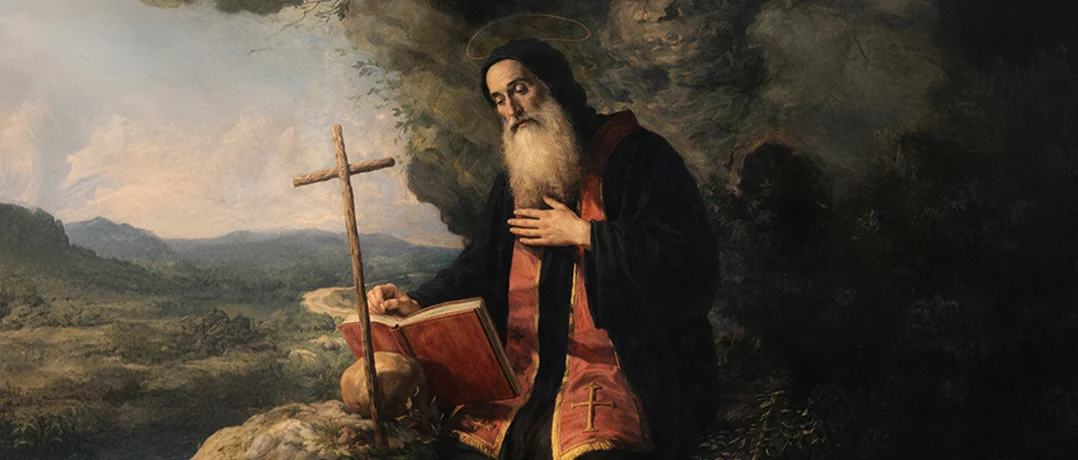
Each year on 9 February, Maronite Christians in Lebanon and across the world commemorate the Feast Day of Saint Maron, honoring the hermit whose spiritual vision gave birth to one of the most enduring Christian traditions of the Middle East.
The celebration transcends a purely religious observance, serving as a moment to reflect on a legacy that has shaped religious identity, cultural resilience, and historical continuity for centuries. Although historical records about Saint Maron remain limited, his spiritual influence has surpassed geographical and historical boundaries, forming the foundation of the Maronite Church and inspiring generations of believers worldwide.
The feast day and its contemporary significance
The Feast of Saint Maron on 9 February holds profound religious, cultural, and national importance. In Lebanon, the sole country who president is a Christian and whose Christian community still thrives and retains considerable weight and influence, it is recognized as an official national holiday, highlighting the historical contribution of the Maronite community to the country’s identity and heritage. The feast represents both a celebration of faith and a reflection on values associated with Saint Maron, including perseverance, humility, and devotion.
On another note, Lebanese officials traditionally commemorate the occasion by attending a solemn Mass, usually held at Saint Maron Church in Gemmayze, Beirut. The ceremony is typically attended by senior state officials and public figures. The Mass serves not only as a religious observance honoring Saint Maron, but also as a national event symbolizing unity and the historical connection between Lebanon’s political leadership and its religious heritage.
Today, Maronite communities span all 7 continents, maintaining strong spiritual ties through liturgical celebrations, educational institutions, and cultural traditions. The global Maronite diaspora reflects the universal appeal of Saint Maron’s spiritual vision, demonstrating its continued relevance in contemporary religious life.
The Maronites: identity, heritage, and continuity
The Maronite community emerged from the spiritual movement inspired by Saint Maron and developed into one of the oldest Christian communities in the Middle East. Over centuries, the Maronites established themselves primarily in Mount Lebanon, where geographical isolation and their resistance helped preserve their religious traditions, liturgical practices, and cultural identity.
The Maronite Church is unique among Catholic Eastern Churches in maintaining continuous unity with the Roman Catholic Church while preserving its Syriac liturgical heritage and theological traditions. Syriac, derived from Aramaic (the language spoken by Jesus Christ) remains central to Maronite liturgy, reflecting the community’s deep historical roots.
Throughout history, Maronites endured periods of persecution, political upheaval, and forced migration. Despite these challenges, they maintained strong communal structures built around monasteries, religious institutions, and educational centers. Their historical experience contributed significantly to shaping Lebanon’s pluralistic identity and political development, with Maronites playing a prominent role in the formation of the modern Lebanese state.
Today, Maronite communities exist across the Middle East, Europe, the Americas, and Australia, forming a global diaspora that continues to maintain strong spiritual and cultural ties to Lebanon and to Saint Maron’s legacy. Among the community’s major achievements was the founding of the Pontifical Maronite College in Rome in 1584, serving as a significant institution for the education of Maronite clergy and playing a vital role in the Catholic Church’s mission. This, along with the establishment of what became known as the “school under the oak tree” and the success of Maronites abroad prompted an infamous phrase to be coined to this community: “an intellectual as a Maronite.”
The life and historical context of Saint Maron
Saint Maron, born in the mid-4th century, emerged as a pioneering figure in early Syriac monasticism during a period when Christianity was consolidating within the Roman Empire. Documented primarily by Theodoret, Bishop of Cyrrhus, Maron was a priest and hermit known for his extraordinary ascetic devotion. He withdrew from urban life to reside on Mount Cyrrhus near Antioch, embracing a rigorous lifestyle in the open air rather than in caves or monasteries. Exposing himself to harsh natural elements, he believed physical hardship cultivated spiritual discipline and purified the soul. His dedication attracted many disciples, and his reputation for holiness reached prominent figures, including Saint John Chrysostom, who sought his prayers and guidance during exile.
Although Saint Maron never formally founded a religious order, his teachings inspired a spiritual movement that endured beyond his death around 410 AD. His disciples established the Monastery of Saint Maron along the Orontes River, known as “Beit Maroun,” which became a center for prayer, ascetic discipline, and community life. This monastic network preserved Maron’s teachings and became the spiritual nucleus of the Maronite Church.
Saint Maron’s influence also encompassed missionary activity. He contributed to the spread of Christianity in northern Syria, transforming pagan temples into Christian sites of worship and inspiring religious conversion. His disciples, notably Abraham of Cyrrhus, carried his teachings to Mount Lebanon, laying the foundation for the Maronite spiritual tradition. Over time, this tradition profoundly shaped Lebanon’s religious landscape, establishing the Maronite Church as a cornerstone of both spiritual life and communal identity. Through his ascetic devotion, spiritual guidance, and missionary contributions, Saint Maron left a lasting legacy that continues to inspire religious communities across the world.
In conclusion, Saint Maron’s life illustrates the enduring power of spiritual dedication in shaping faith, history, and identity. Through his ascetic discipline, missionary influence, and unwavering devotion to prayer, he inspired a movement that evolved into a global religious tradition. As Maronite Christians commemorate his feast day, his legacy continues to symbolize resilience, spiritual depth, and communal unity. More than 16 centuries after his passing, Saint Maron remains a guiding figure whose teachings preserve a rich spiritual heritage that bridges past and present.
-
-

-
The Beiruter
-
