



Status, comparison, and the pressure to look successful
Status, comparison, and the pressure to look successful
By The Beiruter | September 01, 2026

Reading time 4 min
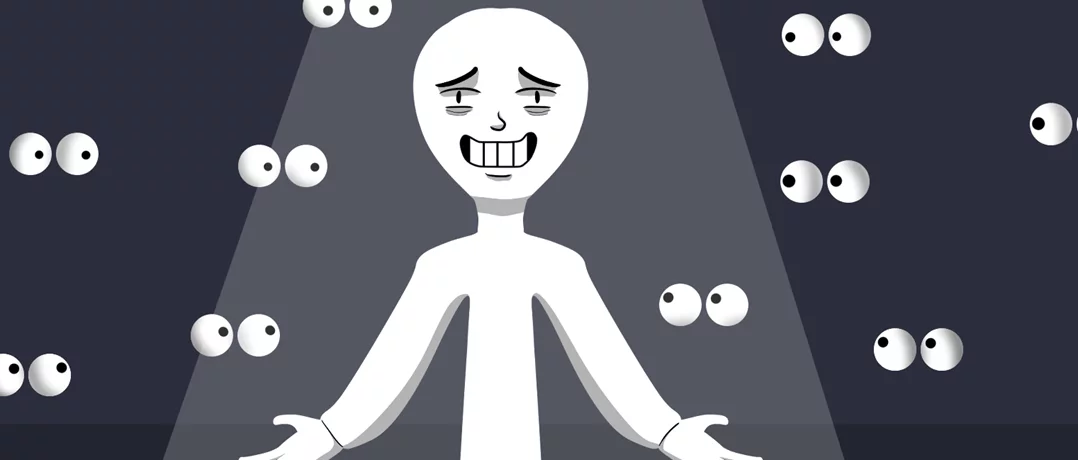
Illustration by Karim Dagher
Somewhere along the way, ordinary life stopped being enough to simply live, it had to be documented, curated, and, increasingly, won. Nobody announces they are struggling anymore, they instead choose to conceal their truth. Three people, each navigating a different corner of this pressure, financial status, physical image, and professional relevance, describe what it actually costs to keep performing a life that looks better than the one they are living.
Names have been changed to pseudonyms to protect anonymity.
Maya, 27: " There is a shame attached to looking like you're struggling”
For Maya, the pressure crystallized after university, watching peers accumulate the visible markers of adulthood all at once. "Suddenly everyone was working, travelling, getting engaged, moving into apartments, buying cars. And nobody says, 'I'm doing badly.'" Despite a modest marketing salary, her online presence told a different story, expensive restaurants, Ubers, trips she couldn't afford, followed by months of financial recovery. "There is a very specific shame attached to looking like you're struggling," she said. "It's not enough to be okay. You have to look like you're okay." That fear once led her to lie about being unable to afford an outing rather than admit it, borrowing money from her sister instead. "That's insane when I say it out loud."
Underneath the spending was a comparison she couldn't name until later. "I grew up in a family where we were comfortable, but not rich. Then you go to university and meet people whose parents are buying them apartments... You start unconsciously measuring your life against theirs." Even her happiest-looking moments were often hollow from the inside. Describing a photo from a Dubai hotel that drew comments like "living your best life," she admitted, "The reality was I had spent almost the entire trip worrying about how much I was spending... They're congratulating me for something that is actually making me anxious." What kept her posting wasn't vanity so much as reinforcement.
"The attention works. That's the uncomfortable part... I think that's the addiction. Not Instagram itself. It's the feeling of being perceived as successful." The wake-up call came when the performance started shaping real decisions. "I once rejected a perfectly good job because I thought the company wasn't impressive enough to tell people I worked there. That's when I realized something was wrong."
Nour, 24: "I wanted to be undeniable"
For Nour, the pressure lives on the body. "It used to mean feeling good. Now, honestly, it means knowing that nobody can look at me and think I've let myself go." What began as a health goal expanded relentlessly. "Then it became about my body. Then my face. Then my skin. Then my hair. There's always another thing." Comparison, for her, has become something closer to surveillance. "I'll see someone on Instagram and immediately start analyzing her. What did she do to her lips? Where is her dress from?... You start seeing yourself as a project that needs constant updating."
The cost shows up in avoidance. "I've cancelled plans because I didn't like how I looked that day. Nobody rejected me. I rejected myself before anyone had the opportunity to." Even her most confident-looking photos conceal a different internal reality. "I got so many comments saying I looked amazing. And I was sitting on my bed afterwards thinking, 'Thank God nobody knows how insecure I actually feel.'"
She's especially attuned to a gendered version of the pressure. "You can't just be intelligent. You have to be intelligent and beautiful. You can't just be successful. You have to look successful." Her deepest fear is falling behind an invisible, ever-shifting field of competitors. "Someone got engaged. Someone lost ten kilos. Someone got a promotion... If you're constantly watching everybody else's highlights, ordinary life starts feeling like losing." Asked how she'd behave unobserved, her answer cut to the core of the performance. "Sometimes I wonder how much of my personality is actually mine and how much was built around being looked at."
Karim, 31: " we've become much more interested in what can be seen.
Karim's version of the pressure centers on relevance and professional status. "Being busy, basically... If someone asks what you're doing and you say, 'Nothing, I'm at home,' it almost feels like you've failed the question." During a period stuck in a job he disliked, he compensated by curating an image of ambition online, business content, networking, books, while falling short of his own expectations. "I wasn't necessarily lying. That's what's complicated. I was taking real things and exaggerating their importance."
The underlying belief, he admits, was a kind of imagined scoreboard. "If someone from university became a CEO at 29, I noticed... And I assumed they were noticing me too. They probably weren't." That scorekeeping reshaped his friendships. "I started choosing friends based on what being around them said about me... At some point I realized I wasn't asking, 'Do I like this person?' I was asking, 'What does knowing this person say about me?'" Status, once acquired, didn't bring peace.
"Once you build an identity around being successful, you have something to lose. Every time someone else succeeds, you feel threatened." He described catching himself in the act after a friend's promotion, "My first reaction was genuinely happiness. Then, maybe thirty seconds later, I started calculating how much he was probably making... He hadn't compared himself to me. But I had turned his good news into a referendum on my own life." His conclusion lands on something simple but rarely said aloud. "We've confused being seen as successful with actually feeling successful. And the two can be completely different... The problem is that happiness is private. Status isn't. And we've become much more interested in what can be seen."
The life behind the performance
Maya, Nour, and Karim describe three different arenas, money, beauty, and professional relevance, but the same underlying mechanism, a fear of appearing to fall behind that overtakes the desire to actually live well. None of them describe outright dishonesty so much as exaggeration, a persistent inflation of ordinary reality into something that photographs better and reads more impressively. What their stories share, in the end, is a kind of exhaustion, the sense of having built not a life, but a case for one, argued constantly to an audience that is rarely even watching as closely as they feared.
-
-

-
The Beiruter
-
