



Why some university students misuse prescription stimulants as “study drugs,” and how academic pressure, burnout, perfectionism and fear of failure can fuel psychological dependence.
Study Drugs and the pressure to perform

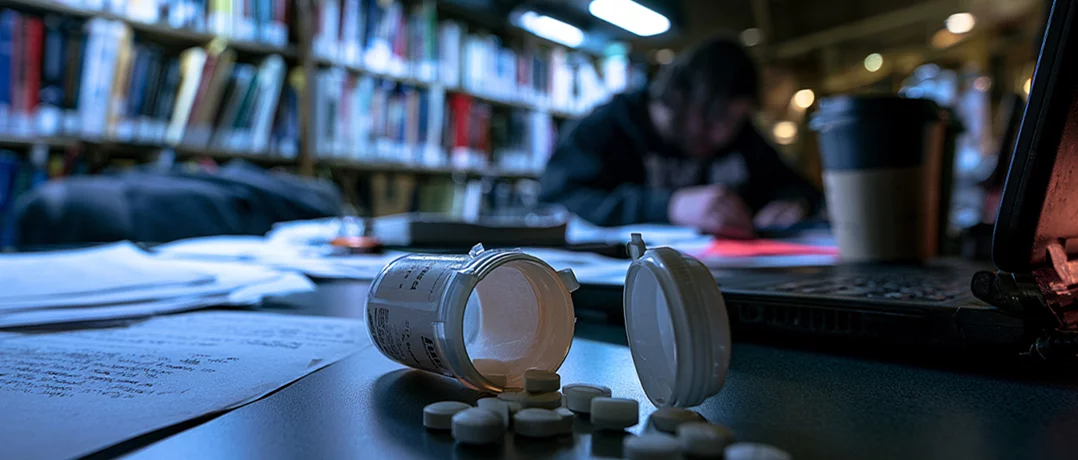
For some university students, exam season means more than late nights, caffeine and hours spent in the library. Prescription stimulants have entered conversations around academic performance, used by some students without an ADHD diagnosis in the hope of studying longer, concentrating harder and keeping exhaustion at bay. Often described casually as “study drugs,” prescription stimulants can be used medically to treat conditions such as attention deficit hyperactivity disorder (ADHD). But when students take them without a prescription or medical supervision, psychologists say the reasons behind the behavior can reveal a larger problem surrounding academic pressure, burnout and students’ relationship with productivity. Psychotherapist and psychologist Randa Wehbe says students do not necessarily turn to stimulants because they want to “cheat” academically.
“University students can experience intense academic demands, long study hours, competition, and pressure to succeed,” Wehbe said. “A stimulant can temporarily increase alertness, energy, and the ability to stay focused, so some students start believing that it will help them study longer or be more productive.” Clinical psychologist Joelle Yaghi similarly links non-medical stimulant use to the pressures of university life. She says overwhelming workloads, tight deadlines and competition can create a persistent fear of falling behind. For students who already struggle with perfectionism, stimulants may begin to look like a shortcut for meeting expectations that feel otherwise impossible.
When exhaustion becomes a productivity problem
Academic pressure does not exist in isolation. Competition, perfectionism and fear of failure can change the way students understand their own limits. When academic achievement becomes closely connected to self-worth or future opportunities, Wehbe says students may begin feeling that they cannot afford to rest. “Everyone else is working harder than me,” “I have to get the highest grade,” and “I don’t have time to sleep” are among the thoughts she says can emerge in highly pressured students. Burnout can make this worse, instead of recognizing exhaustion as a sign that the body and mind need recovery, students may begin treating it as another obstacle to productivity.
“A burned-out student is already mentally and physically exhausted, but instead of interpreting that exhaustion as a signal to stop and recover, they may interpret it as a productivity problem: ‘I need something to keep me going,’” Wehbe said. Yaghi describes academic pressure, burnout and fear of failure as major factors behind non-medical stimulant use. In competitive environments, students can internalize the idea that their value is determined by their output. Stimulants can then become less about getting ahead and more about keeping up.
“I can’t study without it”
One of the risks psychologists highlight is how repeated stimulant use can change the way students perceive their own abilities. A student may initially decide to use stimulants only during finals. But repeatedly studying while using them can create an association between the medication and academic success. “I’ll only take it during exam week” can gradually become “I can’t concentrate without it,” according to Wehbe. “Sometimes the medication becomes a psychological crutch,” she said. “The student may actually still have the ability to study without it, but their confidence in that ability decreases.”
Yaghi describes a similar process through cognitive conditioning. When a student takes a stimulant and subsequently finishes an assignment or performs well on an exam, they may increasingly attribute that success to the medication rather than their own abilities. Over time, this can erode academic self-confidence. The psychological dependence is therefore not simply on the stimulant, but also on the belief that academic success is impossible without it.
The cycle can work against students
The irony is that using stimulants to overcome exhaustion can ultimately contribute to the same problems students are attempting to solve. Wehbe points to sleep as one of the biggest concerns. Students may take stimulants late in the day or specifically use them to remain awake overnight, despite sleep being essential for attention, memory, emotional regulation and learning. Stimulants can also increase physical arousal, potentially contributing to anxiety, restlessness, irritability and racing thoughts. When their effects wear off, some students may experience a noticeable crash.
Yaghi says prolonged non-medical use can leave the central nervous system in a state of heightened arousal, particularly when accompanied by poor sleep, irregular eating and physical exhaustion. The result can become a self-reinforcing cycle: academic pressure leads to stimulant use, stimulant use enables prolonged studying, prolonged studying reduces sleep, and sleep deprivation contributes to exhaustion, anxiety and impaired concentration. The student may then turn to stimulants again to compensate.
Why calling them “study drugs” matters
Part of the normalization of prescription stimulants among students may come from the language surrounding them. Calling them “study drugs,” Wehbe says, makes prescription medication sound more like coffee or an energy drink than a drug affecting the central nervous system. There is also an assumption that because these medications are prescribed to people with ADHD, using them must be relatively safe. But medication safety depends on factors including the person taking it, dosage, health conditions, interactions with other substances and medical supervision. Yaghi says students may also rationalize stimulant misuse because of its purpose. Unlike drugs associated with partying or escapism, stimulants may be taken with the intention of completing an essay, preparing for an exam or improving a grade. Academic productivity can make the behavior feel more legitimate. Peer culture can reinforce this perception, when students hear classmates talk casually about using stimulants during exams without seeing obvious immediate consequences, the practice can start to appear normal.
When does it become a problem?
There is no single number of pills or study sessions that psychologists point to as the moment stimulant use becomes concerning. Instead, Wehbe and Yaghi emphasize changes in a student’s behavior and thinking. Warning signs can include increasing the amount or frequency of use, persistent insomnia, anxiety, irritability, appetite changes, severe mood crashes, obtaining medication without medical supervision and taking stimulants to compensate for sleep deprivation. But one of the most significant warning signs is psychological: when taking the medication stops feeling optional. “Occasional use crosses into a concerning pattern the moment a student's internal narrative shifts from choosing to use a stimulant to believing they cannot function without it,” Yaghi said. Wehbe similarly identifies the loss of confidence in one's own abilities as a major concern. “‘I can’t do this unless I take something,’” she said. “That is when I would want the student to stop and look at what is really happening underneath the stimulant use.”
What sits underneath it may be more revealing than the medication itself. Anxiety, procrastination, perfectionism, burnout, fear of failure and chronic sleep deprivation can all contribute to the feeling that ordinary human limits are incompatible with academic expectations. For Wehbe, this is why prevention should shift the conversation from “Does this help me study?” to “Why do I feel that I need medication to cope with my academic demands?” When exhaustion becomes something to medicate rather than recover from, stimulant misuse is not only a story about individual choices. It also raises questions about an academic culture in which constant productivity can begin to feel more important than sleep, recovery and students’ well-being.
