



Syria has become a new stage for Pakistan’s regional rivalries, as the country draws closer to Islamabad and its Turkish and Saudi allies while India and Israel watch warily.
Syria, Kashmir and the Golan in a shifting diplomatic balance
Syria, Kashmir and the Golan in a shifting diplomatic balance
By Peter Chouayfati | November 19, 2026

Reading time: 6 min
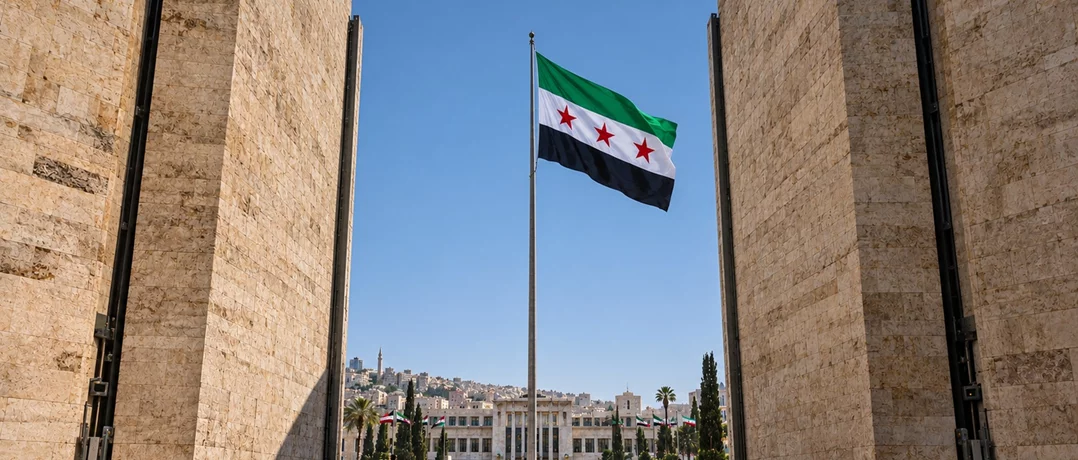
Throughout the Assad era, Syria stood out in the Muslim world as one of the few states that leaned toward India on Kashmir. This position put it at odds with most of its fellow Muslim-majority nations and earned it considerable goodwill in New Delhi. However, Islamabad has always told a somewhat different story, with Pakistan’s Foreign Ministry maintaining that Syria recognizes Kashmir as a dispute which needs to be resolved in accordance with UNSC Resolutions, yet Damascus’s public statements consistently pointed in India’s direction.
That alignment was clear as early as 2008, when Bashar al-Assad visited India and distanced his country from the Organisation of Islamic Cooperation’s (OIC) resolutions on Kashmir. The OIC has for decades adopted resolutions that back the Kashmiri people’s right to self-determination under UN Security Council resolutions, criticise India’s conduct in the region and call for international attention to the dispute. Pakistan has long relied on these resolutions to build diplomatic support across the Muslim world, while India rejects them as interference in its internal affairs. Assad said Syria did not subscribe to these OIC resolutions on Kashmir, adding that Syria held different views from the organisation. He argued instead that the dispute should be settled through direct talks between India and Pakistan, a formula that suited New Delhi far better than the international mediation Islamabad has long sought.
The clearest test came in 2019 over Article 370 of the Indian constitution, the provision that had given Jammu and Kashmir a special autonomous status since shortly after independence.
On 5 August 2019 the Indian government revoked Article 370 that gave Jammu and Kashmir its own constitution, its own flag and broad self-government. While the rest of the Muslim world strongly castigated India’s decision, Syria dismissed the move as India’s internal matter, and its ambassador in New Delhi, Riad Abbas, went further by declaring that Syria would always stand with India on any action it took.
On the Golan Heights, by contrast, India and Pakistan find themselves on the same side. Pakistan has consistently backed Syria’s claim to the territory, and when Washington recognised Israeli sovereignty over it in 2019, Islamabad described the decision as “a serious violation of UN Charter, international law and applicable UN Security Council Resolutions, particularly 497 (1981).” That support has carried over to the new government in Damascus, with Prime Minister Shehbaz Sharif telling Syria’s foreign minister in August 2026 that Pakistan would firmly support Syria’s position on the Golan Heights.
India, despite its deepening partnership with Israel, has taken the same line, and in November 2023 it was among the 91 nations at the UN General Assembly to vote in favour of a resolution demanding that Israel withdraw from all occupied Syrian Golan to the line of June 4, 1967, before backing a similar resolution again in 2025. Most recently, on 11 November 2026, the 193-member General Assembly voted overwhelmingly in favour of a resolution on the permanent sovereignty of the Palestinian people and of the Arab population of the occupied Syrian Golan over their natural resources, and India backed the text.
Since Assad’s fall in December 2024, however, the question of where Syria stands on Kashmir has become far less certain. The new government under Ahmed al-Sharaa has not publicly declared any position, and even during its foreign minister’s landmark visit to Islamabad in August 2026, the official readout referred only to discussions of “the situation in South Asia” rather than to Kashmir by name. Indian officials had feared a sharp reversal, with one intelligence official predicting that post-Assad Syria can be expected to back Pakistan on the Kashmir dispute, but so far Damascus has chosen a careful silence that allows it to keep India’s goodwill while drawing closer to Pakistan and its Turkish and Saudi partners.
Pakistan's pivot to al-Sharaa
Pakistan was slow to embrace Syria's new rulers. In January 2025, its Foreign Office said it had not yet made direct contact with them. Only in February, after Ahmed al-Sharaa became interim president, did Prime Minister Shehbaz Sharif welcome him. Foreign Minister Ishaq Dar met al-Sharaa at the UN General Assembly that September.
The caution reflected Islamabad's long ties with Assad's government. Yet the relationship was never only about Assad. Its foundations were based on country-country relations, spanning across various regimes and presidents, laid by diplomats and soldiers.
Al-Shaibani's met Sharif, Dar and army chief Field Marshal Asim Munir. The two sides agreed to revive their Joint Ministerial Commission and restore direct flights. Sharif pledged firm support on the Golan and invited al-Sharaa to visit. Al-Shaibani condemned terrorist attacks on Pakistan launched from Afghanistan. On Kashmir, though, the new government has said nothing in public.
Turkey, Saudi Arabia and the Mecca pact
Pakistan's weight in Damascus comes largely through its two closest regional partners, who are also al-Sharaa's main backers. Turkey is his security patron. An August 2025 agreement commits Ankara to train and arm Syria's new forces, and the two have discussed Turkish bases in central Syria. Saudi Arabia supplies money and access to Washington. Riyadh helped persuade President Trump to lift sanctions, then pleadged $6.4 billion in investment. Its motive is plain: Assad's fall removed a pillar of Iranian power in the Arab world.
On 7 August 2026, Mohammed bin Salman, Recep Tayyip Erdoğan and Sharif signed the Mecca Joint Defence Agreement, which treats an attack on one member as an attack on all. New members can join with the founders' consent. In Islamabad, al-Shaibani welcomed the pact and said Syria was reviewing whether to join.
Membership would reshape both of Syria's disputes. The pact binds Saudi Arabia and Turkey to defend Pakistan in a South Asian war, and could pull Pakistani forces into a Turkish–Israeli clash in Syria. Inside the pact, Damascus could hardly keep Assad's pro-India line on Kashmir, while Pakistan's support on the Golan would stop being merely rhetorical.
How Does the India–Israel Alliance Factor In?
As India and Israel grow closer, Pakistan, India's rival, has reason to push back against Israeli influence wherever it can. Some Indian commentators have asked whether the pact is partly a response to India's ties with Israel. Syria is where the two rivalries meet.
New Delhi has answered calmly, saying it is "closely following" the pact. It still has assets in Syria. India kept its embassy open through the war, sent its first delegation to the new government in July 2025, and backs Syria on the Golan. Its stakes are wider too where instability in Syria quickly spills over into Gulf markets. Syria also borders Jordan and Israel, both on the route of the proposed India–Middle East–Europe Economic Corridor.
The open question is whether al-Sharaa takes sides. He is negotiating a security deal with Israel and courting Washington, and joining a bloc Israel distrusts could jeopardise both. For now, silence on Kashmir suits him by keeping India's goodwill without offending his Turkish and Saudi backers. If Syria joins the Mecca pact, that balancing act will be far harder to sustain.
-
-

-
Peter ChouayfatiPolitical Analyst and Researcher
-
