



Syria has reinforced troops along its borders with Lebanon and Iraq, citing rising regional tensions and fears of spillover from the Israel–Hezbollah conflict.
Syria reinforces its borders with Lebanon and Iraq
Syria reinforces its borders with Lebanon and Iraq
By The Beiruter | March 04, 2026

Reading time: 3 min
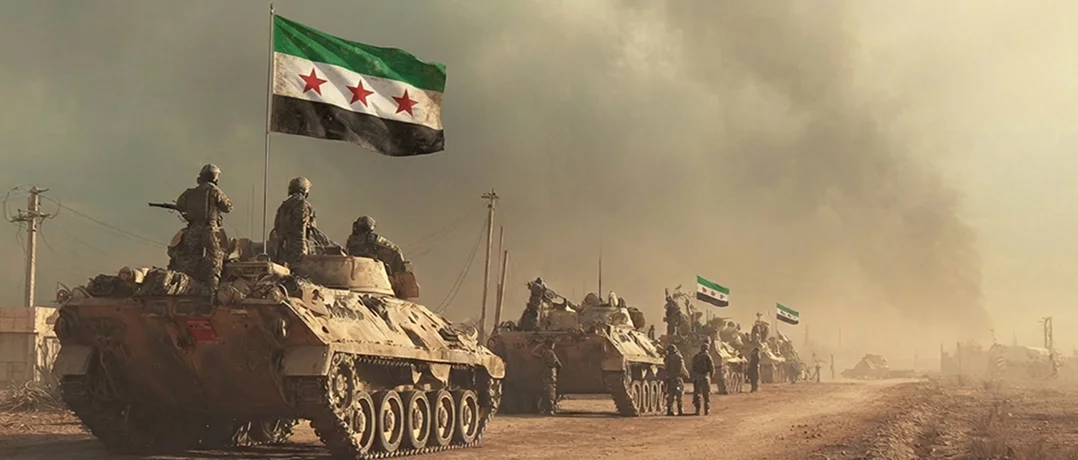
As tensions intensify across the Levant, the Syrian government has announced a significant reinforcement of its military presence along its borders with Lebanon and Iraq.
The move comes against the backdrop of renewed hostilities between Israel and Hezbollah, as well as broader regional friction involving Iran and the United States (US). Damascus has framed the deployment as a defensive measure aimed at safeguarding national sovereignty, tightening border control, and preventing spillover from neighboring conflicts.
The decision reflects the fragile security environment in which Syria finds itself, balancing internal stability concerns with the risk of being drawn into a wider confrontation.
Official rationale: Border protection and anti-smuggling efforts
In a statement released by the Operations Authority of the Syrian Arab Army (SAA), the Ministry of Defense confirmed that military units had strengthened their deployment along the Syrian-Lebanese and Syrian-Iraqi frontiers. According to the announcement, the reinforcements are intended to “protect and control the borders amid the escalating regional conflict.”
The units deployed reportedly belong to border guard forces and reconnaissance battalions tasked with monitoring cross-border activity and combating smuggling. Syrian military officers cited by international media indicated that the reinforcement campaign began in February but accelerated markedly in recent days as regional tensions deepened.
The substantial build-up includes thousands of troops, armored vehicles, and short-range rocket systems such as Grad and Katyusha launchers. Military formations from several Syrian army divisions, including the 52nd and 84th Divisions, are said to have expanded their presence in western Homs countryside and south of Tartus, areas adjacent to Lebanon.
Syrian officials stressed that the deployment is defensive in nature. A senior security source stated that Damascus has no plans for military action against neighboring countries but is prepared to respond to any security threat directed at Syria or its partners.
Concerns over wider implications
The timing of Syria’s move coincides with a sharp escalation between Israel and Hezbollah in Lebanon. The conflict has triggered significant civilian displacement. Tens of thousands of Lebanese residents have fled southern regions following evacuation orders and sustained airstrikes. Simultaneously, Syrian and Lebanese civilians have moved toward border crossings in the Syrian provinces of Rural Damascus, Homs, and Tartus, seeking refuge from the violence.
Lebanese authorities have reportedly been informed by Damascus that the deployment of rocket launchers along the mountainous eastern border is intended as a defensive precaution, particularly in the event that Hezbollah activities might draw retaliatory fire toward Syrian territory.
Despite Syrian denials of offensive intentions, the military build-up has raised concern among some European and Lebanese officials about the potential for a broader confrontation; considering its animosity with Hezbollah and various previous US statements (most notably from Special Envoy to Syria Tom Barrack) hinting to merging the 2 neighboring countries. Syria’s complex history in Lebanon adds sensitivity to the situation. Syrian forces have occupied Lebanon from 1976 until 2005, during and after the Lebanese War (1975-1990), a presence that shaped decades of political and security dynamics between the 2 nations. Today, Syrian officials state that their objective is to maintain balanced relations with Beirut while preserving border stability.
Strategic calculations and internal considerations
For Damascus, reinforcing the borders serves several strategic purposes beyond immediate military readiness. The Syrian government has long struggled with cross-border smuggling networks involving arms and narcotics, particularly along the Lebanese frontier. Strengthening surveillance and enforcement could help reassert state authority in areas that have experienced years of conflict-related fragmentation.
Additionally, the Syrian leadership appears intent on preventing any armed faction, whether Hezbollah or other militant actors, from using Syrian territory as a corridor for operations that might provoke external retaliation. Maintaining control over its borders allows Syria to signal both autonomy and deterrence, especially as the regional conflict widens.
In conclusion, Syria’s reinforcement of its borders with Lebanon and Iraq represents a calculated response to an increasingly volatile regional landscape. While Syrian authorities deny any intention of offensive action, the scale and composition of the reinforcements highlight the seriousness with which Damascus views the current escalation.
-
-

-
The Beiruter
-
