

Syria foils an alleged Hezbollah-linked border plot, exposing persistent cross-border networks, rising post-war instability, and shifting alliances as Damascus seeks to assert control and redefine its regional position.
Syria thwarts Hezbollah border plot

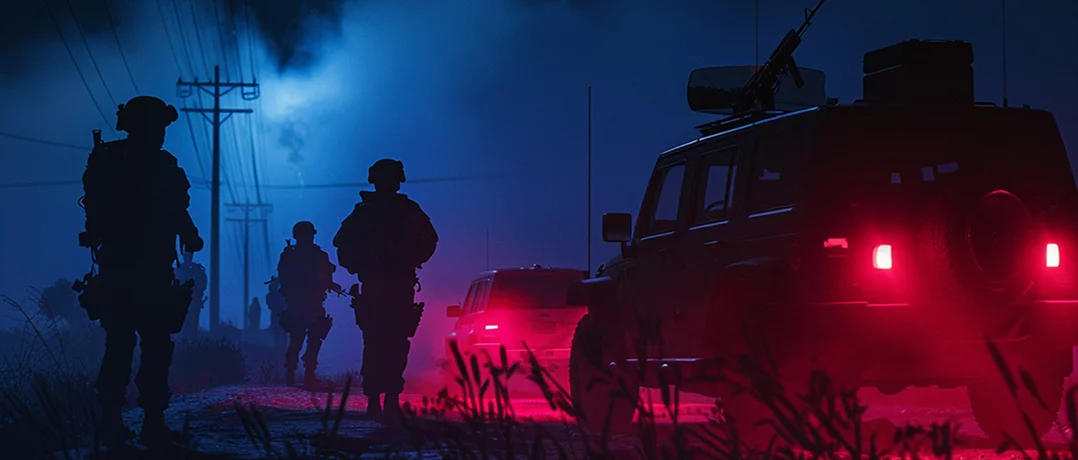
Recent security developments in Syria point to a volatile and evolving post-war environment marked by competing regional interests, fragile internal stability, and unresolved cross-border dynamics. Syrian authorities announced that security forces had thwarted an alleged attack planned from within Syrian territory by remnants of the former regime of Bashar al-Assad and operatives linked to Hezbollah.
The incident, alongside parallel reports of dismantled cells and foiled assassination attempts in Damascus, highlights the increasingly complex security landscape confronting Syria’s new leadership following the end of its civil war in 2024.
Disrupting cross-border threats
According to Syria’s Ministry of Interior, the intercepted plot originated in Quneitra province, a sensitive area bordering Israel. Authorities claimed that a “sabotage cell” linked to the ousted Assad regime and Hezbollah had been planning to launch missiles across the border with the aim of destabilizing the country and provoking broader regional tensions. The arrests were presented as part of an ongoing effort to counter attempts by remnants of the former regime and affiliated networks to undermine public security.
The timing of this development is particularly significant. On 17 April 2026, a temporary 10-day ceasefire brought a pause to hostilities between Hezbollah and Israel, after the group had engaged in cross-border rocket fire in support of Iran. Syrian officials appear keen to prevent their territory from becoming a staging ground for renewed confrontation, especially given the risk of retaliatory escalation involving Israel.
Hezbollah’s denial and narrative contestation
Hezbollah has categorically rejected the accusations leveled by Syrian authorities, describing them as “false and fabricated.” The group insists that it maintains no operational presence in Syria and has no involvement in any destabilizing activities within the country. It has also called on Damascus to conduct thorough investigations before issuing public claims, suggesting that external intelligence services may be attempting to inflame tensions between Lebanon and Syria.
This exchange underscores a broader contest over narratives and legitimacy. While Damascus accuses Hezbollah of continued interference, the group seeks to distance itself from Syrian affairs, particularly in the wake of shifting political dynamics; in fear of opening a new front on its eastern border.
A pattern of foiled attacks in Damascus
The Quneitra incident is not an isolated case. Syrian authorities recently reported dismantling another cell allegedly linked to Hezbollah that had attempted to plant an explosive device in the Bab Tuma district of Damascus. According to security sources, the target was Syrian Rabbi Michael Khoury during a sensitive holiday gathering, an operation that was thwarted moments before detonation.
Further investigations reportedly uncovered a broader network extending beyond the capital. Intelligence findings pointed to logistical links between operatives in Damascus and a tunnel network in the Homs region, potentially connecting to Lebanese territory. The discovery of weapons caches and underground routes suggests a level of operational sophistication that goes beyond isolated cells.
These findings align with earlier announcements by Syrian officials, who in February claimed to have dismantled a group responsible for attacks in the Mazzeh district of Damascus. In that case, authorities also alleged that the weapons used had originated from Hezbollah, an assertion again denied by the group.
The legacy of cross-border networks
The emergence of such networks is rooted in the legacy of Syria’s prolonged conflict. Since 2011, porous borders and fragmented control allowed the proliferation of informal routes used for military, logistical, and economic purposes. Over time, these pathways evolved into complex systems facilitating the movement of fighters, weapons, and goods across the Lebanese-Syrian frontier.
According to security assessments, some of these tunnels exhibit advanced engineering features, including ventilation systems and reinforced structures, enabling sustained underground activity. Originally designed to support wartime logistics, they have since become embedded in a broader “shadow economy” involving smuggling operations that range from arms transfers to fuel and pharmaceuticals.
The persistence of these networks presents a formidable challenge for Syrian authorities attempting to reassert state control. Efforts to dismantle them are likely to encounter resistance from entrenched interests that benefit from their continued operation.
A shift in Syria’s strategic orientation
Perhaps the most consequential dimension of these developments is the apparent shift in Syria’s geopolitical alignment. Under Assad, Syria was a central component of Iran’s so-called “Axis of Resistance,” serving as a conduit for the transfer of weapons and financial support to Hezbollah. However, the country’s new leadership has signaled a departure from this framework, explicitly rejecting Iranian influence and seeking to recalibrate its regional posture.
This transition has profound implications. By targeting networks allegedly linked to Hezbollah and Iranian actors, Damascus is not only addressing immediate security concerns but also redefining its strategic identity. The move may be aimed at gaining broader international legitimacy and reducing the risk of external intervention, particularly from Israel, which has historically targeted Iranian-linked infrastructure inside Syria.
At the same time, this repositioning introduces new tensions. Former allies perceive Syria’s actions as hostile, while internal factions with lingering loyalties could contribute to fueling instability. The resulting environment is one of heightened uncertainty, where security incidents are intertwined with broader political realignments.
Hence, the recent wave of foiled plots and dismantled cells in Syria reveals a country still grappling with the aftershocks of war and the complexities of transition. The allegations involving Hezbollah and remnants of the Assad-era networks highlight the persistence of cross-border threats and the challenges of consolidating state authority in a fragmented landscape. What is clear, however, is that Syria’s post-war trajectory will be shaped not only by reconstruction efforts but also by its ability to manage the web of actors and interests that continue to operate within and beyond its borders.
-
-

-
The Beiruter
-
