

Tannourine meets the sky

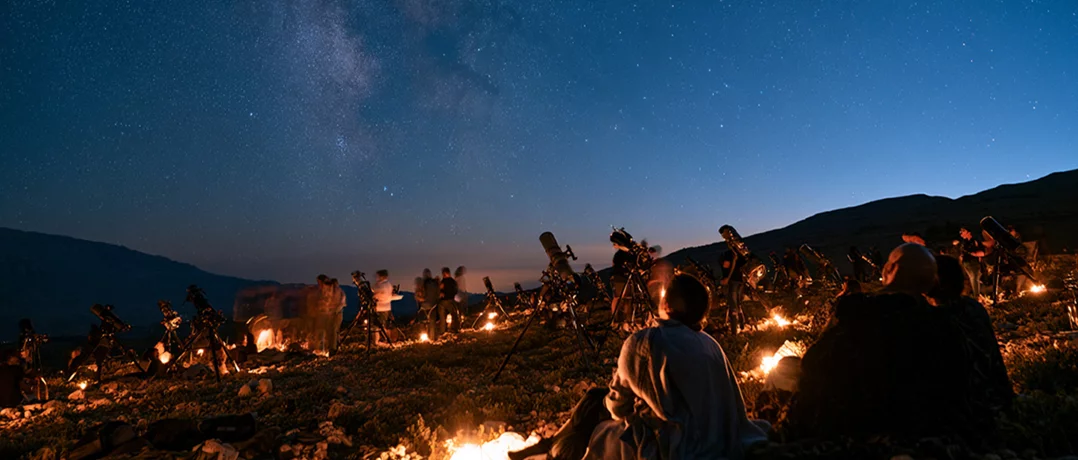
This week, Tannourine will host the first edition of “Tannourine Meets the Sky,” a stargazing event held on land bordering the Tannourine Cedar Reserve, bringing together astronomy, local tourism and community life under one of Lebanon’s clearest night skies. Part telescope night, part village showcase, the event invites visitors to step away from the noise and light of the city and look upward, toward a sky where stars, meteors and the Milky Way remain visible to the naked eye. For its organizers, however, the night is an attempt to introduce Tannourine through one of its most overlooked natural assets, while creating a new kind of tourism experience for the village.
Why Tannourine and why now
The idea began with a simple observation about geography. "This particular spot in Tannourine is the darkest area in terms of light pollution," explained Mariam Harb, journalist and Head of the Tourism and Media Committee in Tannourine. "It's very dark, so there's no light pollution. If you go up to any mountainous area, especially in August, you can see the sky very clearly, the stars, the moon, comets, and the meteors that pass through during this period."
That timing was deliberate. The event was scheduled around the peak days of mid-August, when meteor activity draws sky-watchers worldwide. While the Cedar Reserve committee had previously organized occasional camping nights with physicists and astronomers, Harb and her team wanted something more dynamic, a way to turn a quiet night of sky-watching into a full tourism draw. "When you want to encourage tourism, you have two ways of approaching it," she said. "Either you go with this concept, or you make it a bit more dynamic for people. So we came up with the idea of having a telescope night."
Built by the village
What distinguishes the event most, Harb emphasized, is that it runs entirely on local participation. Every food and drink kiosk on site is operated by residents of Tannourine itself. "We wanted this time for it to be entirely local, first of all for the people," she said, noting that the modest kiosk fee charged to vendors functions less as profit and more as a low-cost invitation to participate. Prices were kept deliberately reasonable, precisely because organizers absorbed most operating costs upfront. Entrance to the event itself is free, as is access to the telescopes.
Those telescopes are a centerpiece of the evening. Organizers secured at least five, with specialists from Notre Dame University on hand to calibrate the equipment and answer questions from visitors throughout the night.
A night designed around nature
Despite the festival atmosphere, a DJ, roughly 25 raffle prizes, and surprises promised throughout the evening, the event was built with conservation in mind. Organizers ruled out open flames entirely, citing the site's proximity to the reserve and the risk posed by wind-carried sparks. Trash bins, on-site bathrooms, and a full post-event cleanup were all planned in advance. "It's important not only in the sense of bringing people closer to nature, because they're already mountain people and are connected to nature," Harb said. "What's more important is paying attention to how we interact with nature, how we preserve it."
A first step towards the future
Harb was clear that this year's event, which drew around ten local vendors, is meant as a proof of concept rather than a finished product. "Next year, we will definitely be doing a two-day event," she said, describing early plans for a full-day camping experience paired with an evening program. For her, the stakes extend well beyond a single night of stargazing. "Any event held in Tannourine is an opportunity for young people and an opportunity for the region to develop economically and to keep people in their villages," she said. "When we give people from the village the opportunity to use this space, it's to encourage them to stay, open businesses and invest here."
In Tannourine, looking to the sky is becoming a way of looking ahead. What begins as a night beneath the stars could grow into a lasting tradition, one that brings visitors to the village while giving its own people more reasons to stay.
-
-

-
The Beiruter
-
