



As social media tracks every outfit, rewearing clothes has become taboo. This piece explores how repetition can be confidence, not failure.
The art of rewearing

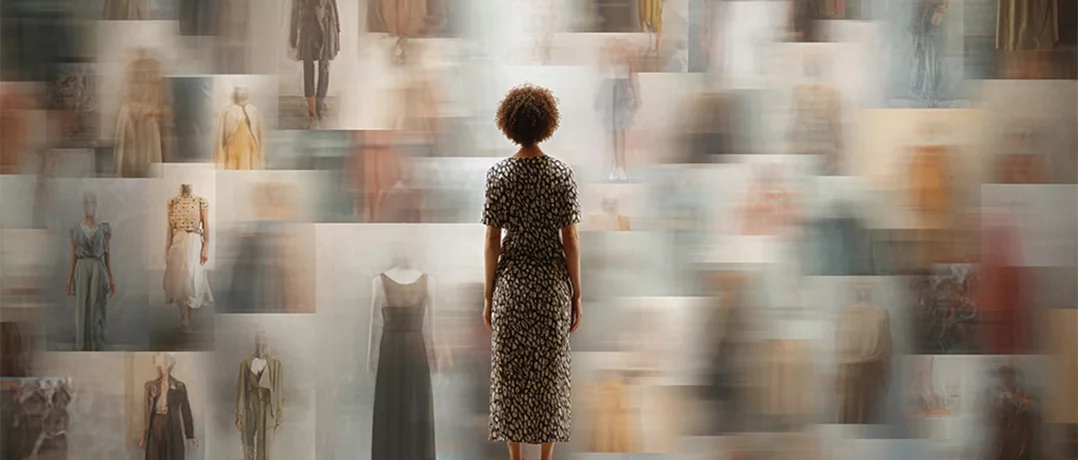
Somewhere along the fashion timeline, repetition became a social failure. In a hyper-documented world, clothing stopped being fabric and started being proof. Proof of relevance. Proof of status. Proof that you can afford to constantly renew yourself. The pressure to “never repeat” is no longer confined to red carpets. It has trickled down into weddings, birthdays, even casual outings. Social media has turned wardrobes into public timelines. And the fear is simple: if they have seen it before, what will they say?
To understand where this anxiety comes from, The Beiruter spoke to Lebanese celebrity stylist George Chamoun, who has worked closely within an industry where novelty is expected. And according to him, the pressure is real, but not universal.
The celebrity paradox
“In the world of celebrities,” George says, “people are always waiting for the celebrity to come out in a new look.” For public figures, fashion is performance. Audiences expect evolution, surprise, constant reinvention. “They’re a bit afraid,” he explains. “Because people might say, ‘Is this the only outfit they have? Are they still wearing it?’” Repetition, in this context, risks being interpreted as stagnation.
And yet, this was not always the case. George points to artists like Elissa, who openly embraced rewearing in the past. “If you go back to the archives, she wore the same dress once, twice, three times. And she once said, ‘These are my clothes. I paid for them. Why wouldn’t I wear them several times?’” It is a simple sentence, but radical in a culture obsessed with spectacle. Even Haifa Wehbe, he notes, used to repeat outfits across concerts and private events. “Before, they wore things more than once.” So what changed?
The rise of styling and the disappearance of ownership
Today, the system looks different. “With more styling now,” George explains, “it is easier for celebrities. They don’t have to buy the dress and throw it away. We’re more involved in collaborations.” Instead of purchasing pieces, celebrities often borrow them for photoshoots or events, then return them. The look exists for a moment, is photographed, and disappears.
But George makes an important distinction: rewearing an iconic is actually powerful. “There are international celebrities who re-wore their old clothes recently at events, Jennifer Lopez, Jane Fonda…” he says.
It’s nostalgic. People love to see a very iconic look again.
For the rest of us: You are your own stylist
Outside the celebrity sphere, however, the rules soften. “For ordinary people, I think it’s easier,” George says. “We don’t redo our outfits every day.” In fact, he argues that everyone is already their own stylist. “In everyday life, every person dresses themselves.” The difference between repetition and reinvention, he insists, lies in styling. “You can re-wear the same piece, but change it depending on what it is. Add a jacket. A belt. Accessories. If it’s a jacket, wear it with jeans one time, with a skirt another time.” Accessories, he emphasizes, are transformative. “You can wear a big necklace, a statement piece. Styling changes everything.” A dress is never just a dress. It’s a base. A foundation.
Which is why, when asked what pieces are most versatile, his answer is clear: “The basic pieces are the ones you benefit from the most. The famous little black dress, you can wear it in a hundred ways. It won’t look repetitive because it’s simple.”
Simplicity invites creativity.
Fashion, politics, and public image
In Lebanon, clothing does not exist in a vacuum. It intersects with politics, class, and public morality. When asked about criticism directed at public figures, particularly first ladies or political wives, for wearing expensive outfits during national crises, George approaches the topic carefully.
The stylist recognizes the newfound extravagance in public figures’ looks. “If we talk about fashion,” he says, “everyone can buy what they want. If I can afford an expensive piece, I go for it. I love fashion.” At the same time, he acknowledges the symbolic weight of public roles. “The advantage we are very happy to see is when a political figure supports Lebanese designers or local shops” he adds. “Designers love to work with them. It’s also part of the country’s image.” Supporting local designers can be economic encouragement, cultural signaling, national branding. The outfit is a message.
Rewearing as confidence
So does repeating clothes damage image? “It happens,” George admits. “People talk.” But the international stage is playing a huge role in breaking that stigma. His closing message to the younger generation reframes the conversation entirely. “Everyone can create a very nice style,” he says. “Even if they don’t shop every day. Even if they don’t have access to luxury brands. From the simplest pieces, they can create an amazing look.”
Rewearing, then, is not a failure of resources, it is a test of imagination. And perhaps the most confident thing a person can say in a culture obsessed with newness is the simplest: “I’ve worn this before. And I’ll wear it again.”
-
-

-
The Beiruter
-
