Lebanese radiologist Dr. Nayla Nicolas received a prestigious international award after developing a diagnostic pathway that dramatically improves early childhood cancer detection.




Lebanese radiologist Dr. Nayla Nicolas received a prestigious international award after developing a diagnostic pathway that dramatically improves early childhood cancer detection.

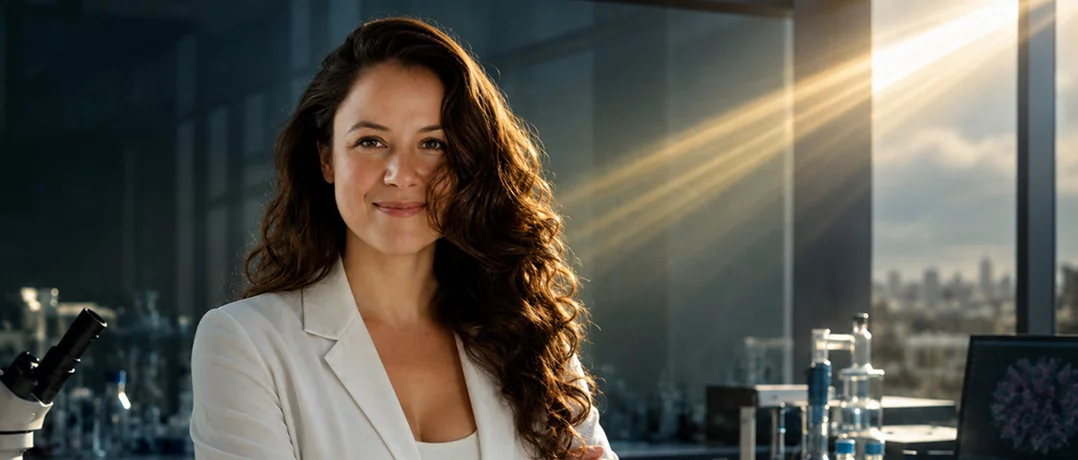
Dr. Nayla Nicolas is among the first Lebanese doctors to have encountered and trained in interventional radiology. This June, at the International Pediatric Radiology Congress in Boston, Dr. Nicolas received the Jacques Lefebvre Award, one of the most distinguished honors in her specialty, presented once every five years. The award recognizes a breakthrough that materially improves the care of children with cancer. It was, the committee noted, the first time in the award’s history that it had been given for work in interventional radiology.
Dr. Nicolas, who trained at Lebanon’s Holy Spirit University of Kaslik before moving to Paris and joining Necker-Enfants Malades Hospital, one of France’s largest pediatric hospitals, had spent years watching a painful pattern repeat itself. A child develops a lump. One doctor says to monitor it. Another orders more tests. Months pass. And all the while, a clock no one can see is ticking.
The Beiruter spoke with Dr. Nicolas to trace her remarkable journey.
“In many cases, there can be a delay of six months before a definitive cancer diagnosis is made,” she explains. “About one in five of these children ultimately turns out to have cancer. That’s not a small number.”
The consequences of delayed or incorrect diagnosis can be devastating. Surgeons who remove a mass without suspecting cancer may not take the margins or precautions the situation demands. A child who might have needed no chemotherapy at all could suddenly require multiple rounds of treatment. A cancer with a near-perfect cure rate can see its odds drop to 60 or 50 percent, simply because the first steps were taken without the right information.
Dr. Nicolas decided to build a better system. Rather than children being passed from specialist to specialist, any physician who encounters a child with an unexplained mass refers them directly to Dr. Nicolas. She conducts a full clinical consultation, determines what imaging is needed, and interprets the results. If she can confidently rule out cancer, she sends a report back to the referring physician within 48 hours. If anything looks atypical or suspicious, she performs a biopsy the same day.
Crucially, around 80 percent of those biopsies are performed under local anesthesia alone, even for children under five. From initial referral to a complete and accurate diagnosis, the maximum wait is three weeks.
Over six years, Dr. Nicolas evaluated nearly 600 children through this pathway. Among those she assessed as not needing a biopsy, she did not miss a single cancer. Among those who did undergo biopsies, approximately half were diagnosed with cancer, all of them in time to receive the right treatment from the very beginning. Cancer detection accuracy improved from 67 percent to more than 99 percent, and the diagnostic timeline shrank from four to six months down to two to three weeks.
The hardest part, she says, was not the medicine. It was the thought-process of people regarding the medical expertise and aspect of the culture. Cancer detection, with Dr Nayla Nicolas’s new model, improved from 67 percent to more than 99 percent, and the diagnostic timeline shrank from four to six months down to two to three weeks. Over 6 years, Dr Nicolas evaluated nearly 600 children through this pathway.
The hardest part, she says, was not the medicine. It was the culture.
“Many doctors, even in France, still view radiologists as people who simply take pictures,” she says. “They forget that radiologists are fully trained physicians with medical expertise and clinical judgment.” When she first proposed that referring doctors send patients directly to her, and that she, a radiologist, would be responsible for the diagnostic and management pathway, the skepticism was significant.
Within less than a year, the results spoke loudly enough. Colleagues saw what the system delivered for patients and began referring regularly. The resistance faded.
“I believed that if people saw I was doing it for the children and for the patients, not for myself, they would eventually understand,” she says. “And that’s exactly what happened.”
When her results were presented at the International Pediatric Radiology Congress this June, the reception was immediate. The congress, which draws leading pediatric radiologists from Europe and North America every five years, deemed the work both innovative and impactful.
Dr. Nicolas was not even in the room when they called her name.
“Someone called me and said, ‘Nayla, can you come here? They’re about to announce your name, you’ve won.’ I was completely shocked.”
The Jacques Lefebvre Award is named for a physician considered the founding father of pediatric radiology, one who believed that practitioners in this field should be clinicians first, not merely image interpreters. In that sense, the recognition carries a particular resonance for Dr. Nicolas, it is, in effect, an award for insisting on doing exactly what the specialty’s own pioneer believed it should do.
Hospitals in Hong Kong, Amsterdam, and London are already in discussion with her to implement similar programs in their own countries.
For Dr. Nicolas, the message she wants to leave, for young professionals as much as for the public, is honest and poignant. When she chose radiology, people told her she would never see patients. She disagreed with their premise and built a career that proved them wrong.
“No one should allow others to dictate how they work, how they live, or what they want to become,” she says. “There are no limits except the ones you place on yourself.”
And for those who still underestimate what a radiologist does, who picture someone sitting quietly behind a screen, she offers a simple corrective.
“Behind every image is a patient, a family, a sister, a mother, or a child. That’s something we should never forget.”

