



An inside look at how the 2026 Venice Biennale became a reflection of today’s global political and cultural fractures.
The Biennale’s political storm

As the Venice Biennale prepares to open to the public on May 9, the exhibition finds itself entering one of the most turbulent moments in its modern history.
Days before the inauguration of what is widely considered the world’s most prestigious contemporary art exhibition, the Biennale has become consumed by resignations, diplomatic pressure, protests, funding threats, and mounting political division. The international jury has stepped down. The traditional awards ceremony has been cancelled. Russia’s return has triggered backlash across Europe. Israel’s participation remains heavily contested. Iran has withdrawn altogether. Even Italy’s own culture minister has announced he will boycott the opening.
For an institution that has spent more than a century presenting itself as a global platform for artistic exchange, the 2026 edition is exposing something much larger than controversy. It is exposing the growing collapse of the idea that major cultural institutions can remain politically neutral during wartime.
An institution built on nations
Founded in 1895, the Venice Biennale gradually evolved into one of the world’s most influential cultural institutions, spanning visual arts, cinema, architecture, theater, dance, and music. Its International Art Exhibition, held every two years across the Giardini and Arsenale districts, gathers nearly 100 countries through national pavilions that function simultaneously as artistic spaces and symbols of state identity.
For decades, the Biennale has described itself as a platform open to all nations and resistant to censorship. But the structure of the exhibition itself has always been political. Countries compete through national representation. Governments fund participation. Pavilions operate as forms of cultural diplomacy as much as artistic expression.
In moments of geopolitical stability, that contradiction can remain largely invisible. In moments of war, it becomes impossible to ignore.
The Biennale has faced political crises before. In 1968, protests linked to student movements disrupted the exhibition and led to jury resignations. During the Cold War, national pavilions frequently became extensions of ideological rivalry between East and West. But few editions have combined institutional collapse, war-related controversies, diplomatic pressure, and public protest on the scale seen in 2026.
Why the jury resigned
The turning point came at the end of April, when the Biennale’s entire five-member international jury resigned just days before the opening ceremony.
The resignation followed mounting tensions surrounding the participation of Russia and Israel. Before stepping down, the jurors issued a rare public statement saying they would not award prizes to artists representing countries whose leaders are currently facing accusations of crimes against humanity before the International Criminal Court.
While the statement did not explicitly name countries, the reference was widely understood to concern Russia and Israel, whose leaders are facing ICC arrest warrants linked to alleged war crimes.
The jury argued that it had a responsibility to remain faithful to the Biennale’s role as a platform connected to “the urgencies of its time.” Their resignation effectively dismantled one of the exhibition’s oldest traditions. The Golden Lion and Silver Lion prizes, typically awarded during the inauguration, have now been cancelled. Instead, visitors attending the Biennale will vote for their preferred pavilions and artists throughout the exhibition’s run.
For many observers, the resignations represented more than an internal dispute. They reflected a broader fracture inside the international art world over whether institutions can still claim neutrality while wars continue to unfold in real time.
Russia’s return and the politics of reintegration
Much of the crisis surrounding the Biennale centers on Russia’s return.
After the full-scale invasion of Ukraine in 2022, artists and curators representing Russia withdrew from the exhibition in protest, leaving the Russian pavilion empty. In 2024, Russia did not officially participate and temporarily handed the pavilion to Bolivia.
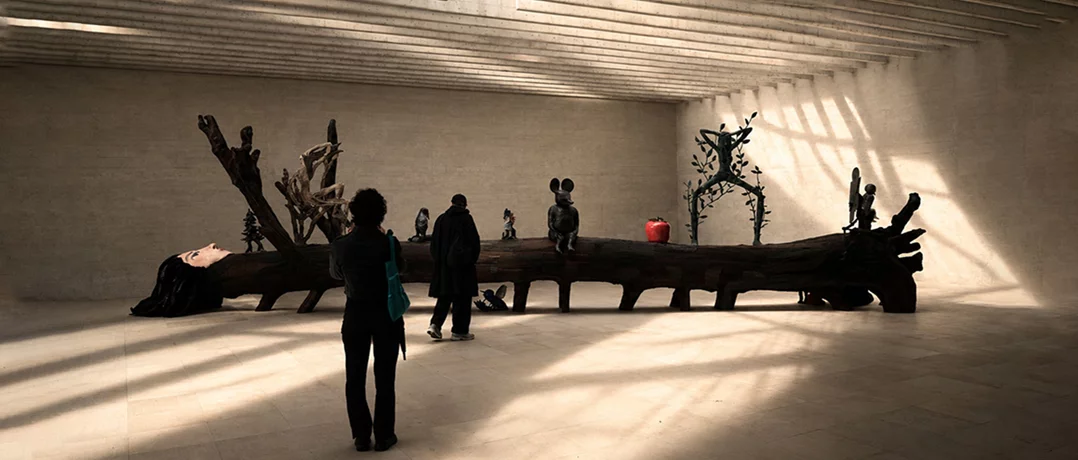
This year, however, Russia returned with an exhibition titled The Tree is Rooted in the Sky, presented inside its historic pavilion in the Giardini, which the country has occupied since 1914.
The Biennale Foundation defended the decision by arguing that Russia owns the pavilion and that no sanctions or regulations had technically been violated. The institution reiterated that it rejects exclusion and censorship, insisting that participation does not necessarily represent political endorsement.
But for critics, the issue was never simply about the presence of artworks inside a pavilion. It was about symbolism.
For opponents of Russia’s participation, returning to one of the world’s most prestigious cultural events represents a form of international normalization at a time when Moscow remains politically and economically isolated across much of Europe. Ukrainian officials warned that the Biennale risked becoming a platform for “whitewashing” violence against Ukrainian people and cultural heritage while the war continues.
The European Commission reacted sharply, threatening to withdraw a €2 million grant allocated to the Biennale unless the decision was reconsidered. European officials argued that culture should never become a platform for propaganda during an active war.
The controversy also exposed divisions inside Italy itself. Prime Minister Giorgia Meloni publicly stated that Russia’s participation was “not a decision shared by the government.” Meanwhile, Culture Minister Alessandro Giuli announced he would boycott the Biennale’s opening ceremony altogether, becoming the first Italian culture minister to do so in the institution’s history.
Italian inspectors were reportedly sent to Venice to examine the reopening of the Russian pavilion and assess whether sanctions issues existed.
Faced with mounting backlash, Russia later restricted access to its pavilion during preview days, allowing entry mainly to media and accredited visitors.
Israel, Gaza and the expanding protest movement
Russia is not the only participant at the center of controversy.
More than 200 artists, curators, and Biennale participants signed open letters calling for Israel to be excluded over the war in Gaza and alleged human rights violations. Some activists also criticized the United States over its military support for Israel and involvement in Iran.
The issue intensified because Israeli Prime Minister Benjamin Netanyahu is also facing an ICC arrest warrant linked to allegations of war crimes during the Gaza conflict. Israel has rejected the accusations and criticized attempts to politicize the Biennale.
The Israeli pavilion had already become a flashpoint during the previous Biennale in 2024, when artist Ruth Patir refused to open the exhibition until a ceasefire and hostage agreement were reached in Gaza.
This year, Israel’s exhibition is no longer taking place inside its traditional Giardini pavilion, but instead in a smaller venue within the Arsenale district.
Across Venice, protests connected to Gaza and Ukraine have increasingly become part of the Biennale atmosphere itself. National pavilions no longer feel like isolated artistic spaces. They increasingly resemble extensions of geopolitical conflict.
Iran’s withdrawal reflects a wider polarization
Iran has also withdrawn from the Biennale shortly before the opening.
No detailed official explanation was publicly provided, though the withdrawal comes amid escalating regional tensions and the increasingly politicized atmosphere surrounding this year’s exhibition.
Its absence reflects the wider geopolitical polarization now shaping the Biennale itself. What was once presented as a neutral international cultural gathering is increasingly being pulled into the same divisions shaping diplomacy, sanctions, and global alliances.
The end of “Art Above Politics”
The Venice Biennale has always reflected the political climate of its time, but rarely has that relationship appeared this direct.
What was once considered primarily a cultural event has become entangled in the same fractures shaping diplomacy, international institutions, and public debate elsewhere. The disputes surrounding Russia, Israel, and the jury’s resignation are not isolated controversies. They reflect a broader shift in how culture itself is being viewed, no longer as separate from politics, but increasingly as part of it.
As the Biennale opens this year, the question facing organizers is no longer simply how to exhibit art during a period of global instability, but whether institutions built around international cooperation can still operate according to the same rules in a far more divided geopolitical environment.
-
-

-
Michella RizkContent Manager/WriterFocusing on social affairs.
-
