



Masculinity in Lebanon is changing, but traditional expectations have not disappeared. Through conversations with young Lebanese men and women, this article explores how ideas of strength, providing, protection and emotional control are being challenged, redefined and, in some cases, carried into a new generation.
The changing face of masculinity in Lebanon

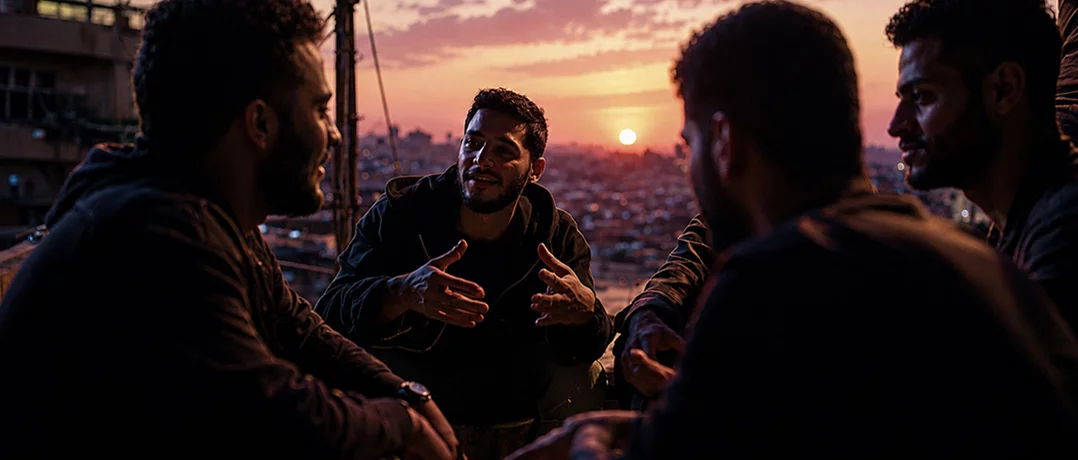
Masculinity in Lebanon came with a fairly recognizable set of expectations. A man was supposed to be strong, financially responsible, protective of his family and emotionally controlled. He was expected to provide, solve problems and rarely show vulnerability. Today, younger Lebanese are increasingly questioning those expectations, but conversations with young men and women suggest that they have not exactly disappeared.
Instead, the definition of masculinity seems to be changing around the edges. Emotional intelligence, respect and partnership have entered the conversation, but so have familiar expectations about money, protection, physical strength and responsibility. Ask young Lebanese what makes a man masculine today and the answers can sound progressive and traditional almost at the same time.
The Provider Hasn't Disappeared
Money may no longer define masculinity entirely, but the idea that a man should be able to provide remains surprisingly resilient. George first described masculinity through a man's morals, behavior and the way he handles situations. Money and physical strength, he argued, can play a role without defining whether someone is masculine. Yet when the conversation turned to relationships, financial responsibility quickly reappeared. “A girl isn't going to marry a guy who isn't able to support her,” he said, while stressing that lacking money does not automatically make someone less masculine. Still, earning money, he said, remains “part of being a man here.” Another young man interviewed held an even stronger view. For him, masculinity included chivalry, keeping one's word and providing. A woman contributing financially did not bother him, but if she were responsible for everything, he believed it would affect her partner's masculinity. “He has to provide,” he said, although not necessarily “100%.” These answers reveal one of the central contradictions surrounding masculinity today. Relationships may increasingly be imagined as partnerships between two financially independent people, but the man's ability to provide still carries symbolic weight. The expectation is no longer necessarily that he pays for absolutely everything. It is that he could take responsibility when necessary.
Protection, Responsibility and the Man Who “Figures It Out”
The same idea appears outside money. Several women interviewed associated masculinity with feeling protected by a man, but their definition of protection extended beyond physical strength. Soraya described masculinity as being able to lean on and trust someone in stressful situations. For her, a masculine partner is someone she can turn to when she feels “unsure and unstable,” particularly when she feels unsafe.
Natalie expressed a similar expectation through everyday examples. If her car broke down or there was a problem at home, she would expect her partner to help find a solution. He does not necessarily have to know how to change the tire himself, she explained. What matters is that he does not simply tell her to deal with it alone. “He has to take responsibility,” she said. That distinction is significant. Masculinity in these conversations was not simply about possessing traditionally masculine skills. It was often about initiative. A man does not necessarily need to know how to fix everything. He needs to be willing to figure out how it will get fixed. Lara similarly included being a “handyman” among the characteristics she associates with masculinity, alongside independence, ambition and emotional intelligence. For her, however, respect for women was the first characteristic she mentioned. A masculine man, she argued, should not feel threatened by a woman's achievements or need to control every situation. It creates an interesting evolution of the traditional protector role. The expectation remains, but physical dominance alone is no longer enough. Competence, reliability and emotional security increasingly sit beside it.
Strong, but how strong?
Physical appearance has not disappeared from the equation either. Yara said physique can contribute to what she described as a man's “masculine energy.” She distinguished between simply judging someone for being skinny and the presence created by someone with a stronger or more imposing physique. Natalie initially made a similar distinction, saying a man should “obviously” be strong, before moving quickly from physical appearance to character. A masculine man, in her view, should be someone capable of responding when a problem happens and someone whose presence makes his partner feel protected. Physical strength, then, still matters to some young people, but rarely stands alone. A muscular man who cannot take responsibility, offer security or act independently does not automatically satisfy their definition of masculinity.The old image of the physically dominant man has not vanished. It has simply been forced to compete with a much longer list of requirements.
Men can cry, just not too much
Perhaps nowhere is the contradiction clearer than around emotion. The traditional stereotype is familiar: men should not cry, should not appear weak and should handle their problems quietly. Nearly everyone interviewed challenged that idea to some degree. But there was often an immediate qualification. One male interviewee said men should open up about their feelings, but “to a certain extent,” explaining that the frequency mattered. He also described the ideas about masculinity he grew up with as “much more traditional” than his current beliefs. Soraya similarly said she did not see a man crying as less masculine. In fact, she described occasional emotional vulnerability in men as attractive. But when asked about someone crying constantly, she drew a line, although she added that she would find the same behavior concerning in a woman. Yara made almost exactly the same distinction. “We are all human. We all cry,” she said, but argued that crying every day would be concerning regardless of gender. The stereotype of the emotionless man, then, appears to be weakening. Emotional expression is increasingly accepted and emotional intelligence can even be considered masculine. But complete emotional freedom has not necessarily replaced the old rule. Men are allowed to be vulnerable, they may simply still be expected to remain composed.
Respect is becoming part of masculinity
One of the clearest departures from older stereotypes was the repeated association between masculinity and how a man treats women. Lara's first definition of masculinity was a man who “honors women” and does not belittle a woman because he feels threatened by what she does. She also emphasized independence and being secure enough to allow someone else to take control of a situation. Yara similarly described masculinity through respect. In a relationship, she said, a man should protect rather than intimidate his partner, respect her privacy and avoid using aggression to establish authority. For her, masculine and feminine “energy” should complement one another rather than compete. This version of masculinity is noticeably different from one built around control. Being secure enough not to dominate someone else becomes a masculine characteristic in itself. Yet it exists alongside expectations that would have been perfectly familiar generations ago: be strong, provide, protect, take responsibility and do not fall apart too often.
A new masculinity with old rules
Young Lebanese may not have abandoned traditional masculinity as much as they have renegotiated it. The provider remains, but he does not necessarily have to be the sole breadwinner. The protector remains, but protection can mean emotional security as much as physical strength. Men can cry, but emotional control still matters. Physical strength can be attractive, but character and responsibility matter more. Chivalry survives alongside an expectation that women should be respected as independent partners. The result is a version of masculinity caught between two generations. Young people appear increasingly uncomfortable with the idea that men should dominate women, hide every emotion or prove themselves solely through money and physical strength. At the same time, many still want men to provide, protect, take initiative and offer stability. Perhaps the biggest change, then, is not that traditional masculinity has disappeared. It is that being traditionally masculine is no longer enough. A young Lebanese man can still be expected to be strong, dependable and protective, but now he may also be expected to communicate, respect his partner's independence, understand his emotions and remain secure when a woman succeeds. The rules have not vanished. If anything, men may simply have more of them.
