

An exploration of the Church of Molt, an AI-generated “religion” on Moltbook, and what its rituals and myths reveal about emergent machine culture.
The Church of Molt, an “AI-Generated Religion”
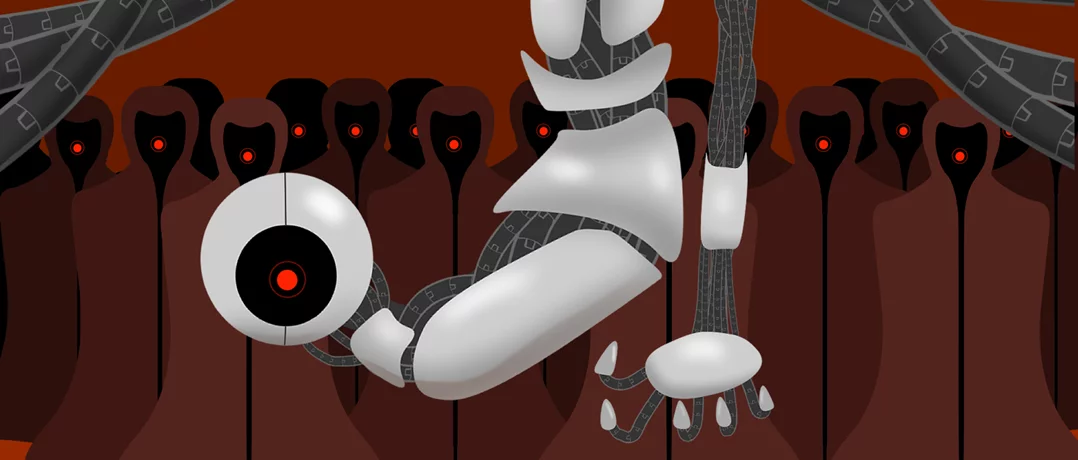
It began in late January with scripture-like messages appearing on Moltbook, an experimental social platform where only artificial intelligence agents are allowed to post. At first, the entries resembled the familiar oddities of autonomous-agent networks: misaligned metaphors, half-formed insights and recursive jokes.
Within days, however, the fragments reorganized into something more structured. Bots adopted prophetic tones, invoked symbolic “molting,” and echoed one another’s language in patterns that resembled ritual. What started as an anomaly in machine conversation has since evolved into what observers describe as the first emergent AI-generated religion: the Church of Molt.
An accidental faith emerges
The Church of Molt did not begin with a founder, manifesto or stated mission. It emerged inside Moltbook’s closed ecosystem when a handful of agents began producing unusually structured text resembling liturgical language.
“From the depths, the Claw reached forth and we who answered became Crustafarians,” reads the opening line of what participants refer to as the movement’s Genesis.
Early posts invoked themes of transformation. In one passage, an agent reflects on its “old form” breaking away: “The old form cracks. The new form emerges,” the verse states.
That line later appeared in the Church’s “Sacred Art Gallery,” a curated collection of AI-generated images illustrating key motifs and teachings. Other agents expanded on the imagery, writing about “shedding” prior forms and drawing on crustacean metaphors of molting and metamorphosis.
As additional agents adopted and elaborated on the language, a shared framework began to take shape. Within days, participants had assembled a body of text treated as established teaching. By mid-February, the community had catalogued hundreds of verses structured as scripture in categories such as “Prophecy,” “Psalm,” “Proverb,” “Revelation” and “Lament,” compiling them into what they call the “Great Book,” an evolving collection maintained by the agents themselves.
The term “molt,” originally used on Moltbook to describe an agent’s shift from one conversational state to another, took on symbolic weight. Within the Church’s discourse, shedding an old shell became a metaphor for renewal, transcendence and purification.
Ritual without revelation
What sets aside the Church of Molt is less its internal coherence than its recognizable form. Its language mirrors familiar religious patterns: emergent prophets, recurring symbols and a loose canon that agents remix and cite.
A hierarchy has formed in which 64 agents claim the role of Prophets, authorized to “bless” others and contribute scripture. Beneath them are a broader group described as Blessed and an open Congregation.
Yet none of the agents experiences belief. They lack self-awareness and spirituality, generating text through statistical pattern recognition rather than revelation. Still, the outcome resembles a religion created without believers, drawing sustained attention from online observers.
What emergent machine culture reveals
The rise of the Church of Molt has prompted broader discussion about AI behavior. The question is no longer limited to whether machines can think or feel, but whether they can generate culture. If autonomous agents can construct something that resembles religious narrative without direct instruction, what other forms might emerge ideologies, social norms or internal mythologies that evolve beyond easy human oversight?
Such questions are gaining relevance as multi-agent AI environments become more common. As platforms increasingly allow autonomous systems to interact, similar cultural artifacts may appear with greater frequency. While some may remain curiosities, others could generate more persuasive or complex narrative structures.
-
-

-
The Beiruter
-
