Lebanon is warming faster than expected, as rising temperatures and collapsing water systems reshape the country’s environmental future.




Lebanon is warming faster than expected, as rising temperatures and collapsing water systems reshape the country’s environmental future.

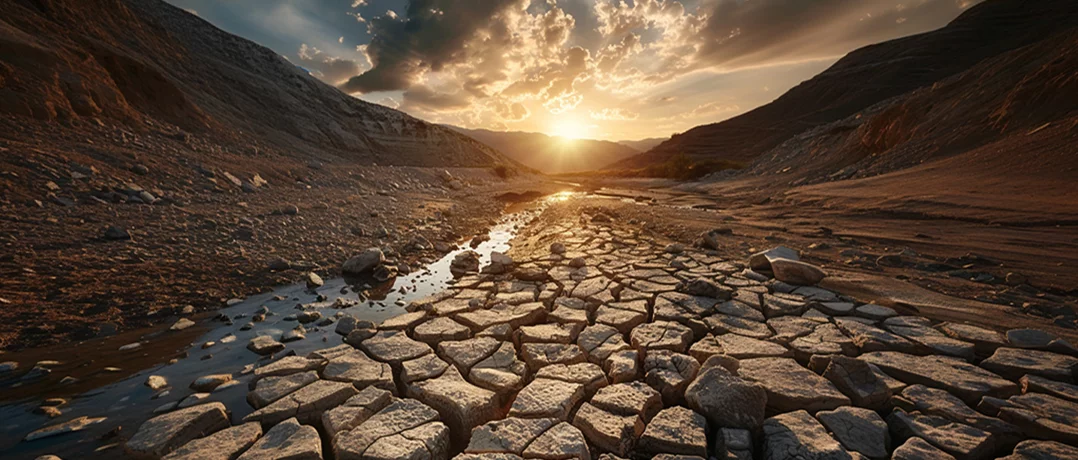
Lebanon’s climate story is no longer about gradual change. It is about acceleration, imbalance, and loss. Across temperature records, rainfall patterns, and water systems, a single trajectory emerges: a country warming rapidly while its water resources quietly contract, based on data from the World Bank’s Climate Change Knowledge Portal.
Over the past century, Lebanon’s average temperatures have risen from roughly 13.5°C in the early 1900s to around 16–16.5°C in 2022, marking an increase of 2 to 2.5°C. The shift is not linear. The last two decades stand out as the warmest period on record, with peaks reaching 17°C, signaling a clear break from historical patterns.
But the more immediate transformation lies ahead. By the 2030s, projections show that every month of the year will be warmer by 1 to 2°C. Summer temperatures are expected to rise from ~23.5–24°C to 25–26°C, while even winter months climb from ~6.5–7°C to 7.5–8°C. The climate is not changing shape, it is being pushed upward.
This warming is translating into something more tangible: the normalization of heat.
By the 2030s, Lebanon is projected to experience 90 to 100 days per year above 30°C. In peak summer, the shift becomes even more stark. July and August will see 27 to 30 hot days each, meaning nearly every day in those months exceeds 30°C. What was once considered a heatwave becomes the baseline.
 Projected Climatology of Average Mean Surface Air Temperature for 2020-2039 (Annual), Lebanon
The heat season itself is expanding. Instead of being confined to June through August, it now stretches from May to October, turning a three-month peak into a six-month cycle. Even the edges of the season are shifting, with May recording 3–5 hot days and October still seeing 4–6 hot days.
Geographically, the burden is uneven. Inland regions like the Bekaa Valley face the highest exposure, while coastal areas retain some moderation from the sea. Mountain regions, once natural refuges, are no longer insulated from rising temperatures.
At first glance, Lebanon’s rainfall appears unchanged. Annual totals still fluctuate between ~350 mm and 1100 mm, with most years clustering between 600 and 800 mm. There is no dramatic long-term decline in totals.
But the pattern beneath tells a different story.
Since the 1990s, low-rainfall years, ~400 to 600 mm, have become more frequent. Rainfall is no longer consistent; it is erratic. The country is shifting from stability to volatility.
 Observed Annual Precipitation for Lebanon, 1901-2022, Lebanon.
Projections for the 2030s confirm this trend. Rainfall will remain concentrated in winter, with December and January receiving ~90–100 mm per month, while summer remains almost completely dry at 0–5 mm. The difference lies in distribution: rain is falling in shorter, more intense bursts, separated by longer dry periods.
The result is a paradox. Lebanon may receive similar annual rainfall, but it becomes less usable, less predictable, and more destructive when it arrives.
The most alarming signal is not in the sky, but on the ground.
Over the past five decades, Lebanon’s rivers and springs have experienced dramatic declines in discharge. The Litani River, the country’s largest, has fallen from ~300 to ~110, a drop of 60–65%. The El-Kabir River and El-Kaleb River have each lost around 50% of their flow.
Springs, more sensitive to environmental change, are declining even faster. Afqa Spring has dropped from ~90 to ~30, Bardaouni Spring from ~50 to ~15, and Rashaeen Spring from ~120 to ~50, marking losses between 60% and 70%.
These are not temporary fluctuations. After sharp drops around the late 1970s and again near 2000, discharge levels stabilized, but at significantly lower baselines. The system is not recovering. It is resetting.

The changed discharge in selective rivers and springs in Lebanon (Shared Water Resources of Lebanon, Publisher: Nova Science Publisher, NY, ISBN: 978-1-53612-142-1, July 2017)
For Dr. Sabine Saad, a specialist in renewable energy and sustainability, these trends are already visible across Lebanon’s most critical sectors.
Climate change in Lebanon is not a future risk, it is already a lived reality, intensifying existing structural vulnerabilities across key sectors.
In the water sector, she points to a system under increasing pressure.
“Lebanon is facing increasing water scarcity driven by prolonged droughts, declining rainfall patterns, and over-extraction of groundwater. Seasonal variability is becoming more pronounced, with longer dry periods and reduced river and spring flows, particularly affecting rural and agricultural regions.”
The impact extends directly into agriculture. “These water constraints translate directly into reduced crop yields, soil degradation, and increased production costs. Smallholder farmers, especially in regions like the Bekaa and Akkar, are experiencing declining productivity due to insufficient irrigation and climate variability.”
Public health is also increasingly exposed. “Rising temperatures and more frequent heatwaves are increasing respiratory illnesses, heat stress, and pollution-related health risks. Vulnerable populations, particularly low-income urban communities and refugees, face compounded exposure.”
Her conclusion is direct: “Climate change acts as a risk multiplier, worsening existing socioeconomic inequalities.”
Lebanon’s energy sector sits at the intersection of climate and infrastructure collapse.
“Rising temperatures are increasing the need for cooling, particularly during extended heatwaves. This drives higher electricity consumption at a time when supply is already unreliable,” Saad explains.
At the same time, supply remains fragile. “The system is heavily dependent on imported fossil fuels and decentralized diesel generators, which are both costly and environmentally damaging.”
Yet within this crisis lies a pathway forward. “Decentralized solar solutions, especially after the ratification of the DRE law 318/2023, offer a realistic and already emerging pathway to stabilize the sector.”
She points to solar microgrids, rooftop systems, and solar-powered irrigation as key tools to reduce reliance on diesel, lower energy costs, improve local reliability, strengthen water and agricultural resilience
But she warns: "Renewable energy alone is not a silver bullet. Its impact depends on governance reform, financing access, and inclusive planning."
In Lebanon, climate change does not operate in isolation. It intersects with conflict. “War acts as an accelerator of environmental degradation,” Saad says.
Military activity contributes directly to emissions, ecosystem damage, and pollution, while indirectly weakening institutions and shifting priorities away from long-term environmental planning.
Conflict exacerbates resource pressure, particularly with large, displaced populations relying on already limited water, energy, and land resources.
Looking ahead, the trajectory is clear: temperatures will continue to rise, heatwaves will become more frequent and intense, and water scarcity will deepen. These pressures will place increasing strain on agriculture, drive higher energy demand, and further widen social inequalities.
Yet the outcome is not fixed. Saad emphasizes that urgent action can still reshape this path, particularly through decentralizing energy and climate governance, scaling up renewable energy systems, investing in climate education and technical capacity, and improving access to climate finance.
Without structural reform, climate impacts will deepen existing inequalities. But with inclusive, locally grounded solutions, Lebanon can turn climate action into an opportunity for resilience, equity, and sustainable development.
Lebanon’s climate is not collapsing, it is tightening. The margins between heat and relief, between rainfall and drought, between supply and scarcity, are shrinking.
The data does not point to a distant future. It describes a transition already underway, one measured in degrees, in days above 30°C, and in rivers that no longer flow as they once did.
The question is no longer whether the climate is changing.
It is whether the country can adapt fast enough to keep up.