



Pope Leo XIV’s reform gives Eastern Catholic synods a formal path to remove patriarchs for grave cause with papal assent, reshaping church accountability with particular significance for the Maronite Church.
The code of Cannons: The ability for Eastern Churches to remove their own patriarch
The code of Cannons: The ability for Eastern Churches to remove their own patriarch
By Nami El Khazen | September 03, 2026

Reading time: 7 min
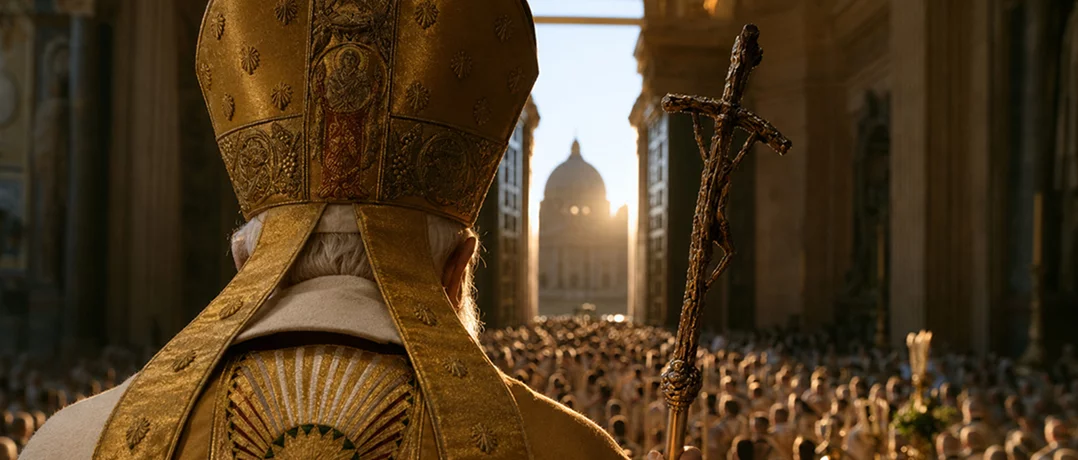
Six days after his election, Pope Leo XIV devoted one of the first audiences of his pontificate to the Eastern Catholic Churches. Their traditions, he said, had much to offer the wider Church, including on Christian life, liturgy and, notably, synodality. He also urged their bishops to make their synods places of fraternity and authentic co-responsibility.
Sixteen months later, that emphasis on co-responsibility has acquired a new legal dimension. In Mutua Concordia, a papal letter issued on August 29, Leo amended the Code of Canons of the Eastern Churches to give the synods of patriarchal Churches an authority they previously lacked: the ability, for grave cause and through a defined procedure, to remove their own patriarch.
The Synod and the Patriarch
To understand the significance of the change, however, it is necessary to understand the institution receiving the new power. A synod is the formal assembly of bishops through which a patriarchal Church, like the Maronite Church, collectively exercises key governing powers. Each patriarchal Church has its own Synod of Bishops, with the Patriarch normally presiding over a body that is part of the Church’s governing structure rather than simply an advisory assembly.
That distinction has long been central to the Catholic understanding of the Eastern Churches. The Second Vatican Council, in its 1964 decree Orientalium Ecclesiarum, described the Patriarch together with his Synod as the highest authority for the affairs of the patriarchate, while preserving the Roman Pontiff’s right of intervention. The synod already exercises substantial powers of its own, including electing the Patriarch, legislating for the patriarchal Church and participating in the selection of bishops.
The gap in Eastern Canon Law
Despite the breadth of those powers, one major gap remained in the existing law. Under the Code of Canons of the Eastern Churches, promulgated in 1990, the patriarchal see could become vacant through the death or resignation of the Patriarch, but there was no defined procedure by which the Synod itself could remove him if he refused to step down.
That left the law without a clear internal remedy for an exceptional situation in which the relationship between the Patriarch and his bishops had broken down completely. In Mutua Concordia, Pope Leo XIV describes such a possibility as one in which the bond between the Patriarch, the Pater et Caput, or father and head of the Church, and the other bishops has become gravely and irreparably compromised.
The new law was designed to fill that gap by setting out, for the first time, a formal procedure for resolving such a rupture.
The procedure established by Pope Leo XIV begins by ensuring that the Synod can act even if the Patriarch does not cooperate. Under the amended Canon 106, if the Patriarch fails to fulfil his obligation to convene the Synod, that authority passes to the bishop entitled to vote who is senior by episcopal ordination (meaning the longest-serving among them). If he also fails to act, the power passes successively to the next eligible bishops. The provision is significant because it prevents the Patriarch from blocking a process concerning his own position simply by preventing the Synod from assembling.
Canon 126 then establishes the steps required for removal. The process begins with the Synod determining that a grave cause exists and asking the Patriarch to resign. The law does not provide an exhaustive list of what constitutes such a cause, leaving that initial judgment to the Synod itself.
If the Patriarch refuses, the bishop senior by episcopal ordination arranges for the Synod to elect a new president to oversee the proceedings. This removes the Patriarch from his normal role presiding over the body now considering his position. He nevertheless retains the right to defend himself before the Synod.
The final decision requires a secret ballot supported by at least two-thirds of the Synod’s members entitled to vote. Even then, the Patriarch is not automatically removed. The new president must inform the Pope, whose assent is necessary for the decision to take effect and for the patriarchal see to become vacant.
The mechanism therefore combines a substantial new synodal power with several barriers against its routine use. Removal is made possible, but deliberately difficult.
A new balance of authority
The significance of the reform lies less in expanding papal authority than in redistributing authority within the Eastern Churches themselves. Pope Leo XIV states that the new rules are intended to give a more complete expression to the internal autonomy of the patriarchal Churches. The Synod now determines whether a grave cause exists, conducts the proceedings and reaches the decision on removal, while the Pope’s role comes only at the end of the process.
That does not reduce the Patriarch to a chairman serving at the pleasure of the bishops. Mutua Concordia explicitly describes him as the first among the episcopal assembly and not merely its president. At the same time, the Pope stresses that the Patriarch cannot be considered independently of the Synod that elected him and shares responsibility for governing the Church.
The reform therefore changes primarily the relationship between Patriarch and Synod. The Patriarch remains father and head of the Church (Pater et Caput), while the Synod gains a new form of institutional accountability over his office. While Rome retains the final safeguard through papal assent, the substantive judgment begins within the Eastern Church itself.
Synodality and the Christian East
The reform also fits a longer effort by the Catholic Church to give greater institutional expression to the distinct traditions of the Christian East. The Second Vatican Council affirmed that Eastern Catholic Churches have the right and duty to govern themselves according to their own disciplines, while the 1990 Code of Canons of the Eastern Churches gave those structures a separate legal framework within the Catholic Church.
Pope Leo XIV places Mutua Concordia within that tradition, arguing that greater responsibility for Eastern synods is consistent with the internal autonomy of Churches sui iuris, self-governing Churches in communion with the Catholic Church. He also points explicitly to relations with the Orthodox Churches and to their theological understanding and practice of synodality. By doing so, Pope Leo XIV situates the reform within the historic pattern of Church government in the Christian East, where synodal authority has long occupied a more central place.
The Maronite precedent
For Lebanon, the most immediate example is the Maronite Church. Its Synod already elects the Maronite Patriarch and exercises broad authority over the internal affairs of the Church. Under the new law, that same body now also has a defined procedure for addressing the exceptional case in which a Patriarch refuses to resign despite a grave rupture with the bishops. Maronite history shows why the absence of such a mechanism could become consequential.
On the eve of the Lebanese Synod of 1736, relations between Patriarch Youssef Dergham El Khazen and parts of the episcopate were already deeply strained. During preparations for the Synod, the Patriarch clashed with the papal legate Joseph Assemani and several bishops over reforms that would limit patriarchal authority, including the organization of dioceses. The dispute became entangled with pressure from the Khazen family and intervention by the French consul, while the Patriarch later appealed to Rome in an unsuccessful attempt to overturn some of the Synod’s decisions.
The confrontation showed how difficult such a rupture could become when there was no clear mechanism for ending it. An initial attempt to hold the council broke down amid pressure on the bishops, and outside intervention was needed before the proceedings could resume. Even after the Synod adopted its reforms, resistance to their implementation continued, drawing Rome into the dispute. Pope Benedict XIV formally approved the Synod’s acts in September 1741, five years after the council, and in February 1742, nearly six years after the bishops had voted, separately confirmed its provisions for the division of the patriarchate into dioceses.
Had a mechanism comparable to Mutua Concordia existed, the bishops would have possessed another institutional way out once ordinary negotiation failed: the possibility of formally asking the Patriarch to resign and, if the conflict met the threshold of a grave cause, ultimately moving toward his removal. That does not mean Patriarch El Khazen necessarily would have been deposed, nor that the canonical structures of 1736 were identical to those of today. But the existence of such a mechanism could have helped break the institutional deadlock by giving the bishops a defined procedure for bringing the dispute to a conclusion, rather than allowing it to drag on through pressure, outside intervention and repeated recourse to Rome.
The 1736 episode therefore illustrates the practical importance of what Pope Leo XIV has now added to Eastern canon law: a defined institutional exit when the relationship between Patriarch and bishops becomes untenable. For the first time, an irreparable rupture between Patriarch and bishops no longer has to remain suspended between pressure, resignation and outside intervention. The Synod now possesses a means of bringing the question to a conclusion, while the Pope retains the authority to determine whether that conclusion takes legal effect. A longstanding gap in Eastern canon law has finally been given a canonical answer.
-
-

-
Nami El KhazenJournalistFocusing on geopolitics and international affairs.
-
