As Lebanon's economic crisis deepens, maintaining a middle-class lifestyle now requires thousands of dollars each month, with housing, education, healthcare, food, and transportation placing unprecedented pressure on family budgets.




As Lebanon's economic crisis deepens, maintaining a middle-class lifestyle now requires thousands of dollars each month, with housing, education, healthcare, food, and transportation placing unprecedented pressure on family budgets.

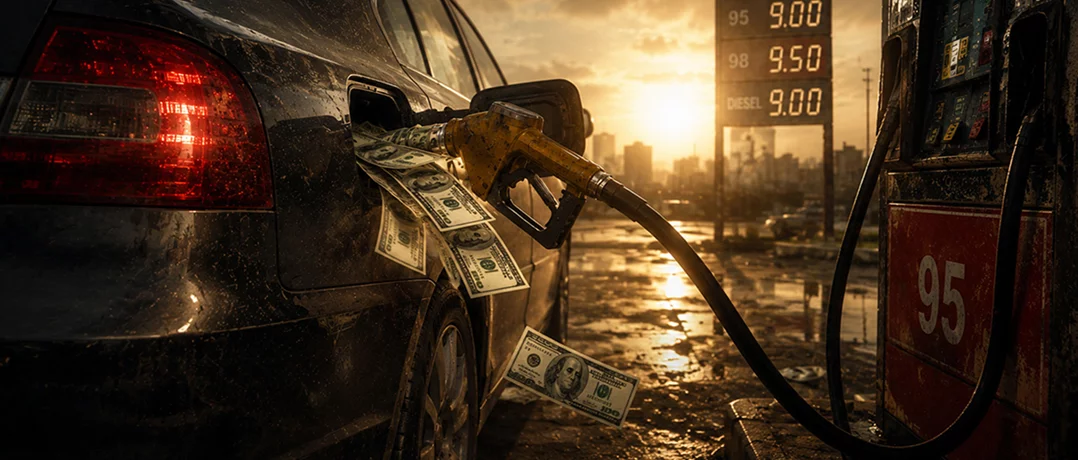
Between private schooling, fuel, generators, healthcare and soaring food prices, maintaining a middle-class life in Lebanon has become increasingly expensive. In a country where the official minimum wage barely covers a fraction of basic monthly expenses, simply living “decently” can now require several thousand dollars a month.
Buying groceries. Paying school tuition. Filling up the car. Covering the generator bill. Going to the doctor without financial anxiety. Taking the family out to dinner once in a while. In Lebanon, these once-routine expenses have become a monthly balancing act.
As the country continues to endure one of the worst economic crises in its modern history, one question now dominates conversations across Lebanese households: how much does it actually cost to live decently in Lebanon in 2026?
The answer is staggering. For a Lebanese family of four living without extravagance but trying to maintain what many would still consider a “normal” middle-class standard of living, monthly expenses can now easily range between $3,000 and $5,000, especially when private schooling, rent, transport and healthcare are included. In some parts of Beirut, that figure can climb well beyond $6,000 a month.
Officially, Lebanon’s minimum wage in the private sector now stands at around LL28 million, roughly $300 to $320 at market exchange rates.
In practical terms, however, that amount no longer comes close to covering even the essentials.
Rent alone can consume several times the minimum wage. Add food, transportation, electricity and healthcare, and the gap becomes overwhelming. Even employees earning $1,000, $1,500 or even $2,000 a month increasingly say they struggle to make ends meet.
The underlying problem is structural: Lebanon now operates largely as a dollarized economy, while many salaries have failed to keep pace with inflation and the rising cost of services.
Housing remains one of the largest expenses for most Lebanese families. In Beirut and several sought-after urban areas, a family-sized apartment can now rent for between $800 and $2,000 per month, with premium neighborhoods significantly exceeding those figures.
Outside the capital, rents can be lower, often ranging between $400 and $900, depending on the region, size and condition of the apartment.
But rent is only part of the equation. Families must also absorb the cost of private generator subscriptions, electricity, water, internet, mobile plans and building maintenance fees.
As a result, monthly utility and service costs alone can add another $300 to $700 to household expenses. In some Beirut neighborhoods, generator bills can exceed $200 per household.
Food has become one of the most painful pressure points for Lebanese households.
For many middle-class families of four, monthly grocery costs can easily range between $700 and $1,200, depending on consumption habits, imported products and household size. The bill can rise even higher for families relying heavily on imported goods or higher consumption patterns.
Prices for basic goods have surged dramatically: meat, dairy products, coffee, infant formula, cooking oil, hygiene products, diapers and medication. Today, a routine supermarket visit can easily exceed $150 to $250.
Many families have consequently altered their consumption habits, reducing meat purchases, limiting restaurant outings, replacing imported goods with cheaper alternatives, or buying only essential items.
For many parents, education has become the most financially stressful burden of all. Lebanon’s private education sector, long considered one of the country’s pillars, has progressively shifted toward dollarized fees since the crisis.
School fees have soared. In many private and international schools, annual tuition can range from around $3,000 to $15,000 per child, with elite institutions exceeding $20,000 annually.
And tuition represents only part of the cost. Families must also cover transportation, books, uniforms, extracurricular activities and various administrative fees.
For households with two children, education expenses can now reach $15,000, or even more than $25,000 per year, depending on the school and level of services.
In some cases, school fees alone now exceed the total annual income of many Lebanese workers.
Lebanon remains heavily dependent on private cars due to the near absence of reliable public transportation.
Although fuel prices remain below those of several European countries, transportation costs still weigh heavily on household budgets.
Filling up a vehicle now generally costs between $50 and $80, depending on the car, tank size and fuel fluctuations.
Once fuel, maintenance, insurance, tyres, parking and daily commuting are factored in, an active family can easily spend between $300 and $600 per month simply to move around.
Lebanon’s healthcare system has also been deeply weakened by the crisis.
Even middle-class families increasingly struggle to maintain adequate medical coverage. A private family health insurance policy can range from a few thousand dollars to well above $6,000 per year, depending on age, coverage, exclusions and provider.
Without insurance, hospitalization can rapidly become financially devastating.
Some specialized medical procedures and treatments now cost several thousands of dollars upfront, placing serious pressure on families already stretched by daily expenses.
Restaurants, beach clubs, cinemas, cafés, sports memberships and weekend outings have all become substantially more expensive.
A simple family outing can now easily cost between $100 and $200, depending on the venue and number of people.
For many Lebanese households, even modest leisure activities have become occasional luxuries rather than regular habits.
Perhaps the most striking transformation is the gradual erosion of Lebanon’s middle class.
Before the 2019 financial collapse, a monthly income of $2,000, or even $3,000, still allowed many families to live relatively comfortably.
Today, even what were once considered “good salaries” are increasingly insufficient amid dollarization, inflation and soaring service costs.
Many families now rely on savings, depend on remittances from relatives abroad, juggle multiple jobs or slowly abandon non-essential spending.
In Lebanon, the new luxury is simply living normally.
In 2026, the challenge for many Lebanese families is no longer about living well. It is about maintaining basic stability: paying school fees, keeping the refrigerator full, covering fuel costs, accessing healthcare and preserving a minimum sense of normality.
Because in today’s Lebanon, living “decently” can now cost several thousands of dollars a month. And for a growing share of the population, that standard of living is slipping further out of reach.
