



The Israeli strike on Beirut’s southern suburbs signals a renewed phase of escalation, highlighting tensions around Hezbollah’s Radwan Force and broader regional instability.
The Dahiyeh hit and the risk of wider war

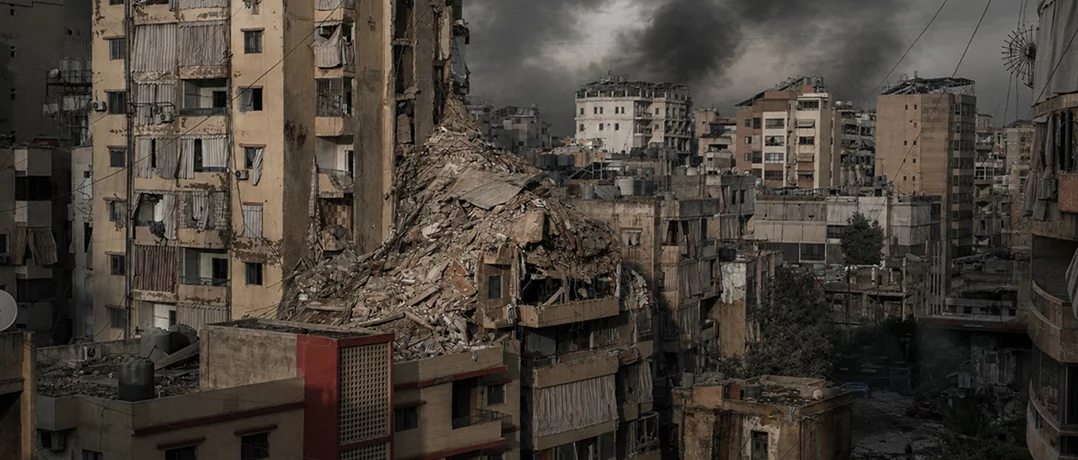
The Israeli airstrike that targeted Beirut’s southern suburbs marked a significant and dangerous development in the ongoing confrontation between Israel and Hezbollah. The strike, which reportedly killed Malek Ballout, an operations commander in Hezbollah’s elite “Radwan Force,” represented the first Israeli attack on the area in nearly a month since the ceasefire began and immediately revived fears of a broader escalation.
Conducted without prior warning, the operation underscored Israel’s willingness to continue pursuing Hezbollah commanders deep inside Lebanese territory despite an existing ceasefire arrangement.
The strike and conflicting narratives
Israeli officials confirmed that the operation specifically targeted a senior commander from Hezbollah’s Radwan Force, which is considered the group’s elite offensive military unit. According to statements issued by Israeli Prime Minister (PM) Benjamin Netanyahu and Defense Minister Israel Katz, the commander had allegedly been involved in directing attacks against Israeli military positions and northern Israeli towns.
Israeli media outlets, however, presented differing accounts regarding the outcome of the operation. While some reports suggested that multiple senior Radwan officials were killed alongside the targeted commander, others indicated that several intended targets were not present during the strike. Hezbollah itself did not immediately issue a detailed statement confirming the extent of the losses, though sources close to the group later identified the slain commander as Malek Ballout.
The strike targeted an apartment in the Ghobeiri area of Beirut’s southern suburbs, a district widely regarded as a Hezbollah stronghold. Images from the aftermath showed severe destruction to the residential building and renewed scenes of panic among civilians already traumatized by months of instability and displacement.
The absence of prior warning before the strike also attracted significant attention. In previous operations, Israel had sometimes issued evacuation notices before attacking locations in Beirut’s southern suburbs. However, when targeting senior figures, operations, such as that of yesterday, tend to be designed for maximum tactical surprise, reflecting the increasing emphasis on rapid targeted assassinations within Israel’s broader military strategy.
The strategic importance of the Radwan Force
The Radwan Force occupies a particularly important position within Hezbollah’s military structure. Established originally under the supervision of senior Hezbollah commander Imad Mughniyeh, the unit was designed as a specialized offensive force trained for infiltration operations, border raids, and complex military missions.
Israeli military doctrine has long viewed the Radwan Force as one of Hezbollah’s most dangerous components, especially due to its alleged preparations for potential incursions into northern Israel during any future large-scale war. Israeli officials have repeatedly described the unit as a direct strategic threat capable of launching highly coordinated attacks against military and civilian targets.
Over the years, the Radwan Force has developed a reputation for advanced combat training, operational secrecy, and battlefield experience gained through Hezbollah’s involvement in regional conflicts, particularly in Syria. Many analysts believe that the force represents Hezbollah’s attempt to transform itself from a primarily guerrilla movement into a more sophisticated hybrid military organization.
For Israel, therefore, targeting senior Radwan commanders serves both tactical and symbolic objectives. Operationally, it seeks to weaken Hezbollah’s offensive capabilities and disrupt command structures. Politically, it sends a message that Israeli intelligence penetration remains effective even within Hezbollah’s most secure areas.
Regional and international dimensions
The timing of the strike also carried broader geopolitical implications. The attack occurred as international attention remained focused on ongoing diplomatic efforts involving Iran, the United States (U.S.), and regional powers. Statements by U.S. President Donald Trump regarding a possible agreement with Iran added another layer of complexity to the regional atmosphere, as some observers viewed yesterday’s operation as a dual message: to hinder possible U.S.-Iran agreement, or to signal that the Lebanese scene remains a separate front even if an agreement was reached with Tehran.
For Lebanon, already suffering from severe political paralysis and economic collapse, continued escalation threatens to deepen an already catastrophic national crisis. Indeed, the World Health Organization (WHO) has also warned about repeated attacks affecting healthcare infrastructure, including hospitals and medical centers.
Therefore, the Israeli strike on Beirut’s southern suburbs represents more than a targeted military operation against a Hezbollah commander. It reflects the persistence of a dangerous strategic confrontation that continues to evolve despite temporary ceasefires and diplomatic efforts. By targeting a senior figure within the Radwan Force inside Beirut itself, Israel signaled that it remains committed to an aggressive strategy of preemptive action against Hezbollah’s military leadership.
At the same time, the attack exposed the fragility of the current truce and the growing possibility that localized confrontations could once again escalate into a broader armed conflict. The renewed targeting of Beirut’s southern suburbs is especially significant because attacks on the capital carry substantial political and psychological implications. Such operations risk widening the confrontation beyond the border regions.
Nevertheless, the central question now is not only whether retaliation will occur, but whether any regional or international actor still possesses the leverage necessary to prevent the confrontation from spiraling into another full-scale war.
-
-

-
The Beiruter
-
