



Self-medication in Lebanon goes beyond easy access to medicine, revealing how cultural attitudes, health anxiety and the desire for quick relief can turn taking a pill into an automatic response to physical and emotional discomfort.
The dangerous culture of self-medication

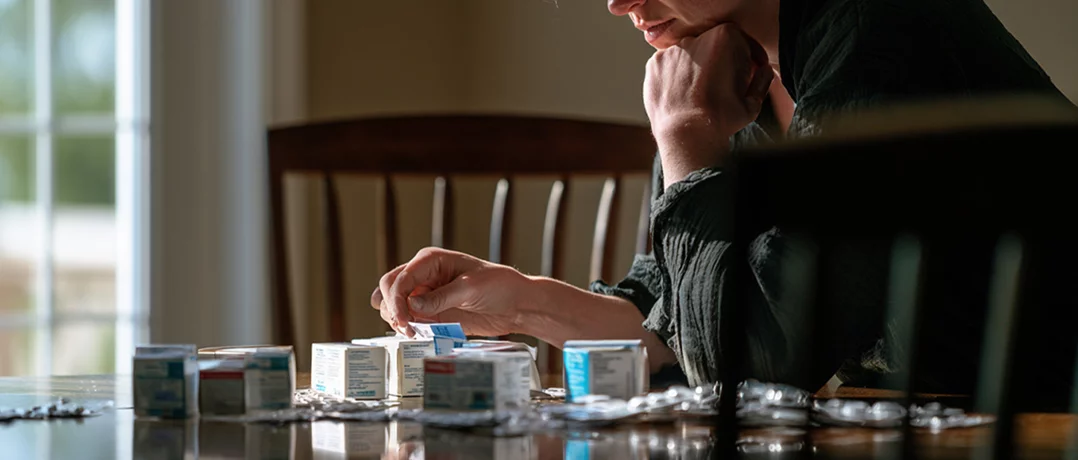
In Lebanon, self-medication has become so common that taking medication without consulting a doctor can almost feel routine. A headache might be met with a painkiller recommended by a relative, while an old prescription may be reused when familiar symptoms return. Just because the practice has been normalized does not make it safe. Self-medication can be harmful, particularly when medications are taken incorrectly, unnecessarily or repeatedly without professional guidance. Beyond the potential physical consequences, the habit can also reflect a deeper psychological tendency to seek immediate relief rather than understand the source of discomfort.
According to psychologist Joelle Yaghi, self-medication can become appealing because seeking professional help often requires confronting the source of discomfort rather than simply suppressing it. “Opening up to a professional means revisiting painful memories or facing uncomfortable truths, which takes time, vulnerability, and effort,” Yaghi said. “A pill or a quick fix offers immediate comfort and an instant confidence boost.”
When taking a pill becomes normal
In Lebanon, Yaghi believes self-medication has become particularly normalized, pointing both to access to medication and cultural attitudes surrounding emotional distress. She argues that a culture that often associates emotional expression with weakness can encourage people to express psychological distress through physical symptoms instead. Taking medication for those symptoms can feel more socially acceptable than discussing what may be happening emotionally. “When a society values endurance over vulnerability, medication becomes the default response to suffering,” she said.
These attitudes can begin at home. In families where medications are regularly shared or recommended, reaching for a pill can become an automatic response to discomfort. According to Yaghi, growing up around this behavior can condition people to search for external solutions rather than develop confidence in their ability to tolerate discomfort. Medication can then provide an immediate feeling of control. Over time, she said, it risks becoming an “automatic escape hatch whenever discomfort arises.”
A sense of control
That desire for control becomes particularly relevant during periods of stress, anxiety and uncertainty. Self-medication may offer reassurance because it gives someone something tangible they can do about what they are feeling. Yaghi, however, describes this as a “false sense of control.” “Part of being human is learning to tolerate frustration, uncertainty, and emotional discomfort,” she said. “When we instantly quiet those feelings with medication, we rob ourselves of the opportunity to develop genuine emotional resilience.”
Familiarity can reinforce the behavior. Someone who previously experienced a particular symptom and received a certain diagnosis may assume that experiencing it again means they need the same treatment. Yaghi says repeating an old treatment can make an unfamiliar situation feel predictable. “It makes them feel like their current struggle is something they have already mastered, rather than an unknown threat,” she said. The medical reasoning may not necessarily be sound, but psychologically, familiarity can reduce anxiety.
When health anxiety enters the pictures
For people experiencing health anxiety, the relationship with medication can become even more complicated. Yaghi describes health anxiety as creating a state of hypervigilance in which minor bodily sensations may be interpreted as potential threats. A person may repeatedly monitor symptoms, search for explanations and take medication in an attempt to reassure themselves. The relief, however, may be temporary. If taking medication becomes the response every time anxiety appears, Yaghi says the behavior itself can reinforce the cycle. Medication can also become a psychological safety net without someone necessarily developing a physical dependence or addiction.
“You see this in people who constantly carry an entire pharmacy in their bags just in case,” she said. Simply knowing the medication is available may reduce anxiety because the person feels they have an immediate solution if something goes wrong. Relying on that safety net, she argues, can gradually make ordinary discomfort more difficult to tolerate. Yaghi says the temporary relief of self-medication can eventually become a trap. Repeatedly using medication to escape distress can prevent people from learning how to process difficult emotions and gradually reduce their confidence in their ability to cope without it. “Psychologically, it teaches people to run from their distress instead of processing it,” she said. “Over time, that reliance strips away their confidence, leaving them feeling disempowered and unable to handle tough emotions on their own.”
With long-term use, the consequences can become more serious. Yaghi says tolerance and dependence may develop, while the exact physical effects vary depending on the medication being used. The consequences can also spill into relationships, work and everyday life, creating additional stress that may push someone to self-medicate again. “They end up stuck in a loop, facing the fallout of their choices while feeling completely powerless to break free,” she said.
Social media and the culture of quick fixes
The internet has added another dimension to the way people understand their bodies. Symptoms that once might have prompted a conversation with a professional can now be typed into a search bar or discussed through social media. Yaghi believes online health culture has increasingly pushed people toward opposing extremes. On one side are wellness trends that encourage suspicion of pharmaceuticals and promote supposedly “natural” alternatives. On the other are trends that casually present medications as solutions for everything from weight loss and skin concerns to mood. “It has eliminated the nuanced middle ground,” Yaghi said, “leaving people either hyper-fearful of modern medicine or overly casual about consuming it.” The result is an environment in which people have unprecedented access to health information but may not always have the expertise necessary to interpret it.
Changing Lebanon’s relationship with self-medication
For Yaghi, addressing self-medication in Lebanon requires more than telling people not to take medicine without professional advice. She argues that stricter enforcement surrounding the distribution of medication needs to be accompanied by a broader cultural shift in how people understand emotional distress and professional psychological support. “Seeking help for physical pain is socially accepted, while emotional pain is still viewed as a flaw or a blow to one's dignity and pride,” she said. Changing that distinction could also change why some people reach for medication in the first place.
Normalizing psychological distress as part of human experience, rather than something that must immediately be suppressed or hidden, could encourage more people to seek appropriate support. In that sense, Lebanon’s culture of self-medication is not only about what is available behind the pharmacy counter. It is also about what happens before someone reaches it: how families teach people to respond to discomfort, how society treats vulnerability, and why swallowing a pill can sometimes feel easier than asking for help.
