



Lebanon’s middle class has nearly collapsed under worsening poverty and widening inequality, prompting experts to stress that rebuilding it through better wages and real economic reforms is essential for restoring stability and growth.
The disappearance of the middle class

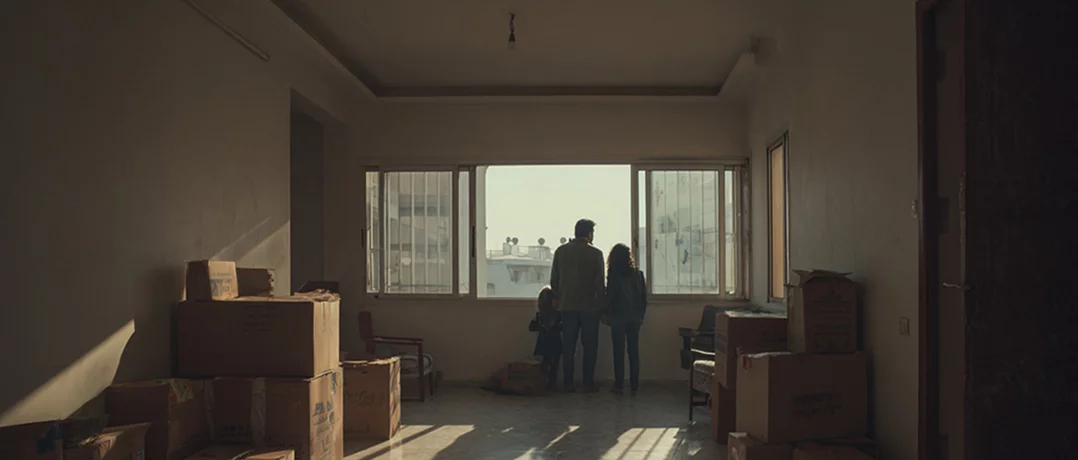
Source: Nidaa Al Watan
The middle class constitutes the fundamental pillar of any society because of the social, economic, and financial weight it represents. It is a working and productive class that includes employees and fixed-income earners, and it typically forms a “safety valve” that limits the manifestations of poverty and reflects a society’s ability to maintain stability and growth. However, the situation in Lebanon has changed drastically in recent years, as successive crises have undermined this class’s ability to endure, shrinking its base in an unprecedented manner.
According to ESCWA reports, extreme poverty has risen to around 40%, and overall poverty to more than 80%, while multidimensional poverty; taking into account social, health, and educational aspects—has reached levels exceeding 82%. In contrast to this collapse, the wealthy segment witnessed a notable increase in its wealth during the crisis, deepening class gaps and cementing social imbalance.
In light of this reality, rebuilding the middle class becomes the essential starting point for any serious attempt to revive the Lebanese economy, since one cannot speak of recovery or stability without restoring the central role of this group, which for many years constituted the heart of society and its primary driving force.
3 main points
In this context, Jassem Ajaka, Professor of Economics at the Lebanese University, identifies 3 essential and important points regarding the middle class, breaking them down as follows: social, economic, and financial.
“First, on the social level: the middle class is considered a working and productive class that includes employees and fixed-income earners, meaning that its members do not typically experience poverty and are capable of meeting their basic needs. This forms one of the indicators adopted by the United Nations to measure sustainable development and societal well-being, as the size and growth of the middle class are often used as benchmarks for assessing the health of social structures.
Second, on the economic level: the middle class plays a pivotal role in the economic cycle as the segment with the highest consumption within society. It creates the domestic demand that drives growth and contributes to the production of GDP through both consumption and labor. It also provides the primary source of skilled labor for companies, making it an essential pillar for sustaining economic activity.
Third, on the financial level: the middle class is the largest contributor to the state’s tax revenues, since taxes are primarily imposed on the more regular economic activities typically associated with this class. Therefore, the shrinking of the middle class directly affects public finances and leads to a significant drop in tax revenues.”
A changing landscape
Ajaka discusses “the evolution of conditions between 2019 and the post-crisis period,” noting that “in 2019, official figures reflected the following distribution: severe poverty: 8%, poverty: 19.8%, lower middle class: 45.6%, upper middle class: 11.5%, and the wealthy segment: around 15%.”
After the crisis, particularly after 2021, “the landscape changed drastically. According to ESCWA, extreme poverty rose to around 40%, and overall poverty to more than 80%. As for multidimensional poverty – taking into account social, health, and educational aspects – it reached rates exceeding 82% of the total population. This means that Lebanon lost its middle class on all three levels: social, economic, and financial, posing a direct threat to the structure of society as a whole.”
The impact of public-sector salaries
Ajaka points to the issue of “the impact of salaries in the public sector,” noting that “since the state is one of the largest employers in Lebanon, the wage increases in the public sector contributed, to a limited extent, to reducing poverty levels among its workers.” Nevertheless, he points out that “the decrease remained modest due to the absence of accurate statistics thereafter. Furthermore, the expansion of the cash-based economy since 2022 and the increase in social support led to a partial reduction in poverty rates, but without any tangible or sustainable improvement in living standards.”
In this context, he notes that “the wealthy segment witnessed an additional rise in wealth during the crisis, and some groups from the upper middle class moved into the wealthy category, taking advantage of the circumstances of the crisis in various ways. This shift intensified inequality and deepened the gap between segments of society.”
Rebuilding the middle class
Ajaka stresses that “if the state genuinely seeks to rebuild the economy, the essential starting point must be the reconstitution of the middle class, because it represents the social and economic foundation of any sustainable growth.”
To achieve this, Ajaka asserts that “two parallel paths must be adopted:
Raising and strengthening wages in the private sector, allowing employees to regain their purchasing power and gradually return to a standard of living consistent with the characteristics of the middle class.
Implementing real economic reforms that ensure the creation of job opportunities within the private sector, since a healthy economy relies on a strong private sector—not on expanding employment in the state. These reforms must include improving the business environment, supporting production, enhancing transparency, and providing incentives for investment. Only through these steps can balance be restored to the social structure and a genuine economic recovery be launched.”
-
-

-
The Beiruter
-
