An exploration of the debated historical and symbolic links between the Druze community and Freemasonry, and what they could reveal about Lebanon’s deeper identity.


An exploration of the debated historical and symbolic links between the Druze community and Freemasonry, and what they could reveal about Lebanon’s deeper identity.

Within the Druze community and the world of Freemasonry, some have long argued that there are hidden links between them. Some masons are so convinced that they have given their lodges (meeting places) Druze names. For those who believe that the history of Druze and Freemasons are intertwined, the story goes back thousands of years. If it’s true, then it revolutionises our understanding of the very identity of Lebanon.
Today in the Middle East, Druze, Christians, and Muslims are members of masonic lodges. Observers have long noted the curious similarities between symbols used in the Druze faith and Freemasonry. There’s also a fascinating confluence in the mystical practices between the two groups.
There are about 300,000 Druze in Lebanon today, forming about 5% of the country’s population, concentrated in mountainous areas like Mount Lebanon, the Shouf district, and Wadi al-Taym. Lebanon has the second largest Druze community after Syria, and many are active participants in the political scene and government.
Although the Druze faith developed from Shi’a Islam, they do not identify as Muslim. However, their roots are in the Arab world, and their beliefs draw on all the Abrahamic faiths but are also influenced by Greek philosophy. Some argue that the Druze belief in a cycle of reincarnation may have drawn from ideas introduced from Hinduism and even Buddhism. They recognise the Abrahamic prophets, but their most respected prophet is Shu’ayb, equivalent to Jethro in the bible, the father-in-law of Moses.
The Druze are a tightly knit community where certain individuals hold the secrets of the faith. They are called the ‘uqqal’ which roughly translates as ‘knowers’. Most of the community are termed the ‘juhhal’ who are not permitted to access the sacred texts and inner doctrines.
Freemasons see an analogy here to the ascending masonic degrees, going from an apprentice up to a master mason. Each degree is attained through increasing your knowledge by embarking on a spiritual journey. To masonic writers, the priestly ‘khateebs’ within Druze communities correspond exactly to the master masons.
In the late 19th century, there was intense debate among Victorian historians about the Druze and Freemasons. In 1891, the Reverend Haskett Smith (1848-1906), an English Anglican vicar and mason, wrote an article for a leading masonic publication in London in which he argued that the Druzes were the descendants of the builders of King Solomon’s temple. And he continued, they retained “many evidence tokens of their close and intimate connection with the Ancient Craft of Freemasonry”.
This had not been acknowledged, Haskett Smith believed, because historians had focussed too much on those Phoenicians taking to the seas, engaging in trade and colonisation. They ignored those Phoenicians who lived in the interior of Lebanon and were capable farmers, carpenters, and masons.
We know from the bible that King Solomon drew on people like these, in what is now Lebanon, to build his temple. Haskett Smith wrote that the Druze happily boasted of their role in the temple building:
“The Druses (sic) invariably assert with confidence that they were the builders of Solomon’s Temple. I have questioned them again and again upon this matter; with some I have feigned astonishment at their claim, with others I have pretended to dispute its truth.”
At the start of the 11th century CE, two thousand years after Solomon’s temple was built, a Persian preacher, Hamza ibn Ali (c.985-1021), developed the core Druze beliefs while living under Fatimid rule in Egypt. Facing persecution, he fled and spread his new faith in the Levant.
Haskett Smith claimed that on arriving in what had been Phoenicia, Hamza encountered isolated communities that believed in one God but had insulated themselves from Christianity and Islam. “Their rigid exclusiveness of nature had forbidden them to embrace any religion”. But what they did adhere to were “certain secret and mystic rites”. These included signs and passwords, different degrees of initiation, and closed meetings for a chosen few.
The Druze worship in places called ‘Khalweh’ and to masons they resembled their lodges, right down to the person who stands outside to turn away strangers, much like the Tyler guards the doorway of a masonic lodge. The orientation of the Khalweh and the symbols found on the walls, like the five-pointed star, were remarkably similar to masonic emblems.
How could the Druze have influenced Freemasons? There are various theories. One is the role that the Druze played as the original Freemasons building the Temple of Solomon and projecting their rituals and beliefs down the generations to masons everywhere. Another theory is that the Druze Al-Hikma (House of Wisdom) in Cairo served as a model for masonic lodges. Others have suggested that the Knights Templar, during the medieval Crusades, transmitted Druze knowledge from the Middle East to the west, helping to shape future Freemasonry.
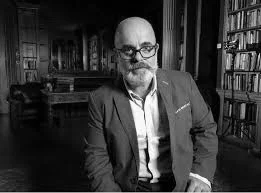
In his 2021 book, The Hidden Face of the Druze – The Freemasons of the East, Jean-Marc Aractingi analysed the crossover between masonic and Druze symbols. And he is something of an expert being a former Sovereign Grand Commander of the Supreme Arab Masonic Council and spending his adolescence living among the Druze in Lebanon. The front of his book bears the Druze five-pointed star while Freemasonry also uses a pentagram to symbolise the five points of fellowship.
But there is one key difference between the Druze and Freemasonry. Unlike the masons, new initiates are not welcome into the Druze. In the year 1043CE, an event called the Baha al-Din al-Muqtana (Closing of the Divine Call) occurred. From this date, no new converts were allowed, and the Druze faith became an enclosed, hereditary community waiting for the Day of Judgment.
However, their secrets continued to be passed down and today the Druze form a strong and resilient community. The only question that remains is: did they help to invent Freemasonry?