

Fiber-optic drones reshape modern warfare, emerging from Ukraine conflict, bypassing jamming systems and increasingly used by Hezbollah against Israel battlefields.
The emergence of fiber-optic drones on the battlefield
The emergence of fiber-optic drones on the battlefield
By The Beiruter | May 12, 2026

Reading time: 4 min
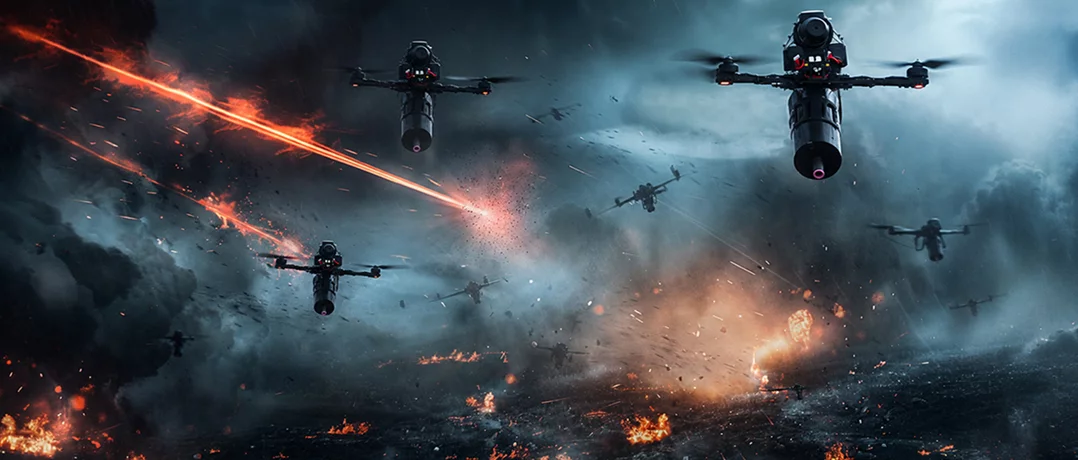
Modern warfare is undergoing a rapid transformation driven by the rise of small, inexpensive, and highly adaptable drones. Among the most significant developments is the emergence of fiber-optic-guided first-person-view (FPV) drones, a new generation of unmanned aerial systems designed to bypass traditional electronic defenses. Once seen primarily on the battlefields of the Russia-Ukraine war, these drones are now reshaping the confrontation between Hezbollah and Israel, introducing a new tactical challenge that even advanced militaries are struggling to counter.
What makes fiber-optic drones different?
Traditional military and commercial drones depend on wireless communication systems. These systems allow operators to control the drone remotely but also expose the drone to electronic warfare tools such as signal jamming or interception. Militaries around the world, including Israel, have invested heavily in technologies designed to disrupt or disable such drones electronically.
Fiber-optic drones eliminate that vulnerability. Instead of relying on wireless communication, they are connected to their operators by extremely thin fiber-optic cables that spool out behind the drone during flight. Through this cable, operators receive real-time, high-resolution video while maintaining full control without emitting detectable electronic signals.
The absence of a wireless signature gives these drones several major advantages. They are largely immune to jamming, difficult to track, and capable of operating effectively in heavily contested electronic environments. Their small size and low-altitude flight paths further complicate detection by radar systems. Experts note that some fiber-optic drones can operate over distances exceeding 15 kilometers, while experimental models used in Ukraine have reached even greater ranges.
The Russia-Ukraine War: The birthplace of a new drone era
The widespread military use of fiber-optic FPV drones first gained global attention during the Russia-Ukraine War (2022-present). As both sides intensified electronic warfare operations, conventional drones increasingly became vulnerable to jamming systems capable of disrupting radio signals and GPS navigation.
To overcome this challenge, Russian and Ukrainian forces accelerated the development of fiber-optic-controlled drones. These systems proved highly effective for reconnaissance missions, artillery coordination, and precision attacks against armored vehicles, trenches, and troop positions. The war evolved into a technological race in which drones became as strategically important as tanks or artillery.
The scale of drone warfare in Ukraine has been unprecedented. Analysts describe battlefields where thousands of drones are deployed monthly, creating an environment in which even small infantry movements are constantly monitored from the air. Fiber-optic drones became particularly valuable because they could continue operating in areas saturated with electronic interference.
Images and videos from Ukrainian front lines have shown landscapes covered with discarded drone cables resembling giant spider webs stretched across fields and ruined towns. These visual reminders illustrate how central drone warfare has become to modern combat operations.
The conflict also demonstrated another important reality: low-cost technologies can challenge sophisticated military systems. Relatively inexpensive FPV drones were able to destroy armored vehicles worth millions of dollars, forcing militaries worldwide to rethink battlefield doctrine and force protection.
Hezbollah’s adoption of fiber-optic drones
The lessons of Ukraine have not remained confined to Eastern Europe. Hezbollah has increasingly incorporated FPV and fiber-optic drones into its military operations against Israel, particularly during the latest armed conflict along the Lebanese-Israeli border. Israeli military officials and analysts acknowledge that Hezbollah appears to have adapted battlefield innovations observed in Ukraine and integrated them into its own asymmetric warfare strategy.
According to reports, Hezbollah uses small quadcopters fitted with explosive payloads capable of targeting Israeli soldiers, armored vehicles, and military positions in southern Lebanon and northern Israel. Videos released by the group show drones flying low between buildings and terrain obstacles before striking their targets with precision. Some attacks reportedly killed or injured Israeli soldiers operating near the border.
Israeli officials describe the drones as one of the most difficult threats currently facing troops on the ground. Because the drones do not emit radio signals, conventional jamming systems are ineffective. Their small size and low flight altitude also make radar detection extremely difficult. Israeli forces have responded by deploying nets, cages, and experimental interception systems, but military officials concede that existing solutions remain imperfect.
Experts believe Hezbollah’s adoption of these drones reflects a broader shift toward flexible and decentralized warfare. Unable to match Israel’s conventional military power directly, the group is increasingly relying on inexpensive technologies capable of exploiting weaknesses in advanced defense systems. This mirrors a broader trend in modern asymmetric warfare and war of attrition, where innovation and adaptability can offset technological disparities.
Why these drones matter globally
The growing use of fiber-optic drones in both Ukraine and the Middle East signals a major evolution in military strategy. These systems demonstrate that relatively cheap technologies can neutralize expensive defensive infrastructure and reshape battlefield dynamics.
For advanced militaries, the challenge is especially significant because existing air defense systems were largely designed to intercept missiles, rockets, and larger aircraft rather than tiny drones flying close to the ground. The emergence of fiber-optic drones forces militaries to reconsider how future wars will be fought and defended against.
The technology also highlights the increasing speed at which battlefield innovations spread across conflicts. Tactics first refined in Ukraine quickly appeared in the Middle East, showing how modern wars are interconnected through technology transfer, online footage, and shared military experience.
Hence, their growing presence on modern battlefields illustrates how warfare is evolving away from reliance solely on heavy conventional weapons toward more flexible, adaptive, and technologically innovative systems. As militaries continue searching for effective countermeasures, fiber-optic drones are likely to remain at the center of future conflicts, shaping military doctrine and redefining the balance between offense and defense in the digital age.
-
-

-
The Beiruter
-
