



How did a former German city become one of the most dangerous potential flashpoints between Russia and NATO?
The enclave that could start a war

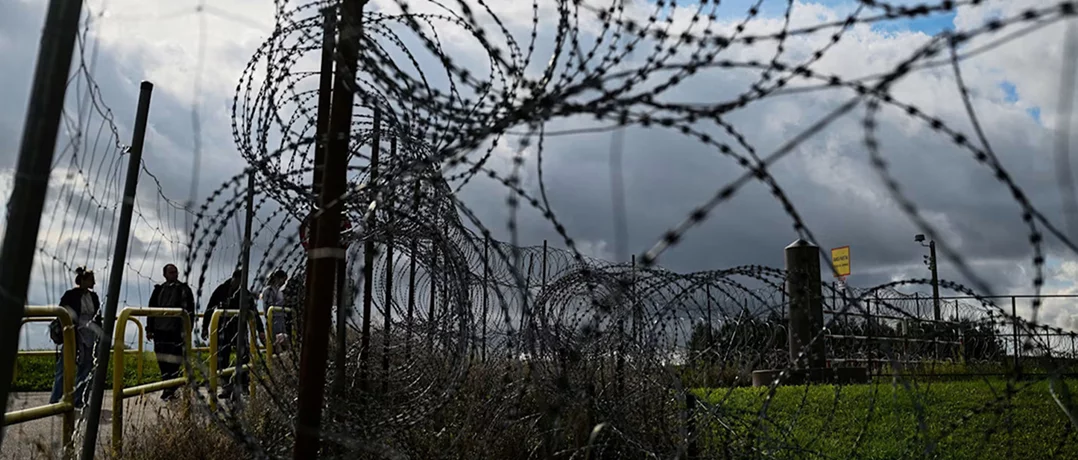
“If it comes to a direct attack on the Russian Federation - in this case, we are referring to Kaliningrad, and perhaps other territories as well - the question of the Russian Federation deploying all the weapons at our country’s disposal will, of course, inevitably and immediately be on the agenda. This is inevitable.”
With those words, Vladimir Putin placed Kaliningrad at the center of the risk of direct escalation between Russia and NATO. The Russian exclave sits on the Baltic Sea, separated from the rest of the country and wedged between Poland and Lithuania, both members of the alliance. Yet this small territory is also one of Moscow’s most important military positions in northern Europe.
How it came to occupy that position begins with a city that, until 1945, was not Russian at all.
From Königsberg to Kaliningrad
For centuries, the city at the center of today’s Kaliningrad was Königsberg, the capital of East Prussia and one of the historic centers of the German-speaking world. By 1945, however, the war that had begun in Europe with Nazi Germany’s invasion of Poland had reached the city itself.
Königsberg was heavily damaged by British bombing before the Red Army captured it in April 1945. At the Potsdam Conference that summer, the United States and Britain agreed in principle to the Soviet takeover of the city and surrounding territory. East Prussia was divided, with its south going to Poland and its northern section coming under Soviet control.
In 1946, Königsberg was renamed Kaliningrad and incorporated into the Russian Soviet republic. Soviet citizens arrived to rebuild and populate the region, while the remaining German population was eventually expelled, with the last organized transports leaving in 1948.
For the next four decades, Kaliningrad’s separation from Russia proper existed largely within the borders of a single state. That changed with the collapse of the Soviet Union in 1991. Lithuania became independent, while Kaliningrad remained part of the Russian Federation, turning the former Soviet outpost into Russian territory physically separated from the rest of the country.
Russia’s Baltic fortress
Kaliningrad’s military value begins with its location. Sitting hundreds of kilometers west of mainland Russia, the exclave places Russian forces much farther into the Baltic region than bases around St Petersburg alone would allow. Baltiysk, on Kaliningrad’s western coast, is a principal base of Russia’s Baltic Fleet, while the exclave also hosts land-based missile and air-defense forces.
Russia has deployed Iskander-M missiles in Kaliningrad, capable of carrying conventional or nuclear warheads and striking targets up to 500 kilometers away. The exclave has also hosted S-400 air defenses and Bastion coastal-defense systems, allowing Russian forces to threaten targets on land, at sea and in the air across a large part of the surrounding region.
Russia’s experience in Ukraine has also changed how such forces are expected to operate. Research published by the International Institute for Strategic Studies describes a shift away from the older image of a largely fixed defensive bubble toward a mobile system in which long-range strike and air defense are combined with dispersed sensors, drones and electronic warfare.
Evidence from Ukraine suggests dense Russian drone reconnaissance and strike operations can extend 30 to 40 kilometers from operating areas, with larger drones and longer-range weapons reaching much farther. Ports, shipping routes, logistics hubs and troop movements can therefore be threatened without Russia exercising continuous control over the Baltic.
The balance around Kaliningrad has nevertheless changed. Finland entered NATO in 2023 and Sweden followed in 2024, making Russia the only Baltic littoral state outside the alliance. Their accession increased NATO’s geographic depth and access around the sea, making Kaliningrad more exposed without stripping it of its capacity to threaten regional movement. Russia, however, retained the ability to make movement through the sea costly and contested through missiles, mines, drones, electronic attack and other forms of disruption.
The geography of mutual vulnerability
The same geography that makes Kaliningrad useful to Russia also creates vulnerabilities on both sides. Immediately southeast of the exclave lies the Suwałki Corridor, a roughly 65-kilometer stretch of Polish and Lithuanian territory separating Kaliningrad from Belarus. It is the only land connection between the Baltic states and the rest of NATO and Russian missiles, drones and other systems operating from the mainland and the exclave could threaten the roads, railways and forces moving through it.
Russia faces the opposite geographical problem. Kaliningrad has no direct land connection to the rest of the Russian Federation. Overland traffic must cross Belarus and Lithuania, while maritime access depends on the Baltic Sea. Even in peacetime, its principal transit routes therefore depend on access through NATO and European Union territory.
The consequences of that dependence became visible in 2022, when EU sanctions on Russia produced a dispute over goods transported by rail through Lithuania to Kaliningrad. Brussels later permitted certain sanctioned civilian goods to continue moving by rail under specified conditions, while military and dual-use goods remained prohibited.
The strategic problem therefore runs in both directions. Kaliningrad gives Russia a position from which it can threaten NATO’s connection to the Baltic states, but the exclave itself depends on access routes that would become increasingly difficult to maintain in a serious confrontation.
The Baltic’s pressure point
Putin’s warning at the Valdai Forum followed several months in which Kaliningrad had moved increasingly into the rhetoric and military activity surrounding the Baltic. In May, Moscow reacted angrily after Lithuania’s foreign minister argued that NATO needed to demonstrate an ability to penetrate Kaliningrad’s defenses and destroy Russian missile and air-defense positions there. The Kremlin described the remarks as approaching insanity.
The military signaling continued in August, when the United States led a large NATO air exercise over Poland and the Baltic region, including areas close to Kaliningrad. Fighter jets, surveillance aircraft, refueling platforms and electronic-warfare assets practiced joint operations, demonstrating capabilities that would be important in disrupting communications and suppressing air defenses during a conflict. NATO has also expanded its presence in the Baltic Sea through operations intended to protect undersea energy and communications infrastructure.
By the end of September, Moscow had raised the issue directly with NATO. Russia said the alliance was preparing an air and naval blockade of Kaliningrad and warned that it could use nuclear weapons if the territory were cut off. NATO rejected the allegation. Putin’s statement on 1 October therefore reinforced a warning Russia had already delivered to the alliance.
European intelligence assessments point to the same deterioration in the regional security environment. Lithuania’s 2026 National Threat Assessment highlighted Russia’s expanding capabilities near NATO’s eastern borders and its use of electronic warfare from Kaliningrad. Danish intelligence has warned of intensifying Russian hybrid activity and a growing risk of limited confrontation, while Germany’s foreign intelligence chief has cautioned that military escalation in the Baltic cannot be excluded.
Against that background, the same combination that makes Kaliningrad valuable to Moscow - its forward position and its separation from mainland Russia - also makes it one of the places where a confrontation between Russia and NATO could become hardest to contain.
-
-

-
Nami El KhazenJournalistFocusing on geopolitics and international affairs.
-
