



How public maritime property became one of Lebanon's biggest governance, environmental and economic controversies.
The endless battle over public maritime property
The endless battle over public maritime property
By Christiane Tager | June 25, 2026

Reading time: 4 min
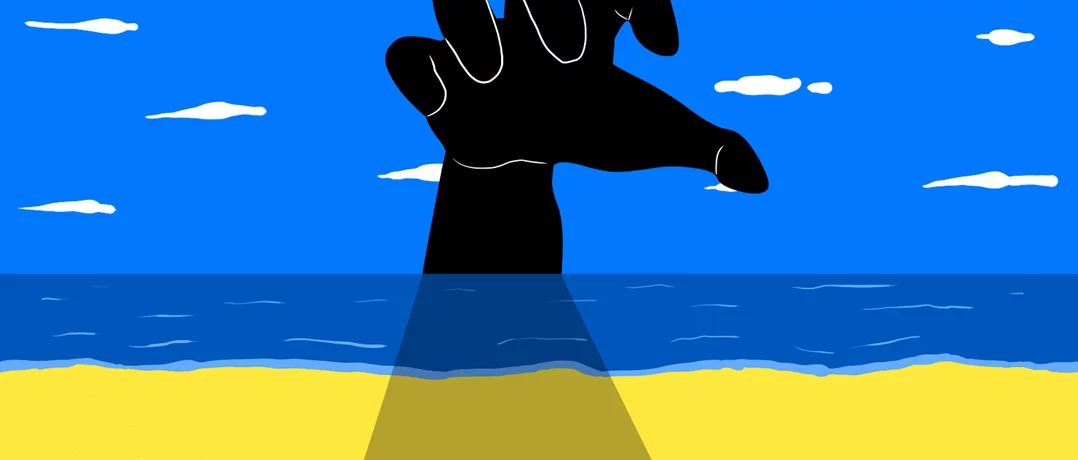
Hotels, beach resorts, marinas, restaurants and luxury residences occupy large portions of Lebanon’s coastline, much of it built on public maritime land that legally belongs to all citizens. Decades of weak enforcement, political patronage and controversial permits have transformed one of the country’s most valuable national assets into a symbol of state failure, lost public revenues and growing social inequality.
Stretching along approximately 225 kilometers of Mediterranean coastline, Lebanon possesses one of the most valuable coastal strips in the eastern Mediterranean. In principle, the shoreline belongs to the public. Natural beaches, coastal rocks, maritime zones and reclaimed land fall under the public maritime domain and are intended for collective use.
In practice, however, large sections of the coast have gradually been occupied by private developments generating substantial commercial revenues while restricting public access.
From the sandy shores of Ramlet al-Baida in Beirut to the seaside resorts of jbeil and the marinas scattered along the coast, Lebanon’s maritime property issue has become one of the country's most enduring governance controversies.
What is public maritime property?
Under Lebanese law, public maritime property encompasses coastal areas owned by the state and reserved for public use.
It includes natural beaches, coastal waterfronts, maritime rocks and shorelines, reclaimed land extending into the sea and the strip separating private property from the sea.
These areas cannot legally be sold or permanently transferred into private ownership.
The state may grant temporary occupation permits in exchange for fees and royalties, provided strict legal conditions are met.
Yet it is precisely these permits and their enforcement that have fueled decades of controversy.
More than one million square meters under private occupation
According to various official estimates and parliamentary reports, between 1.2 and 1.5 million square meters of public maritime property are currently occupied by private developments. These include luxury hotels, beach clubs, private marinas, restaurants, tourism projects and residential developments. Some benefit from legal permits. Others were regularized after construction.
Many remain the subject of legal disputes or administrative challenges.
The phenomenon accelerated during Lebanon’s civil war and the reconstruction period that followed, when state oversight was often weak or absent.
Over time, private interests became deeply entrenched along large portions of the coast.
A potential gold mine for the state
Beyond legal questions, the issue carries major financial implications. For years, economists, auditors and anti-corruption organizations have argued that many occupants paid fees that were far below the true commercial value of the land they were exploiting.
Several studies have estimated that the state forfeited hundreds of millions of dollars in potential revenues because of underpriced concessions and irregular occupations.
In a country struggling with one of the worst economic crises in modern history, public maritime property could represent a significant source of income.
Many experts believe that a comprehensive reassessment of maritime concessions could generate substantial revenues for the treasury without imposing additional taxes on citizens.
A coastline increasingly closed to the public
Perhaps the most visible consequence is the shrinking public access to the sea.
Although the coastline is theoretically a public asset, many Lebanese find it increasingly difficult to reach beaches without passing through private facilities or paying entrance fees.
In some areas, public access has become the exception rather than the rule.
Environmental groups and civil society organizations have repeatedly criticized what they describe as the gradual privatization of a national resource that should remain accessible to all citizens.
For many observers, the issue goes beyond property rights and raises broader questions about social equity and the fair distribution of public resources.
An environmental time bomb
The maritime property debate is not solely about economics or legality. It is also an environmental issue. Decades of land reclamation, coastal construction and shoreline modification have permanently altered parts of Lebanon’s coastal ecosystem. Environmental experts regularly warn of coastal erosion, habitat destruction, declining marine biodiversity, disruption of natural currents and the degradation of public beaches.
As climate change and rising sea levels increase pressure on coastal regions worldwide, preserving Lebanon’s coastline is becoming an increasingly urgent strategic priority.
A national asset at the heart of Lebanon’s governance crisis
The financial collapse that began in 2019 has brought renewed attention to the issue. Faced with collapsing public finances, successive governments have pledged to reassess concession fees, strengthen oversight, regularize outstanding violations and improve transparency in the management of public maritime assets.
Progress, however, has been slow. The debate continues to pit government authorities against private operators, environmental organisations and citizens seeking greater accountability.
Few issues illustrate Lebanon’s governance challenges more clearly than public maritime property.
Behind luxury resorts, beach clubs and private marinas lies a fundamental question: Who truly owns Lebanon’s coastline?
For many Lebanese, the answer extends far beyond land ownership. It touches on public accountability, social justice, environmental protection and the rule of law.
Because beyond the permits, court cases and political disputes lies a simple reality: one of Lebanon’s most valuable natural assets was intended to belong to everyone.
