From Abu Kees to family-made monsters and moral tales, Lebanon's childhood folklore reveals how generations of parents used storytelling to teach values, encourage good behavior and preserve cultural traditions.




From Abu Kees to family-made monsters and moral tales, Lebanon's childhood folklore reveals how generations of parents used storytelling to teach values, encourage good behavior and preserve cultural traditions.

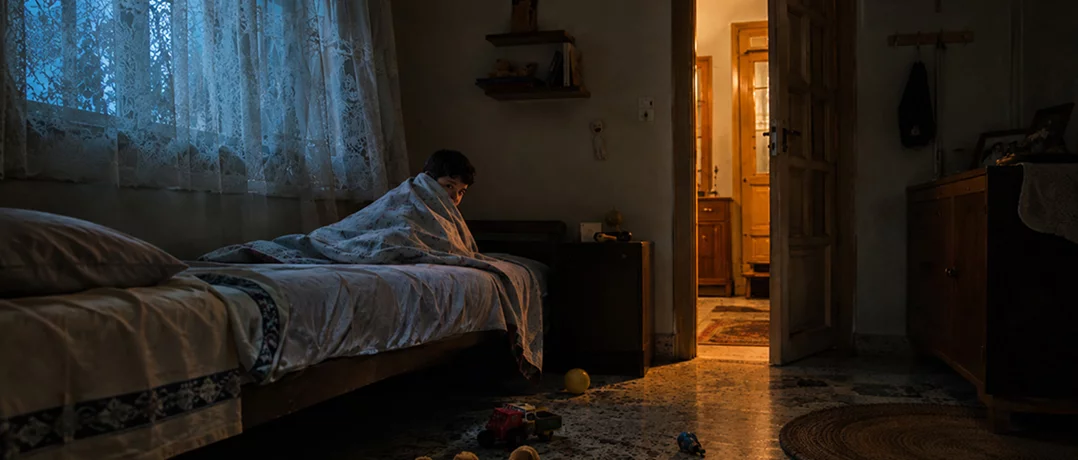
Long before smartphones, cartoons and bedtime stories on YouTube, Lebanese children grew up with a different kind of entertainment. Their childhoods were shaped by stories passed down from parents and grandparents, filled with mysterious figures that waited outside after dark, appeared during storms or punished children who refused to behave. Unlike fairy tales found in books, these characters were part of Lebanon's oral tradition.
They were never officially written down, and no two families remembered them in quite the same way.
Every village, and sometimes every household, seemed to have its own version. While some stories were meant to frighten, others taught gratitude, humility and respect. Together, they became an unforgettable part of growing up in Lebanon. To explore how these stories have survived through generations, I asked several Lebanese people which characters they remembered most from their childhood. Their answers revealed that while the names often changed, the lessons behind them remained remarkably similar.
For Anthony, the answer came immediately. "Whenever we were misbehaving, they'd tell us, 'Abu Kees is coming.' He'd be carrying a sack, and he'd take us away." For generations of Lebanese children, Abu Kees was the country's most famous imaginary villain. He was rarely described in detail. Some imagined him as an old man, others as a giant, while many children never actually knew what he looked like.
The mystery only made him more frightening. Looking back, Anthony laughs at how convincing the story was. As a child, however, the threat of Abu Kees was enough to stop him from misbehaving. Although the character seemed terrifying, the lesson behind him was surprisingly practical. Parents used the character as a way of keeping children in line, Abu Kees became an unforgettable way of making sure they did.
Not every family relied on Abu Kees. For Nathalie, the frightening figure was someone entirely different. "When I was little, I'd always say, 'I'm scared of Momo.' I don't even know where the name came from, but it stayed with me." Unlike Abu Kees, Momo was not a well-known figure across Lebanon. It existed almost entirely within Nathalie's family, illustrating how folklore often developed inside individual households. Her memory highlights something several interviewees had in common. While everyone remembered being scared of something, very few remembered exactly the same character.
Instead of one national collection of stories, Lebanese folklore was shaped by hundreds of small family traditions that evolved over time. Parents adjusted stories to suit their children, added details passed down by grandparents and even invented new characters whenever they needed a quick way to stop bad behaviour.
Not every story children remembered was designed to frighten them. Joia recalled one that her mother repeated every Christmas. "My mother used to tell me the story of the Little Match Girl. The lesson was always to be grateful for what I have." Unlike Abu Kees, the story wasn't about punishment. It followed a poor little girl who had nothing, reminding children to appreciate their family and the comforts they already had. Joia also remembered another story, Breeq el Zeit, about a family that threw away their old oil jug simply because their neighbours had bought a newer one.
Every replacement broke, teaching them that something old is not necessarily worth replacing just because something newer exists. While these stories lacked monsters, they served the same purpose. They used storytelling to pass on values that parents hoped their children would carry into adulthood.
Listening to the interviews, one thing became clear: these stories were never just entertainment. Abu Kees encouraged children not to misbehave. Momo kept Nathalie from wandering around frightened at night. The Little Match Girl taught gratitude, while breeq el zeit reminded children not to compare themselves with others or discard something simply because it seemed old.
Each story reflected the concerns of the people telling it. Rather than giving long lectures, parents wrapped their lessons inside memorable characters and narratives that children were unlikely to forget. Because these tales were passed down orally, they constantly evolved. Every storyteller added something new, omitted another detail or adapted the story to fit their own children. That flexibility is what allowed Lebanese folklore to survive for generations.
Today, many young Lebanese have never heard of Abu Kees, while characters like Momo exist only in the memories of individual families. Storytelling has gradually given way to television, smartphones and social media, leaving fewer opportunities for these traditions to be passed on.Yet these characters remain an important part of Lebanon's cultural heritage. They reveal how previous generations used imagination not only to entertain children, but also to protect them, teach them values and strengthen family traditions.Every family remembered a different story. Every village added its own characters.
Together, they created a uniquely Lebanese folklore that lived not in books, but in conversations between grandparents, parents and children. As those conversations become less common, the characters that once haunted Lebanese childhoods risk disappearing too. Remembering them is about more than nostalgia. It is about preserving one of Lebanon's oldest traditions before it fades into memory.
