



Israel’s capture of Ali al-Taher ridge reshapes southern Lebanon’s security landscape, highlighting Hezbollah’s military setback and future border arrangements.
The fall of Ali al-Taher and Israel’s “Grey Zone” plan
The fall of Ali al-Taher and Israel’s “Grey Zone” plan
By The Beiruter | September 07, 2026

Reading time: 4 min
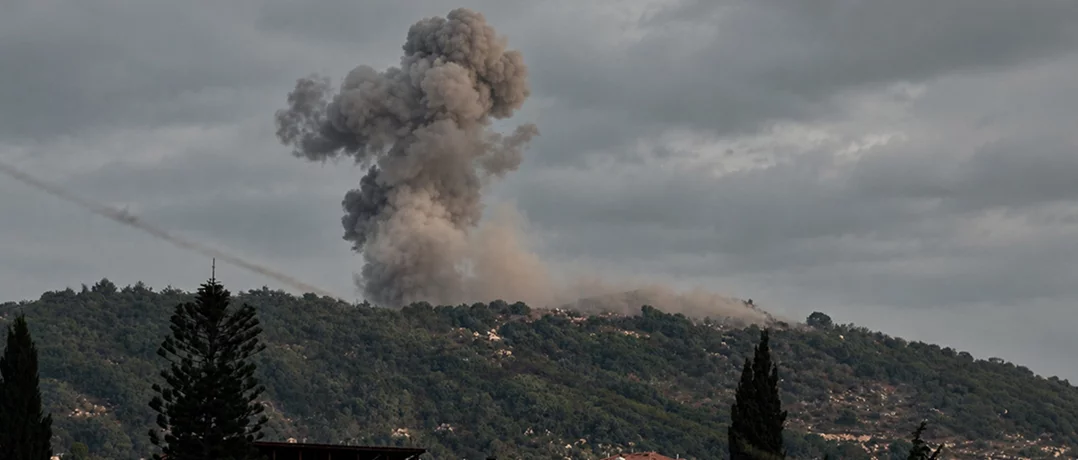
The fall of Ali al-Taher ridge in southern Lebanon represents more than the loss of another military position in the ongoing confrontation between Israel and Hezbollah, but rather a major strategic setback for the Iran-backed group.
Located near Nabatieh and overlooking key areas of southern Lebanon, Ali al-Taher was considered one of Hezbollah’s most important defensive positions. Its geographical elevation provided a strategic advantage, while reports indicated the existence of an extensive underground network containing command facilities, weapons storage areas, and operational infrastructure.
What happened at Ali al-Taher?
The battle over Ali al-Taher developed over several weeks as Israeli forces increased military operations around the ridge. The area witnessed repeated Israeli airstrikes and artillery fire, while Hezbollah carried out attacks against Israeli forces operating near the position, including drone attacks according to Israeli statements.
Recently, the Israel Defense Forces (IDF) announced that forces from the 36th Division had achieved “operational control” over Ali al-Taher ridge. According to the Israeli army, troops secured the area above and below ground, cleared two underground routes, and continued operations to neutralize the tunnel infrastructure.
Israel said that Hezbollah’s underground network beneath the ridge included command facilities, weapons storage rooms, generators, and living areas designed to support prolonged operations. Meanwhile, Israeli officials described the infrastructure as having been developed over approximately 20 years with Iranian funding and planning.
The Israeli military also stated that some Hezbollah fighters were killed during the operation, while others withdrew from the area. While Hezbollah initially disputed Israel’s claims, the group has not publicly provided a detailed account of the battle or confirmed the loss of the position. It has even attempted to downplay the strategic importance of the area.
The exact details of the fighting remain disputed, but the announcement marked a major development in the military confrontation over southern Lebanon.
Why is Ali al-Taher strategically important?
The importance of Ali al-Taher comes from three main factors: geography, underground infrastructure, and its role in southern Lebanon’s military landscape.
First, the ridge provides a commanding position overlooking surrounding areas. Its elevation allows whoever controls it to monitor movement across parts of southern Lebanon and maintain visibility over important routes.
Second, the underground facilities reportedly built beneath the ridge were considered among Hezbollah’s significant military installations. According to Israeli assessments, the tunnels were designed to host fighters, store weapons, and maintain command operations during periods of conflict.
Third, the location became connected to wider discussions surrounding the implementation of the ceasefire framework between Israel and Lebanon. During U.S.-mediated discussions, proposals were reportedly made for the Lebanese Armed Forces (LAF) to take control of the ridge, but Hezbollah rejected handing over the position; effectively and ultimately handing it over to the Israeli army instead.
The capture of Ali al-Taher therefore became linked not only to military control but also to ongoing discussions over security arrangements in southern Lebanon.
The future of southern Lebanon after Ali al-Taher
The fall of Ali al-Taher has created a new phase in the security situation along the Lebanese-Israeli border.
For Israel, the capture of the ridge provides control over a strategically important position and strengthens its ability to monitor southern Lebanon. For Hezbollah, the loss of a key military site represents a psychological and operational setback in the ongoing confrontation, even as the group continues to reject Israeli claims regarding the extent of its control.
For Lebanon, the main issue remains the future security arrangement in the south: whether control will gradually return to state institutions, whether Israel will maintain positions inside Lebanese territory, and how Hezbollah’s weapons and military presence will be addressed.
Ali al-Taher is therefore not only a battlefield location. It has become a central point in determining the future security landscape of southern Lebanon.
Israel’s “grey zone” plan: What comes next?
Following its reported capture of Ali al-Taher, Israel has been discussing a possible adjustment of its military deployment in southern Lebanon.
Israeli media reported plans for what has been described as a “grey zone;” a security arrangement under which Israeli forces would withdraw from some positions (including the recently captured heights) while maintaining a presence closer to the border through a new defensive line.
According to reports, the proposed arrangement would involve Israeli forces moving back from the current “yellow line” positions and establishing a new security zone located approximately two to four kilometers from the border. The plan reportedly includes maintaining military positions and surveillance capabilities to respond to any Hezbollah activity.
The Israeli government has linked any withdrawal to guarantees that Hezbollah will not rebuild military infrastructure near the border. Israeli officials have stated that the army intends to continue neutralizing underground facilities in areas such as Ali al-Taher before adjusting its deployment.
Nevertheless, the plan is still incomplete and has not yet been approved by the political level, while its implementation depends on broader negotiations between Lebanon and Israel (especially with the upcoming Rome 3 negotiations) as well as the role of the LAF in southern Lebanon.
-
-

-
The Beiruter
-
