



Why do we care so much about what other people think? Dr. Christina Riachi explains how fear of judgment, social expectations, low self-esteem and social media can influence our choices and why learning whose opinion truly matters may be the first step toward finding our own voice.
The fear of being judged

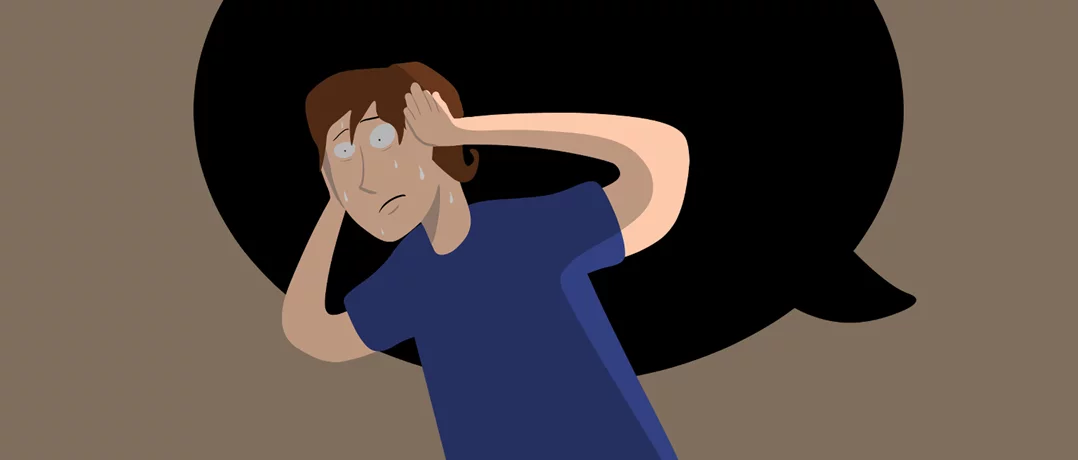
There is a question that can quietly shape the way people dress, speak, make decisions and even live their lives: What will people think?
For some, it is an occasional thought; for others, it becomes a constant calculation about how they look, what they do and what others might think. In Lebanon, where social expectations can carry significant weight, fear of judgment can quietly shape people's choices and self-image. But according to Dr. Christina Riachi, Ph.D., consultant psychologist, caring about others' opinions is not inherently unhealthy, the problem begins when it comes at the expense of our own identity.
When caring becomes losing yourself
Riachi explains that being sensitive to others’ opinions is a natural part of being human. Historically, belonging to a group was linked to safety and survival, so “being accepted is not inherently a problem.” However, this sensitivity can become excessive, particularly when low self-esteem makes people feel “not good enough” or believe that others are better than them.
The problem, she says, arises when fear of judgment becomes a constant preoccupation with what others think. It can become “clinical” when people are excessively focused on being judged, criticized or compared to others.
For Riachi, the key distinction is identity. Changing what you wear, your opinions or the opportunities you pursue simply to please others can mean their judgment is taking control. Listening to others is not necessarily negative, seeking advice from someone knowledgeable can be valuable. “If I want to know something about medicine, I ask a doctor,” she explains. The problem begins when you abandon your own voice simply “to fit in with other people.”
The pressure to fit in
That desire to fit in can also influence how people present themselves. Riachi points to social conformity the pressure to resemble the people around us. It can appear in the brands we wear, the trends we follow and the lifestyles we try to project.
For someone struggling with low self-worth, this can mean looking to others as a model for how they should live. Riachi describes the result as presenting “a different version of myself”: the life a person actually lives may be one thing, while the version they want others to see is something else.
Growing up with “what will people say?”
In Lebanon, the fear of judgment can also begin much earlier. Riachi says family upbringing and the cultural idea that something is socially unacceptable or shameful can play an important role.
She also points to comparison within families and communities: being compared with a cousin, a sibling or the children of the neighbors. When people grow up constantly being evaluated through the eyes of others, they can learn to evaluate themselves in the same way.
“At the end of the day, everything goes back to the way we were raised,”, Riachi says, while also pointing to environmental and psychosocial factors. She notes that the impact can be stronger in collectivist cultures, where the opinions of the wider community carry greater importance.
The cost of avoiding judgment
Sometimes, the fear of judgment does not just affect how people see themselves. It affects what they actually do. Someone may avoid wearing something they like, applying for an opportunity, expressing an opinion or pursuing a relationship because they anticipate being judged.
Riachi describes avoidance as part of a cycle people can fall into as they seek relief from anxiety. But that relief can come at a cost. “Every time you avoid something because of fear, you lose the opportunity to discover what you might actually have been able to tolerate,” she says.
And the consequences can accumulate. “Our lives basically become smaller and smaller because of this,” she says.
She also points out that people may overestimate how much other people are actually paying attention to them. Avoidance prevents them from discovering that they may be capable of tolerating other people's opinions.
The social media scorecard
Social media has not created our desire for approval, Riachi argues. But it has made that desire easier to measure. Likes, views, followers, comments and shares can turn social approval into visible numbers.
At the same time, young people are constantly exposed to carefully selected versions of other people's appearances, relationships, careers and homes. Riachi stresses that what appears online is not necessarily the person's real life.
For teenagers, she says, this pressure can be particularly influential because their personalities and self-esteem are still developing. Instead of simply experiencing a moment, people can begin thinking about how that moment looks to others. The question changes from “Did I enjoy this?” to “How did this look? How did it appear on social media?”
Riachi describes this as experiencing oneself from an “observer perspective” looking at yourself as though you were someone else watching you. “And it is very exhausting,” she says.
Learning whose opinion matters
The answer is not to stop caring about what others think, but to become selective about whose opinions deserve weight. Riachi says that advice can be valuable when it comes from someone knowledgeable, but even then, knowing what you want should remain at the center.
“If a person knows themselves and has good self-esteem,” she explains, they become less influenced by other people’s opinions. For her, self-esteem is “the biggest” part of the issue, and changing this mindset may require therapy.
Fear of judgment may never disappear completely and it does not necessarily have to. Caring about how others see us is part of being human. The real challenge is learning to listen without letting other people's voices drown out our own: knowing whose opinions matter, while still trusting your own voice.
-
-
-
Yara SalibaJunior Writer/Translator
-
