



Rebecca Succar left marketing behind to become a mechanic, challenging stereotypes and proving herself in Lebanon’s male-dominated automotive industry.
The female mechanic breaking the rules

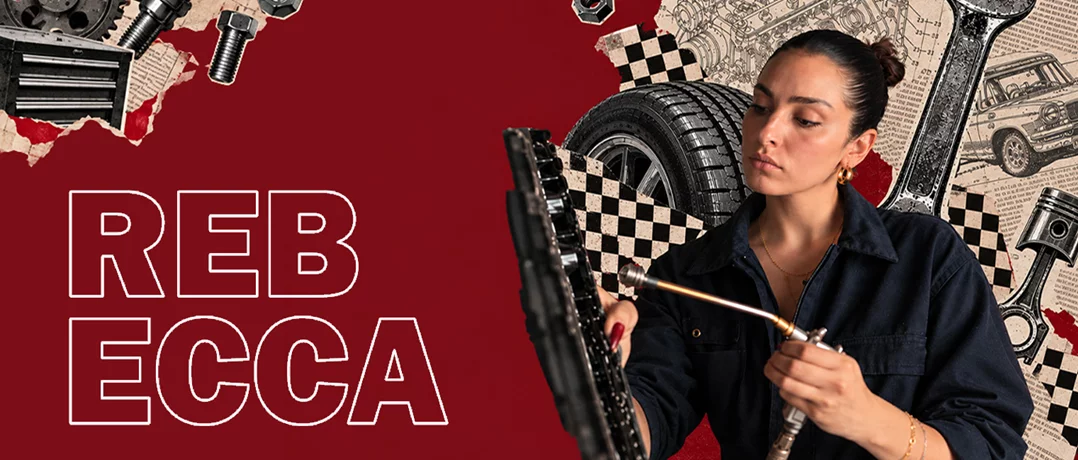
Rebecca Succar was on the honors list in Advertising and Marketing. Then she walked into her father's garage and never left. Female mechanics are almost unheard of in Lebanon, and Rebecca Succar hears about it from customers every single day. Two years into the job, she works beside her father and she is winning over the skeptics.
Rebecca's path began with a plan that had nothing to do with engines. She had finished her first university semester, and wanted something to do over the summer. Her father ruled out waitressing because it meant coming home late at night. So she offered the alternative of working with him. "At first, the idea of being a female mechanic did not really work for me," she recalled. She started by helping tidy up the shop. Within a day or two, curiosity took over. "I started getting into it and I really loved it," she told The Beiruter. "I decided to pursue it."
She is clear that it was never a grand ambition. "It was not a choice I made. It was something that happened by chance. I never had it in my head that I wanted to become a mechanic."
Doubt and surprise
Her family did not greet the news with applause. Her father, who knew how exhausting the trade can be, pushed back. "He told me, 'No, Rebecca,'" she remembered. Her brothers were equally doubtful. She is the only girl among boys, and both had tried the garage before her and quit. "They told me that after a day or two I would leave and not like it."
Relatives asked why she would abandon a program she excelled in. "You were at the top of your class," they reminded her. Only her mother backed her from the start. Succar tuned it all out. The day after her father's refusal, she went to university and changed her major. Once he saw how serious she was, showing up daily with her mind made up, he came around. "He stood by me," she recalled.
Outside the family, the reaction is harder to shake. "It happens every single day. It happens so often that I have lost count," she explained. Because the profession is still unusual, especially in her hometown of Bcharre, customers arrive surprised or hesitant. Early on, some asked her father who she was, and he introduced her only as someone who worked for him. Even now, a few customers tell her to step aside. "Let your dad work," they say. Her reply is polite and firm: "No, please, let me work."
The split in reactions is telling. "In the two years that I have been doing this, I have never had a girl come up to me and ask why I am doing this," she noted. Women encourage her and ask how they can help. The men are another story.
A different kind of advantage
Does being a woman help? Rebecca believes so. Her father tends to lose his temper quickly. She works differently. "When it comes to customers, I have patience," she explained. If someone does not understand what is wrong with their car, she sits down and walks them through each step. Her father now hands her anything new that comes in. She works calmly and pays close attention to detail. "You know how girls like everything to be just right?" she asked. "Yes, I am precisely like that."
The toughest obstacle was physical. "My physical strength was not enough," she admitted. Lifting a tire was beyond her at first, and her father would step in. So, she started training at the gym. "Now there is nothing my dad can do that I cannot do."
The comments have not stopped, though. One man told her she had become like a man because of the work. She rejects that. "I am a soft person. I am still a girl," she insisted. "Even though I work in a male-dominated field, I am still a woman. I still have my femininity and my softness in everything I do."
What the garage taught her
The work has taught her much about herself. It changed the way she thinks. "Being a mechanic requires intelligence," she noted, and the leap from marketing to mechanical engineering reshaped her mind. It gave her patience. "Before, I was someone who would lose patience quickly, but not anymore." It taught her persistence too, "you cannot just stop after a day or two and give up."
Social media delivered a lesson of its own. When she began posting videos, she showed only her hands and barely her face, and people found fault with that. Then they found fault with something else.
"No matter what I do, I will not please everyone, you will never be 100 percent perfect just to satisfy other people."
If she could talk to the girl she once was, Rebecca has no lecture to offer. She believes that girl already had what it took. "Little Rebecca always had a strong personality," she reflected. Her younger self might have been startled to learn she would become a mechanic, and might not have accepted the idea at first. But she did.
"It was, in a way, my calling to end up entering a field like this," Rebecca concluded. Rebecca Succar has wholeheartedly followed the unlikely passion that now guides her through life.
-
-

-
The Beiruter
-
