



Mount Lebanon’s annual wine festival is reviving the region’s centuries-old winemaking heritage, bringing together local wineries to put the area back on Lebanon’s wine map.
The festival putting Mount Lebanon back on the wine map
The festival putting Mount Lebanon back on the wine map
By The Beiruter | August 21, 2026

Reading time: 5 min
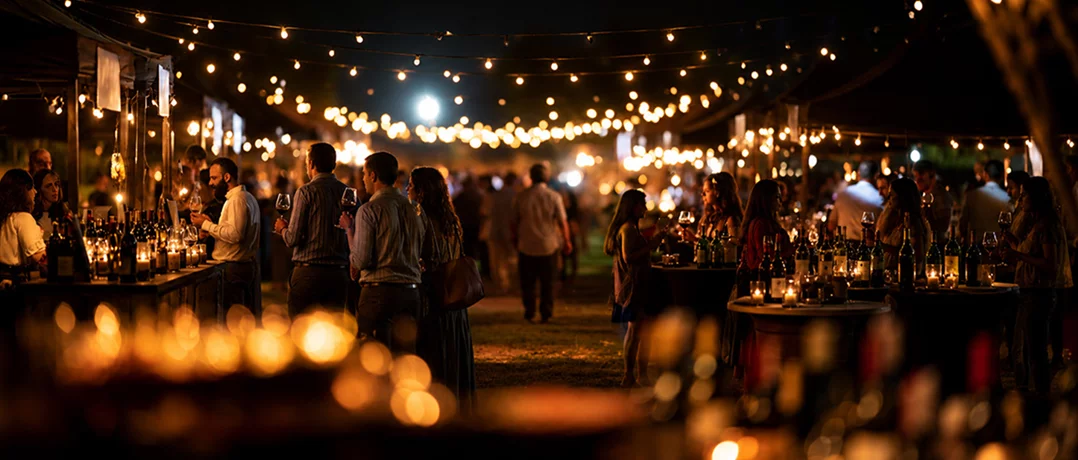
Ask most people to name Lebanon's wine country, and the answer arrives instantly, the Bekaa Valley, with its wide, sun-drenched plains, or Batroun, with its coastal cellars. Mount Lebanon rarely makes the list, despite holding some of the country's oldest winemaking history. Closing that gap is exactly what a small group of winemakers set out to do in 2017, when they founded the Mount Lebanon Wineries Association and, with it, an annual wine festival now held each year in the pine-shaded square of Bois de Bologne.
An overlooked region with an ancient claim
The festival's founding logic, according to event planner Cynthia Kharrat, who has organized it from the beginning, starts with a simple grievance: Mount Lebanon's winemaking history has been overshadowed for decades. "The whole world thinks of the Bekaa and Batroun, while we in Mount Lebanon have the oldest monasteries, and these monasteries were making wine since the year 1000," she explained.
That history isn't exaggeration. Monastic winemaking in the region stretches back centuries; the Cave du Monastère St. Jean in Khenchara, whose monks began producing their first sweet wine in 1720, during Ottoman rule, when alcohol production was restricted except for religious use, remains one of Lebanon's oldest continuously operating wineries and a namesake behind the festival's own Cuvée Saint-Jean. "The Cuvée Saint-Jean is the oldest wine-producing landmark in the Mount Lebanon region," Cynthia said, tracing the festival's origins directly to that legacy. "From this idea, we set out to gather ourselves and do something to introduce the world to us, because the ministries had forgotten us. They only think about the Bekaa and Batroun."
From eleven wineries to a growing regional movement
What began in 2017 as a modest gathering of eleven Mount Lebanon wineries has grown steadily since, pausing only during the COVID-19 pandemic before returning in 2021 and continuing every year through this year's edition. "The number keeps growing," Cynthia said. "We started with eleven wineries, and now we have fifteen participating each year." Attendance has followed the same trajectory. What was once a local gathering now draws roughly half its visitors from outside the region entirely, and the festival now caps attendance around 1,500 people to preserve its intimate character, a deliberate choice, Cynthia noted, given the setting: an open-air gathering beneath pine trees in the square of Bois de Bologne's Church of Our Lady, with visitors seated comfortably rather than crowded around standing displays.
That growth, Cynthia emphasized, has a strict boundary: only genuine winemakers are invited, never traders or resellers operating under a brand name. "It's important to us that the people participating actually have wineries, not merchants, not people who just have a brand," she said.
Three days of wine, music, and pride
Held annually over the first weekend following the feast of Eid al-Sayd (the Hunting Feast), the festival runs Friday through Sunday and pairs wine tastings with live music and cultural programming, a requirement, Cynthia noted, of the festival's official classification as a cultural event. Entry remains symbolically priced, she said, allowing visitors to attend the program, sample wines, and purchase food on-site without a steep cost barrier.
Notably, the event isn't organized by the local municipality or the residents of Bois de Bologne itself, but by the regional winemakers' association, drawing participating wineries from across Mount Lebanon rather than any single village. "It has nothing to do with the people of Bois de Bologne specifically," Cynthia clarified. "It's the association that runs the event, from wineries across all of Mount Lebanon." In recent years, the local municipality has offered limited support with traffic coordination, but organizational responsibility rests entirely with the winemakers' collective.
Asked to summarize the festival's significance in a sentence, Cynthia explained, "the importance of this festival is that it introduces the world to Mount Lebanon as a wine-producing region, and it opens the opportunity for people to come taste wine made in the most authentic way, wine of real quality." That quality, she added, is increasingly recognized well beyond Lebanon's borders. "A lot of these wineries export abroad, compete internationally, and win medals and nominations. This wine isn't just raising the name of the region and of Lebanon at home, it's raising it internationally too."
A small festival with an outsized purpose
What Bois de Bologne's wine festival lacks in scale compared to Lebanon's larger industry events, it makes up for in intention. Beneath its pine trees, the festival is rewriting a map that, for too long, left Mount Lebanon off it entirely. As the crowds keep growing and the wineries multiply, Cynthia and the association she helped build are betting that a centuries-old monastic tradition still has room to be discovered.
-
-

-
The Beiruter
-
