



Economic abuse can turn money, work and access to basic resources into tools of control, limiting women’s financial autonomy and making it harder to leave abusive relationships.
The financial side of abuse

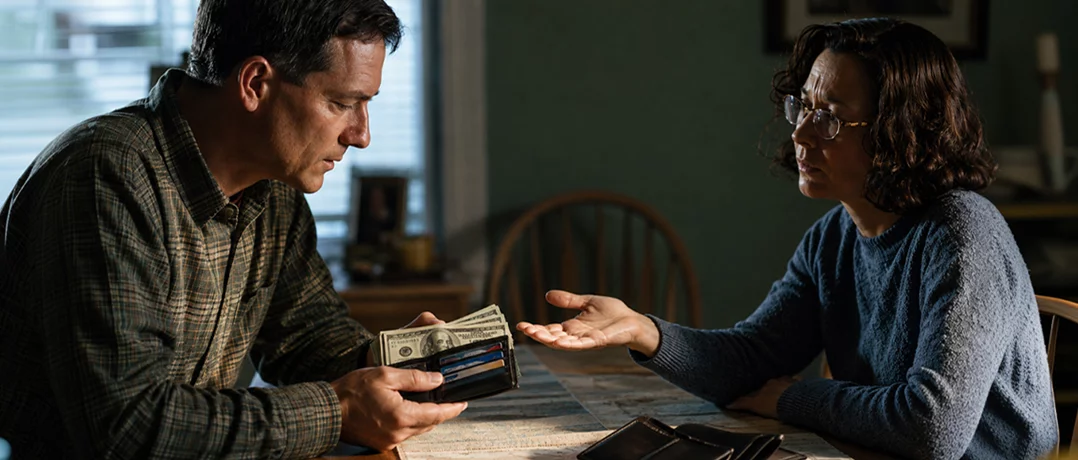
When discussing violence against women, physical, psychological and sexual violence are often the first forms that come to mind. Yet abuse can also be economic, occurring when access to money or other resources becomes a means of control. Unlike physical violence, economic abuse may leave no visible injuries. It can instead appear through a partner controlling a woman's salary, preventing her from working, restricting what she can spend or making financial decisions on her behalf. In Lebanon, where traditional gender roles can still position men as financial providers and women as economically dependent on their partners, the distinction between managing household finances and controlling another person's financial life can become difficult to recognize.
Rania Irani, Response Technical Officer at ABAAD, defines economic abuse as one of four forms of violence and says it involves controlling a woman's access to financial resources and limiting her autonomy. It does not simply mean refusing to give someone money. Economic abuse can include preventing or discouraging a woman from working, controlling her salary or bank account, taking her income without her consent, restricting access to her belongings and preventing her from pursuing education or developing professional skills.
When financial control becomes abuse
One of the difficulties surrounding economic abuse is that the behavior may initially resemble traditional family roles. Irani explained that financial decision-making in Lebanon has traditionally been viewed as a man's responsibility, while women may be economically dependent on their partners. This dependence can leave women more vulnerable to economic violence. Within some families, these dynamics can become so normalized that controlling behavior is not immediately understood as abuse. A woman whose husband controls her salary, for example, may initially interpret it as him simply managing the household's finances. Similarly, having to ask permission before spending money may be understood as part of the expected dynamic between husband and wife rather than a restriction on her autonomy.
The distinction, according to Irani, is not simply about who physically manages the money. “The issue is not who manages the money, but it is whether the woman has meaningful access, decision-making power, and autonomy over resources that affect her life,” she said. Economic abuse can also develop gradually. By the time a woman recognizes that financial behavior has become controlling, she may be reluctant or afraid to report it, particularly because there may be no visible injuries.
The many forms of economic abuse
Preventing a partner from getting a job may be one of the clearest examples of economic abuse, but the behavior can take considerably less obvious forms.Irani divides these into different forms of control, exploitation and denial of resources. An abusive partner may take a woman's salary, control her bank account or restrict her access to money. Financial exploitation can include taking out loans or accumulating debts in her name, using her financial information without consent, taking her savings or selling her belongings. Economic abuse can also involve preventing access to education or professional development, limiting the possibility of becoming financially independent in the future. Even everyday necessities can become tools of control. Withholding money for food, medication, transportation or children's needs can constitute economic abuse when it is intentionally used to control another person. This makes economic violence broader than the question of whether a woman is employed. A woman can have a job and her own salary while still having little meaningful control over the money she earns.
The financial barriers to leaving
The consequences become particularly significant when economic abuse exists alongside other forms of violence. Leaving an abusive relationship itself costs money. Transportation, housing, food, childcare, communication, medical care and legal support can all require financial resources. When the person committing the abuse also controls those resources, leaving can become practically impossible. Irani described economic abuse as an important barrier to safety for women experiencing gender-based violence.
Financial dependence can continue affecting a woman even after she manages to leave. Without sustainable income or safe housing, Irani said, a woman can face a greater risk of returning to an abusive relationship, ABAAD provides case management for women seeking support. According to Irani, social workers work confidentially with women to identify risks and needs, develop individualized plans, connect them with appropriate services and follow up while maintaining a survivor-centered approach.
When an economic crisis intensifies abuse
Lebanon's economic crisis has placed enormous financial pressure on households, but Irani makes an important distinction: economic hardship does not itself create economic abuse. “The economic crisis does not create economic abuse, but it can reinforce violence,” she said. Loss of employment and income, rising costs of food, healthcare, education and housing, alongside reduced social protection and access to services, can intensify vulnerabilities that already exist. For women already experiencing economic abuse or another form of gender-based violence, those pressures can leave even fewer options available. At the same time, Irani cautioned against presenting women solely as victims during periods of economic crisis and conflict, emphasizing that women also occupy roles as decision-makers, community leaders, negotiators and participants in rebuilding society.
Why earning money is not always independence
Becoming financially independent is not necessarily as simple as finding a job. Women, particularly mothers, may encounter social and family pressure around employment alongside practical obstacles such as unaffordable childcare, transportation difficulties, lack of access to bank accounts or financial documents and housing insecurity. Time spent outside the workforce because of caregiving can create gaps in employment history, making returning to work more difficult. Women experiencing abuse may additionally fear retaliation from their partners if they attempt to gain greater financial independence. For this reason, Irani argues that financial independence should not be measured only through income.
“Financial independence is not only about having an income; it is about having the ability to make decisions, access resources, plan for the future, and use those resources safely and freely,” she said. That distinction is central to understanding economic abuse. A partner managing the household finances is not automatically abusive. Neither is one person earning the majority of a family's income. The issue begins when financial dependence becomes financial control, and when access to money, work, education or basic necessities is deliberately restricted to limit another person's choices. Economic violence may not always leave something visible behind. When a person cannot freely access her own income, pursue work, make financial decisions or afford to leave an unsafe situation; money has stopped functioning simply as a household resource, It has become a means of control.
