



Lebanon ranks fourth globally in life dissatisfaction, reflecting the widening gap between resilience and lived reality.
The gap between joy and stability

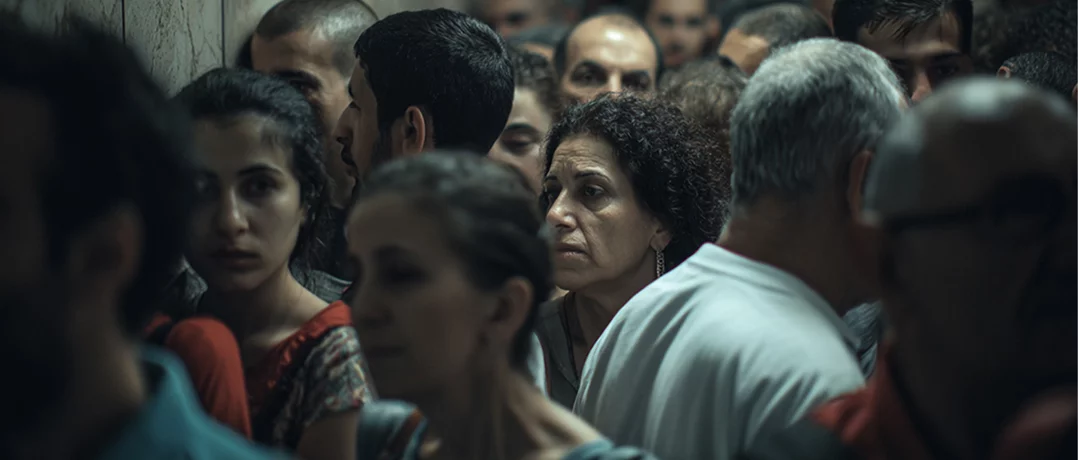
Lebanon now ranks fourth worldwide in life dissatisfaction, according to data from Our World in Data. The ranking is not a measure of happiness or emotional resilience, but an assessment of overall quality of life, including income, health, security, and long-term stability. In other words, it reflects how people evaluate their lives, not how they cope with them.
This distinction matters. Lebanese people are often portrayed and often portray themselves as lovers of life, celebration, and joy. Nightlife, humor, and social warmth remain deeply embedded in the culture. Yet beneath this adaptability lies a growing disconnect between emotional expression and lived reality.
Life satisfaction surveys ask a simple but profound question: How close is your life to the one you want? For many Lebanese, the answer has drifted further away in recent years.
Life satisfaction vs. happiness
Unlike happiness, which can be fleeting and situational, life satisfaction is a cognitive judgment. It reflects how individuals evaluate the trajectory of their lives, whether their efforts feel meaningful, their future predictable, and their sacrifices rewarded.
In Lebanon’s case, successive crises have reshaped this evaluation. Economic collapse, currency devaluation, institutional breakdown, and prolonged uncertainty have disrupted nearly every pillar that traditionally anchors life satisfaction: financial security, access to healthcare, reliable infrastructure, and a sense of continuity. People may still laugh, gather, and adapt but adaptation does not necessarily translate into satisfaction.
The psychological cost of uncertainty
One of the strongest predictors of life dissatisfaction is chronic uncertainty. Psychological research shows that when individuals are unable to plan, predict, or trust systems around them, stress accumulates not as panic, but as quiet exhaustion.
In Lebanon, this uncertainty is not episodic, it is constant. Jobs feel temporary, savings feel fragile, and long-term goals are repeatedly postponed or abandoned. Over time, this erodes the sense that effort leads to progress, a core component of psychological well-being. This helps explain why dissatisfaction can rise even when people remain socially connected or emotionally expressive.
Lebanese resilience is often praised, but resilience can be a double-edged sword. The ability to endure crisis may reduce visible breakdown, but it can also mask deeper dissatisfaction.
Psychologists differentiate between coping and thriving. Coping helps people survive instability; thriving requires stability itself. Many Lebanese are coping remarkably well, improvising, adapting, finding meaning in relationships while simultaneously feeling that their lives are structurally constrained. This gap between inner strength and external limitation is psychologically taxing.
Why this ranking matters
The Our World in Data ranking does not suggest that Lebanese people are incapable of joy or gratitude. Rather, it highlights how prolonged systemic failure impacts how people evaluate their lives as a whole.
Importantly, dissatisfaction can also be a signal. It reflects awareness, not weakness. In psychological terms, it suggests that people still hold expectations for what life should offer, a belief that things can be better.
Between joy and judgment
Lebanon’s fourth place ranking in life dissatisfaction captures a paradox: a society rich in emotional expression, social connection, and cultural vitality, yet constrained by structural instability.
Understanding this distinction allows for a more nuanced narrative, one that moves beyond stereotypes of either despair or blind optimism. Lebanese people are not unhappy by nature, nor uniquely resilient by destiny. They are navigating a prolonged mismatch between their values, ambitions, and the conditions surrounding them. And in that space between joy and judgment, life dissatisfaction becomes less a verdict and more a reflection.
-
-

-
The Beiruter
-
