



Why Lebanon will never let the truth get in the way of a good story.
The glamour myth

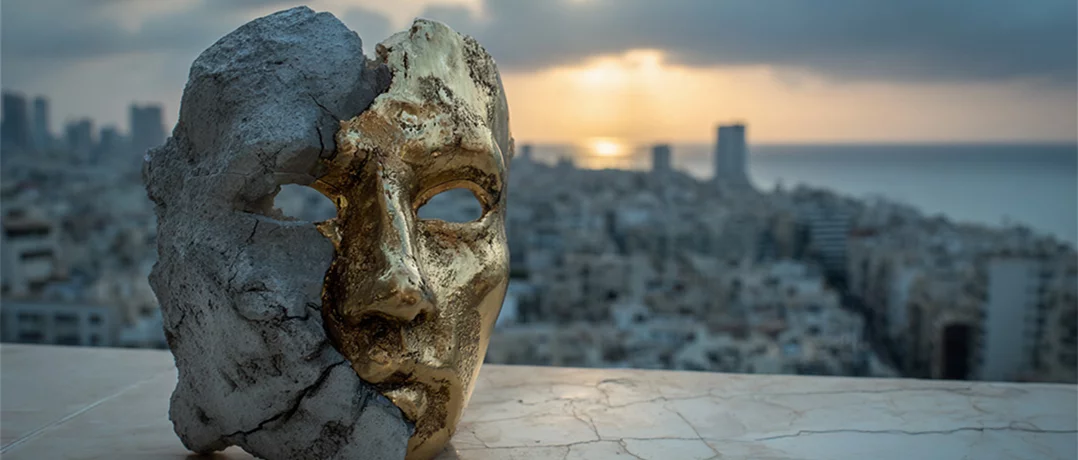
Lebanon is constantly caught in the crossfire of contradictory clichés. Are we the ‘Paris of the Middle East’ or is the country a perennial byword for conflict, a land teetering on the lip of chaos? Are we a country of religious extremism or are an oasis of liberal values in an otherwise conservative region? And then there’s this one: is Lebanon God’s country, a veritable garden of Eden with snowcapped mountains, diving gorges and an abundance of resources or is it a concrete jungle of bullet-scarred buildings, a country that was once genuinely beautiful but now marred by corruption and mismanagement.
Who cares? Despite everything, war and multiple crises and dramas have been unable to budge the narrative that we are an impossibly glamourous nation, tinged with a hint of danger.
But all good clichés hold more than a grain of truth. Lebanon’s version of the truth began in the late 40s and early 50s, in the wake of the creation of Israel and the rise of Arab nationalism under Egypt’s Gamal Abdul Nasser. Beirut was in the right place at the right time in the period as the tectonic plates of history moved inexorably in its favour.
In those turbulent times, the region needed a refuge where secrets could be shared, deals done, steam let off and, most importantly, where myths could be created. Beirut stepped up to the plate. It was the moment the city had been waiting for all its long life. Emigrés, bankers, oil men, journalists and spies poured in and availed themselves of all that the Lebanese could offer. Whatever they wanted was available at a price and the world couldn’t get enough.
It was a no brainer. There was a multilingual, multi sectarian outward looking population whose métier for thousands of years had been selling and servicing. The result was a weapons-grade cocktail of sexiness, excitement and danger. And we haven’t looked back.
The late award-winning Irish actor, Peter O’Toole, tells the story of how he and Egyptian screen legend, Omar Sharif, blew all their wages from Lawrence of Arabia at the Casino du Liban and then tried to sell their passports in the toilets to raise enough money to recoup their losses. It could be the ultimate Beirut morality tale.
Even the tragic unfolding of the Civil War was touched with a patina of glamour. In late October 1975, the Hilton Hotel was poised to open for business and sit proudly alongside the likes of Phoenicia, the Holiday Inn and the Hotel St Georges. The wine cellars were stocked and the finest beef cuts hung in the refrigerators as the opening salvos of the conflict were fired. The hotel never welcomed a paying guest. Militiamen ate the food and drank the bar dry.
It was the same story 100 meters down the road, where months earlier, people had been enjoying the delights of the sunbathing raft moored in St George’s Bay and the kidney shaped pool at the Phoenicia Hotel where you could dive to the bottom and tap on the glass window and signal to the waiter at the bar downstairs. Then, overnight, the pool area sat abandoned for 25 years inhabited by ghosts of a bygone era.
Guns and glamour may be an explosive combination but so are opposing values. Another reason Lebanon lives in a state of chronic schizophrenia is that it under-promises and over-delivers.
How can a country in the Middle East, one that in recent decades has been dominated by what the international media calls the “Iranian-backed Hezbollah”, a party that to many in the West is no different than daesh, at the same time be so open and liberal. Beirut is the city that parties so hard because, wait for it, “we never know what tomorrow will bring”. Well at least that part is true.
And then there is the aesthetic trope. Instagram X and Threads take your pick is awash with filter-saturated drone shots of dreamy sunsets, cascading waterfalls, churches and mosques, tables groaning with food and men with massive moustaches clinking arak glasses with doe-eyed women from Tripoli to Tyre. The reality is that our natural landscape and overall environmental health air, water, soil, ecosystems is f*cked and cancer rates are by all accounts through the roof. But that wouldn’t look good on Instagram.
The reality is that we are a basket case, a nation of world champion pill-poppers living in a constant state of anxiety, fuelled by the constant threat of conflict, rising prices, an uncertain economic outlook and future plans mauled by a banking crisis for which no one has been held to account. Our nerves are shredded and we don’t particularly like each other but why let that get in the way of a good story.
-
-

-
Michael KaramJournalist/Author
-
