



Lebanon is preparing to expand the Lebanese Army’s disarmament campaign north of the Litani, placing Hezbollah and the state on a direct collision course.
The gradual disarmament of Hezbollah

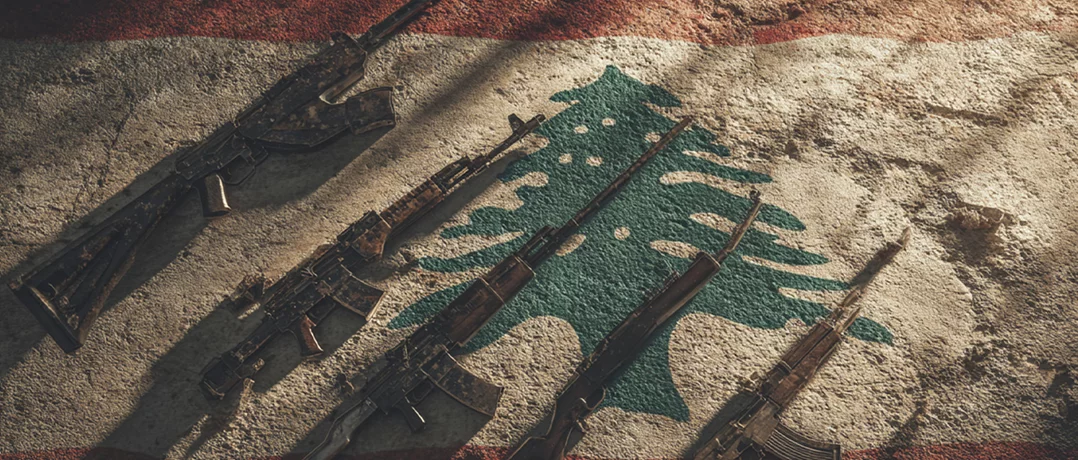
Lebanon is approaching a decisive moment in its long-running struggle to impose exclusive state control over weapons.
With the first phase of the Lebanese Army’s disarmament plan nearing completion south of the Litani River, Prime Minister Nawaf Salam has confirmed that a second phase will begin soon, extending northward toward the Awali River.
The announcement signals a significant escalation in the government’s approach and places both Hezbollah and the state’s institutions before a critical test of authority, credibility, and political will.
Completion of the first phase south of the Litani
According to the Prime Minister’s office, the Lebanese Armed Forces (LAF) is only days away from completing the first phase of its mandate in the area south of the Litani River, which is set to be completed by the end of the current year.
Lebanese military sources report substantial progress, including the confiscation and destruction of thousands of tons of ammunition and military equipment, as well as the discovery of roughly a hundred military tunnels. Salam emphasized that the LAF has effectively imposed state authority across the region, with the exception of areas still occupied by Israel, which he insisted must withdraw without delay.
The government is expected to convene at the beginning of the new year to review the army’s detailed report. While a brief technical extension remains possible, officials indicate there is no intention to delay the transition to the next phase.
Additional phases to follow
As public and international pressure amounts to disarm Hezbollah north of the Litani, Salam claimed that the second phase will cover the strategic corridor between the Litani and Awali rivers. This region is broader, more densely populated, and militarily more sensitive than the southern border zone. It includes major towns such as Sidon and Nabatieh, coastal areas, and elevated terrain that has long been considered vital to Hezbollah’s military infrastructure and supply networks.
Security experts view this phase as a far greater challenge than the first. Unlike the area south of the Litani, much of this territory lies outside the operational scope of UNIFIL under United Nations Security Council (UNSC) Resolution 1701, meaning the LAF will operate without international intelligence backing and will directly enter Hezbollah’s traditional strongholds.
This is also true with regards to the latter phases. The third phase will cover Beirut and Mount Lebanon and the fourth covers the Bekaa followed by remaining regions.
Political tensions and Hezbollah’s position
Hezbollah has consistently rejected calls for disarmament, arguing that the ceasefire with Israel applies only south of the Litani and tying any discussion of weapons north of the river to a full Israeli withdrawal from occupied southern areas. Party officials have signaled that they do not recognize the government’s decision to monopolize arms, raising serious questions about how they will respond as the second phase begins.
Salam, however, maintained that imposing state monopoly over weapons is a Lebanese necessity before it is an international demand. He stressed that progress depends on Hezbollah’s cooperation and on parallel steps to activate state institutions in the South and launch reconstruction efforts with international support.
Form here, as Lebanon prepares to move from border zones into the heart of its internal power balance, the second phase of disarmament represents a defining test for the state. It will measure not only the army’s operational capacity but also the government’s ability to assert sovereignty amid regional tensions and domestic resistance.
With Israel’s actions, Hezbollah’s response, and international mediation all intertwined, the coming months are likely to shape Lebanon’s political and security landscape well beyond 2026.
-
-

-
The Beiruter
-
