



The iconic aloha shirt traces an unexpected origin to Lebanese silk makers, whose craftsmanship and migration helped shape one of Hawaii’s most famous symbols.
The Hawaiian shirt isn’t Hawaiian… It’s Lebanese
The Hawaiian shirt isn’t Hawaiian… It’s Lebanese
By The Beiruter | January 16, 2026

Reading time: 3 min
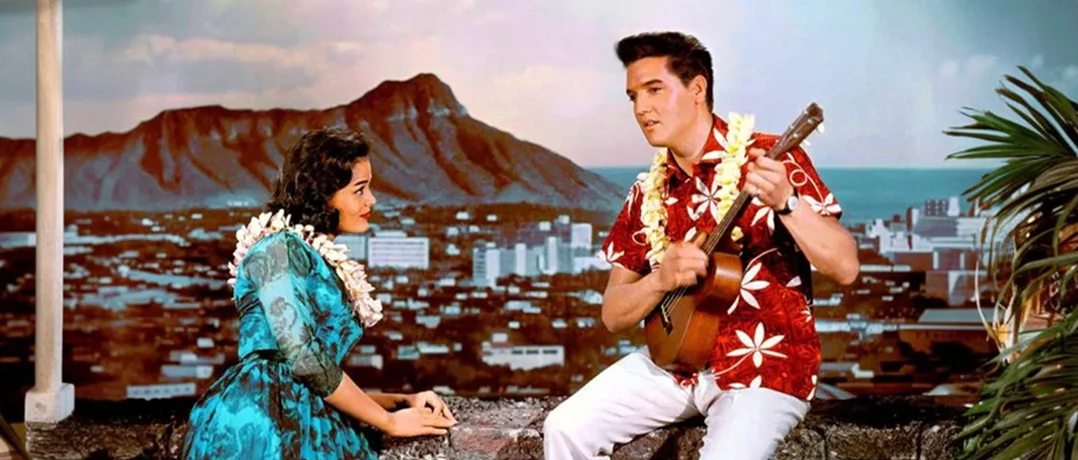
The aloha shirt is everywhere. It hangs in tourist shops, appears in Hollywood films, and has been worn by Elvis Presley, Frank Sinatra, and even U.S. presidents. It is widely understood as a symbol of Hawaii: laid-back, colorful, carefree. But stitched into its seams is a story far older, deeper, and far less known. It begins not in Honolulu, but in Lebanon.
Long before the aloha shirt became shorthand for American leisure, it was shaped by the hands of a Lebanese family of silk makers: the Shaheens.
From Lebanese silk to the new world
In the late 19th century, Lebanon was a global center for silk production. Entire villages depended on mulberry trees and silkworms, and Lebanese silk was prized across Europe. The Shaheen family were part of this tradition, artisans who understood fabric as craft.
Like many Lebanese families at the time, the Shaheens emigrated to the United States, settling in New York and New Jersey, where they established silk factories and continued their trade. Their expertise allowed them to thrive, becoming part of the industrial backbone of America’s growing textile economy.
In the 1920s, the family attempted to bring this success back home, investing in Lebanon’s silk industry. But the timing was brutal. Under the French Mandate, Lebanese silk struggled to compete with cheaper, mass-produced alternatives flooding global markets. What had once sustained entire regions could no longer survive modern economic pressures. The project failed.
Reinvention in the Pacific
By the 1930s, the family relocated again, this time to Honolulu. Hawaii, then a U.S. territory, was a crossroads of cultures: Japanese, Chinese, Polynesian, Filipino, and Western influences collided in daily life. It was fertile ground for reinvention.
The Shaheens arrived as master craftsmen, bringing with them generations of textile knowledge, silk expertise, and tailoring precision. What Hawaii lacked at the time was a locally produced, high-quality garment industry.
After World War II, global supply chains collapsed. Imported fabrics became scarce. Instead of waiting for systems to recover, Alfred Shaheen, the next generation, built his own solutions. Using scrap parts from junkyards, he engineered dye-printing machines capable of producing vivid, long-lasting fabrics locally in Honolulu.
East meets West
Drawing inspiration from Tahitian florals, Japanese woodblock prints, Chinese calligraphy, and Middle Eastern motifs, Alfred Shaheen created bold designs that broke away from the muted, repetitive patterns common at the time.
His brand, Shaheen’s of Honolulu, became the first large-scale manufacturer of what we now recognize as the modern aloha shirt. Unlike earlier versions, often made from imported kimono fabric scraps, Shaheen’s shirts were intentionally designed, culturally referential, and meticulously produced.
A Lebanese story, worn worldwide
Today, the aloha shirt is often dismissed as kitsch or novelty. Few stop to ask where it came from or who made it possible. But behind its bright colors and easy fit is a familiar Lebanese story: displacement, reinvention, craftsmanship, and global influence.
The Shaheens built upon their roots to succeed abroad. From Lebanese silk villages to American factories, from failed mandates to Pacific innovation, their journey mirrors that of countless Lebanese families whose impact on global culture remains quietly embedded in everyday life. Therefore, the next time you see an aloha shirt, remember this: It may look Hawaiian. It may feel American. But its story begins in Lebanon.
-
-

-
The Beiruter
-
