



How a potential disruption of the Strait of Hormuz could trigger far-reaching global economic consequences, reshaping energy markets, maritime trade, and supply chains while exposing the structural fragility of globalization.
The Hormuz shock: When regional war becomes global economics
The Hormuz shock: When regional war becomes global economics
By Dr. Cyril Widdershoven | March 05, 2026

Reading time: 7 min
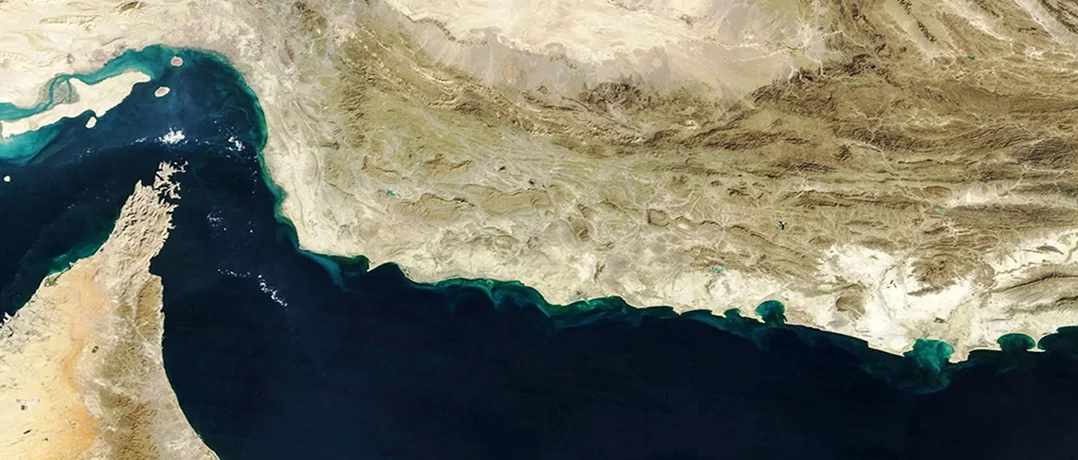
In the last few decades, Middle East wars have been framed as regional events with global consequences. The war between the US, Israel, and Iran, and the increased possibility of a total disruption of the Strait of Hormuz, however, has now reversed that logic. The current conflict is no longer a regional crisis that is spilling outward. It has become a global economic system, and it is now discovering that its economic fundamentals and foundations remain dangerously narrow. If Hormuz is effectively closed, not necessarily by force or blockade but by risk, the emerging shock will be felt beyond oil markets. It will reshape trade routes from Asia to the Mediterranean. At the same time, it will certainly expose the structural vulnerability of economies already operating on thin margins.
It has been widely reported that the Strait of Hormuz is a sea lane through which one-fifth of globally traded oil and a decisive share of liquefied natural gas exports pass. The media repeatedly state this; however, its true meaning is still underestimated. Today’s modern trade does not require the strait to be physically closed to suffer disruption. It needs to be clear that global trade, including the fact that 84-88% goes via maritime trade, depends extremely on predictability. The latter includes a long list of issues, such as insurance availability, freight financing, stable routing schedules, and risk calculations, which allow ships to move without existential uncertainty. If these assumptions collapse, global trade will slow long before tankers stop sailing.
This unwanted process is already in place. We are seeing that insurance markets are retreating, while major shipping companies have reported reassessing and rerouting voyages. At the same time, charterers have already put in place a system for factoring geopolitical premiums into contracts. Until now, the results on the ground have not been immediately halt but a gradual slowdown and throttling of maritime flows. You could see it as the economic equivalent of reduced oxygen supply to a global system designed for uninterrupted circulation.
Yes, global energy markets will feel the shock first, especially given the pivotal role of the Arabian/Persian Gulf in the global energy and commodity system. However, energy markets will not contain the shock. A sustained Hormuz disruption will instantly, without any other option available worldwide, tighten LNG availability. This is since a Strait of Hormuz disruption affects cargoes from Qatar and Abu Dhabi, which currently underpin balancing mechanisms between Asian and European gas markets. Despite that, due to its energy transition strategies and supply diversification, Europe is no longer importing historically high volumes from the Gulf; it is still fully exposed to global price formation. This factor matters more than volumes. Europe will need to deal with the fact that Asia will start bidding aggressively for scarce cargoes. The result will be that Europe will pay the price regardless of origin. This factor will also be in place for Mediterranean countries, such as Egypt, Greece, and Turkey.
When energy prices increase, this translates directly into trade friction. Not only do shipping fuel costs increase, but freight rates follow. For global markets, it will also be shown in industries dependent on predictable logistics. All the latter, from chemicals to automotive manufacturing, will face renewed instability. Overall, inflationary pressure will be building up.
Yet one of the most underestimated impacts we will see is on the Mediterranean, west of Suez.
For decades, the Mediterranean has quietly become one of the world’s most strategically overloaded trade basins, where not only Gulf energy flows, but also Asian European container routes are. It is also the maritime sphere where regional supply chains connecting Turkey, Egypt, Israel, Lebanon, and Southern Europe have been converging, amid already heightened political instability and economic fragility. It needs to be understood and assessed that a Hormuz shock will not stop at the Arabian Sea. It will ripple through the Suez Canal into Mediterranean trade arteries within days.
Looking at the current situation, outside of energy transport, another major sector will be container shipping. The latter’s networks are facing immediate recalibration, as they are linked to a situation in which Gulf transshipment hubs feed cargo into Mediterranean ports. All this is also linked to the fact that Asian services rely on predictable energy costs to maintain tight scheduling loops. Carriers will be forced to slow down due to higher insurance premiums and bunker costs. All will be setting up different rotations or will be consolidating services. For most Mediterranean ports, the new situation will be to experience uneven traffic patterns and increased volatility.
For the Levant, the consequences are more severe.
For Lebanon and others, all of whom operate at the intersection of maritime dependence and economic vulnerability, the situation will become more dire. The country is already dependent on importing most of its fuel, food staples, and industrial inputs. An increase in freight and insurance costs will be passed directly on to domestic inflation and supply insecurity. At the same time, Lebanon’s Port of Beirut, which is still recovering from the country’s structural and financial crises, currently lacks the resilience buffers available to larger European hubs. With a prolonged maritime risk environment, the country will face economic instability, not only on the energy side but also translating into social instability and food insecurity.
Neighboring economies are not immune to. Eastern Mediterranean energy ambitions, which are led by Egypt, Israel, Cyprus, and Greece, all depend on stable global shipping economics. Investment decisions will be put on hold if freight markets tighten and insurance risks expand. Offshore and onshore energy projects, typically designed around predictable maritime logistics, currently carry geopolitical premiums that investors may be hesitant to accept.
Meanwhile, global shipping itself begins to fragment.
Global shipping is currently facing a situation in which insurers withdraw or price risk beyond commercial viability. This could lead to the emergence of alternative maritime ecosystems. In this situation, it can be expected that state-backed fleets, politically aligned insurers, and opaque shipping networks will step into the new gaps left by traditional Western maritime institutions. The Russian shadow fleet is already a prime example.
A Hormuz crisis risks accelerating this bifurcation, as Western-compliant shipping avoids already high-risk zones. This can result in alternative fleets trying to capture market share. If this situation exists for a longer time, maritime trade as we currently know it will cease to operate under a single rules-based framework. It will for sure divide along geopolitical lines.
At the same time, Europe depends on maritime openness, the basis for its survival. Europe only has limited control over the financial infrastructure (insurance and risk underwriting) that determines whether ships sail. Naval deployments can secure sea lanes, but they can't force insurers or financiers to accept exposure.
This again extends into financial markets, as oil price volatility feeds inflation expectations, which complicates monetary policy. Increased transport costs will also directly reduce trade efficiency. It also means that supply chains shift from optimization toward resilience. Economic growth will not slow because trade stops; it will only be structurally expensive. This is the deeper significance of Hormuz. The strait is not merely an energy chokepoint; it is and should be seen as a confidence chokepoint.
The Mediterranean, as it sits downstream of this instability at present (if no military action is in the area), has become the transmission belt of global disruption. The broader lesson is uncomfortable. Until now, globalization remains anchored to narrow maritime corridors vulnerable to regional conflict. For global markets, the Middle East (Gulf/Red Sea) and the Mediterranean region's efficiency have clearly created dependency, and dependency creates leverage.
If the confrontation in and around Iran escalates, making Hormuz persistently unstable, the world will not witness a dramatic collapse of trade. The contrary will be the case; it will experience a much more consequential shift: a gradual rewiring of global trade toward higher costs, regional blocs, and permanent geopolitical risk pricing.
Don’t expect that there will be no more ships moving through the Mediterranean and beyond. The real issue will be that the era of cheap certainty, which has made global trade predictable, will end. Hormuz could be written into the books as the defining moment when the system finally realized how fragile it had become.
-
-

-
Dr. Cyril WiddershovenSenior Analyst at Red Sea FuturesFocused on the intersection of energy, security and transport
-
