



Houthi missiles are bringing regional powers closer together. Could the group’s growing military reach become its greatest strategic miscalculation?
The Houthis’ strategic miscalculation

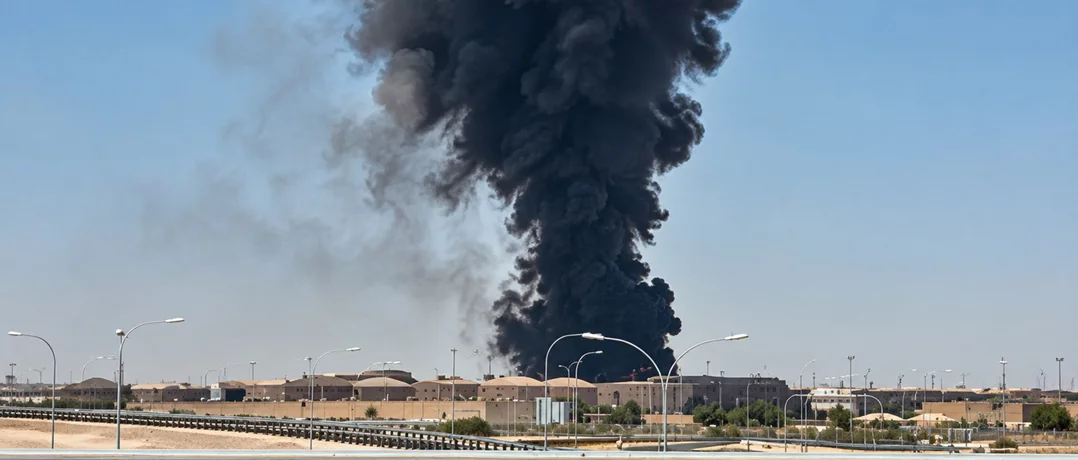
The Houthis are reshaping the Middle East’s geopolitical alliances, one ballistic missile at a time. Their attacks on Saudi airports and energy facilities are producing a consequence the group may not have anticipated: bringing regional governments closer together. The latest escalation in Yemen is reverberating across the region, where concerns over border security, energy infrastructure, and vital shipping routes are giving governments new reasons to strengthen their relationships.
The Saudi Emirati convergence
The clearest signs of renewed regional coordination have emerged between Saudi Arabia and the UAE. On 18 October, Saudi Defense Minister Prince Khalid bin Salman traveled to Abu Dhabi for talks with UAE President Sheikh Mohammed bin Zayed Al Nahyan. Their discussions focused on regional developments, security, and strengthening cooperation between the two countries. A day later, Saudi Foreign Minister Prince Faisal bin Farhan and his Emirati counterpart, Sheikh Abdullah bin Zayed Al Nahyan, condemned the continuing Houthi attacks on Saudi Arabia and emphasized the need for closer Gulf coordination.
The diplomatic engagement followed an increasingly explicit Emirati commitment to collective security. On 12 October, Anwar Gargash, diplomatic adviser to the UAE president, warned that attacks against Saudi Arabia threatened the security of every Gulf state. He called for stronger joint defense arrangements, arguing that shortcomings in regional coordination had exposed the Gulf to greater threats.
More significant developments may be unfolding inside Yemen itself. According to Yemeni sources, the UAE has agreed to resume financial support for government-aligned forces fighting the Houthis, particularly the Southern Giants Brigades, while Saudi Arabia would provide air cover. Neither government has publicly confirmed the arrangement, but it suggests a possible expansion of cooperation from diplomacy to military operations.
The Giants Brigades, previously trained and supported by the UAE, have played an important role in the current fighting along Yemen's western coast. Their experience confronting Houthi forces provides a valuable complement to Saudi Arabia's aerial capabilities and its support for Yemen's internationally recognized government. For Riyadh, improved coordination could strengthen operations against forces threatening its territory. For Abu Dhabi, supporting effective local partners also serves its longstanding interest in protecting maritime security and preventing further instability along the Red Sea.
Egypt and Jordan broaden the regional response
Egypt has taken one of the most significant steps toward expanding the regional response to the Houthi offensive. On 18 October, President Abdel Fattah el-Sisi convened the National Defense Council, which pledged all necessary and possible support to Saudi Arabia. Sisi had also sought parliamentary authorization to deploy Egyptian forces if Riyadh requested assistance. Lawmakers postponed their decision until 26 October, leaving the potential military contribution under consideration.
Cairo has nevertheless established clear limits to its involvement. On 21 October, Sisi ruled out offensive operations inside Yemen, restricting any Egyptian military role to defending Saudi territory and borders. Egypt's position reflects both its longstanding security partnership with Riyadh and its own interests in Red Sea stability. Disruptions to maritime traffic have already damaged Suez Canal revenues, making renewed threats to shipping particularly consequential for the Egyptian economy. Closer security coordination with Saudi Arabia could therefore serve both countries' interests without drawing Egypt into an offensive campaign in Yemen.
Jordan has also moved to reinforce its relationship with Riyadh. On 21 October, Foreign Minister Ayman Safadi met his Saudi counterpart, Prince Faisal bin Farhan, condemning the Houthi attacks and reaffirming Jordan's support for Saudi security. The ministers also agreed to strengthen their existing Higher Coordination Council, replacing the previous bilateral Joint Committee, and placing its activities under their respective foreign ministries to facilitate closer political and institutional cooperation. Their discussions also addressed regional de-escalation and freedom of navigation through Bab al-Mandab and the Strait of Hormuz.
The Gulf’s collective response
The wider Gulf response has also taken a more collective form. Meeting in Bahrain on 18 October, foreign ministers of the six Gulf Cooperation Council states reaffirmed their Joint Defense Agreement, emphasizing that an attack against one member concerns all six. They backed Saudi Arabia's right to defend its territory, demanded stricter enforcement of the UN arms embargo on the Houthis, and called for the protection of commercial shipping through the Red Sea and Bab al-Mandab. The declaration also reaffirmed support for Yemen's territorial integrity and a negotiated political settlement.
Bahrain has helped carry these concerns into international diplomacy. As a member of the UN Security Council, it contributed to efforts surrounding the presidential statement adopted on 15 October, which condemned Houthi attacks on Saudi airports and energy facilities and threats to maritime navigation.
Other Gulf governments have reinforced bilateral consultations with Riyadh. On 13 October, Qatar's prime minister and foreign minister, Sheikh Mohammed bin Abdulrahman Al Thani, discussed closer regional coordination with his Saudi counterpart, reaffirming that Saudi security is inseparable from Gulf security. Kuwait's foreign minister reiterated solidarity during a similar exchange on 20 October.
Oman has pursued a complementary diplomatic approach. On 10 October, Foreign Minister Badr Albusaidi condemned attacks against Saudi civilian infrastructure while emphasizing dialogue and de-escalation. Muscat has also coordinated with Riyadh, Yemeni parties, and the United Nations to revive peace negotiations, maintaining diplomatic channels alongside the Gulf's collective security efforts. Together, these responses combine defensive solidarity with mediation, without yet amounting to a unified military campaign.
The reach and limits of the alignment
Beyond the Arab world, Saudi Arabia's defense partnerships with Türkiye and Pakistan have acquired greater urgency. Following an emergency meeting in Riyadh on 5 October, the three governments moved to implement their existing collective-defense commitments as Houthi attacks intensified.
Pakistan's involvement has extended beyond diplomatic commitments. Defense Minister Khawaja Asif acknowledged that Pakistani and Turkish personnel were providing reconnaissance and other support to Saudi operations, while Saudi forces conducted the fighting. Pakistan's military also confirmed its longstanding troop presence in the kingdom. Reports have suggested a more direct combat role, with The New York Times citing an anonymous Pakistani military official claiming that Pakistani fighter jets were participating in strikes against the Houthis. Islamabad categorically rejected the account, maintaining that its military role was defensive.
Türkiye has meanwhile taken further steps toward formalizing its military commitments. On 20 October, Ankara moved to ratify the trilateral defense agreement. A governing-party lawmaker subsequently indicated that a separate mandate authorizing Turkish military deployments to Saudi Arabia would follow. Initial assistance would focus on air defense, electronic warfare, and technical support, while Ankara has ruled out offensive operations inside Yemen. Türkiye has also agreed to participate in Saudi-led efforts to protect Red Sea navigation.
In seeking to increase pressure on Saudi Arabia, the Houthis may have achieved the opposite: encouraging regional powers to close ranks against them. What the Houthis have gained in military reach, they risk losing in strategic advantage, as their own escalation creates the conditions for a broader regional alignment against them.
-
-

-
Nami El KhazenJournalistFocusing on geopolitics and international affairs.
-
